Restoration & Radon Contractor Insurance
Insurance for restoration and radon mitigation contractors.
Restoration Guard Insurance insures the business owners of two trades a generic policy handles badly — the restoration contractors who respond after a water, fire, smoke, mold, or storm loss, and the radon mitigation businesses that keep a hazard from becoming harm. One specialty program built around the exposures a standard policy leaves out: contractors pollution liability for the substances you are hired to remove, professional liability for the measurement someone relies on at a closing, and the equipment, bailees, and workers compensation lines the work actually carries — across the 48 states we are licensed in.
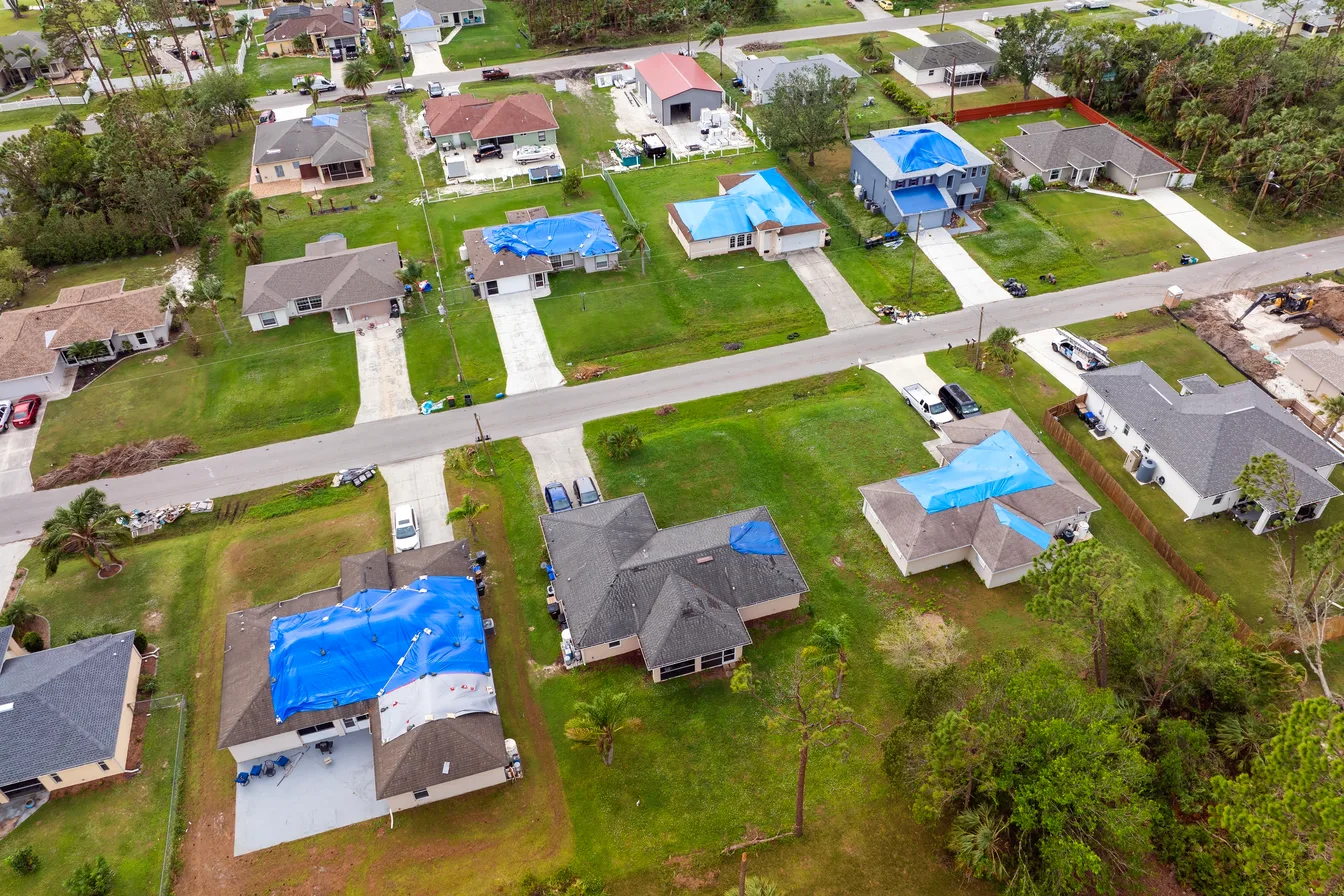

Two trades, one axis: after the loss and before the hazard
Restoration contractors respond to damage that already happened — whether it arrives as a sudden burst or the slow, progressive damage a crew finds weeks later; radon mitigation businesses keep a hazard from becoming harm. They run different risk profiles and lead with different coverage, so we write each to its own operation — not off one generic form.
AFTER THE LOSS
Restoration Contractor Insurance
the catastrophe-response reality — emergency dispatch at any hour, contaminated environments, other people’s contents in your care, and an insurer-funded work environment you must operate inside but never advise on
water damage mitigation and structural drying, fire, smoke, and soot restoration, mold remediation, storm and catastrophe response, contents pack-out, cleaning, and storage, reconstruction and rebuild
Learn more →BEFORE THE HAZARD
Radon Mitigation Business Insurance
the measurement-opinion reality — you produce a number that someone relies on at a real-estate closing, and the exposure is the judgment behind it, not just the pipe in the wall
radon measurement and testing, radon mitigation system design and installation, sub-slab depressurization systems, vapor barriers and crawlspace encapsulation, air purification and indoor air-quality testing
Learn more →Coverage for restoration and radon businesses
The core lines the two trades carry — led by the two that define them: contractors pollution liability for the substances a restoration crew is hired to remove, and professional liability for the measurement a radon business is paid to produce.
Contractors Pollution Liability Insurance
The line that makes restoration a specialty class. Mold is a pollutant under the standard general-liability pollution exclusion — and so are the sewage in a Category 3 water loss, the smoke and soot residues after a fire, and the contaminated material you haul away. The base GL does not answer for the very substance you were hired to remove. Contractors pollution liability is the form that does, and it is largely a manuscript market — described honestly, without inventing a form number.
Learn more →Professional Liability Insurance
A radon test is a professional opinion with a number on it, and somebody relies on that number — often at a real-estate closing. This is the measurement-and-judgment line: the E&O behind a test result, a clearance decision, a protocol choice, and a missed elevation. It carries the restoration side too, wherever the work produces a judgment rather than a repair — moisture mapping, and clearance testing after mold remediation. There is no ISO form for this class; the page says so.
Learn more →General Liability Insurance
The operations base both trades share: third-party bodily injury and property damage from working inside somebody else’s occupied structure — demolition, water and equipment underfoot, and the completed-operations tail that follows a rebuild for years after the crew leaves. This is the page that cuts the seams: what the pollution exclusion takes out, what the care-custody-and-control carve-out takes out, and where workmanship ends and professional judgment begins.
Learn more →Bailees Coverage
The contents line. When you pack out a customer’s furniture, electronics, textiles, and documents and hold them at your facility — or move them in your truck — those goods are in your care, custody, and control, and they are exactly what the general-liability policy carves OUT. Bailees coverage is what answers for them. The honest distinction between a legal-liability standard and a broader all-risk bailee form is drawn on the page. ⚠ Leans TYPE R — pack-out is restoration’s world; type M meets it as context only.
Learn more →Contractors Equipment Insurance
Drying equipment fleets — dehumidifiers, air movers, air scrubbers, generators — live on customers’ sites for days or weeks at a time, not in your yard. That is the exposure: gear in transit, gear deployed at a loss site you do not control, and gear that walks. Covers owned and, where the form allows, rented equipment; the rental-versus-owned reality is discussed qualitatively.
Learn more →Workers Compensation Insurance
The exposure trades. Crews work in contaminated environments in respirators and PPE, in confined attics and crawlspaces, and on storm work at height — often at odd hours, often the day after the loss. Includes honest handling of the four monopolistic state-fund states (ND, OH, WA, WY), where the coverage does not come from a carrier at all.
Learn more →Commercial Auto Insurance
The response fleet: the trucks that roll on an emergency call, the trailers that carry drying equipment, and the box trucks that move a pack-out. ⚠ Note: throughout this page the insurance CARRIER is disambiguated from the motor CARRIER — this trade says ‘carrier’ for insurers constantly, and the rule carries from the sibling brand.
Learn more →Excess Liability Insurance
Additional limits above general liability, commercial auto, and the other underlying lines. ⚠ The display form on this brand is EXCESS, not umbrella — recorded deliberately. Follow-form is HEDGED, not assumed: an excess policy that follows form may still not follow the pollution or professional wording underneath it, which is precisely the gap that matters here. The large-loss and storm-surge contract demands are discussed qualitatively.
Learn more →The two lines that make this a specialty class
Restoration and radon each have one defining exposure a general policy is not built to answer — the pollutant a crew is hired to remove, and the professional opinion a test result becomes. These are the two we build the program around.
The hardest exposure in restoration is the one a general-liability policy is built to exclude
Mold is a pollutant. So is the sewage in a Category 3 water loss, and so are the smoke and soot residues that settle through a structure and into the ductwork after a fire. Under the standard general-liability pollution exclusion, the base policy does not answer for the very substance your crew was hired to remove — which is what makes restoration a specialty class and not a general-contracting one. Contractors pollution liability is the form that responds to the environmental side of the work: the remediation, the contaminated material you haul away, and the environmental exposure that can follow a loss off the site. It is largely a manuscript market, and this page describes it honestly rather than dressing it up with a form number that does not exist.
Contractors pollution liability →A radon test is a professional opinion with a number on it — and someone relies on that number
When a measurement comes back and a real-estate closing turns on it, the exposure is not the pipe in the wall — it is the judgment behind the number. A protocol chosen, a clearance called too early, an elevation missed. That is professional liability: the errors-and-omissions side of a business paid to produce an opinion, not only to install a system. It carries onto the restoration side too, wherever the work yields a judgment rather than a repair — moisture mapping, and the industrial-hygienist clearance testing that says a remediation is actually done. There is no ISO form for this class, and this page says so instead of implying one.
Professional liability →Restoration & radon insurance guides
Plain-language guides on coverage, cost drivers, the licensing that varies by state, and running a restoration or radon mitigation business.
Licensed in 48 states
We place coverage for restoration and radon mitigation businesses across the country (every U.S. state except Hawaii & Alaska) — wherever your crews, your equipment, and your response fleets work. Priority states are highlighted.
- Alabama
- Arizona
- Arkansas
- California
- Colorado
- Connecticut
- Delaware
- Florida
- Georgia
- Idaho
- Illinois
- Indiana
- Iowa
- Kansas
- Kentucky
- Louisiana
- Maine
- Maryland
- Massachusetts
- Michigan
- Minnesota
- Mississippi
- Missouri
- Montana
- Nebraska
- Nevada
- New Hampshire
- New Jersey
- New Mexico
- New York
- North Carolina
- North Dakota
- Ohio
- Oklahoma
- Oregon
- Pennsylvania
- Rhode Island
- South Carolina
- South Dakota
- Tennessee
- Texas
- Utah
- Vermont
- Virginia
- Washington
- West Virginia
- Wisconsin
- Wyoming
Restoration & radon insurance FAQ
What is contractors pollution liability, and why does a general-liability policy exclude the work?
A commercial general-liability policy carries a pollution exclusion, and in restoration that exclusion reaches the substances the trade is hired to remove — mold, the sewage in a Category 3 water loss, and smoke and soot residues. So the base policy does not answer for the very thing you were called in to fix. Contractors pollution liability is the specialty line that fills that gap, covering the environmental remediation, the contaminated material you transport and dispose of, and the environmental exposure a loss can create beyond the property line. It is largely a manuscript market rather than a standardized form, which is exactly the part we walk owners through.
Why does a radon mitigation business need professional liability?
Because a radon business is paid to produce a number, and someone relies on it — often at a real-estate closing. Professional liability, or errors and omissions, is the line that responds when the exposure is the measurement itself: a protocol choice, a clearance decision made too early, or an elevation that was missed. It is a different risk from the physical install of a mitigation system, and a general-liability policy is not built to answer for a professional opinion. There is no ISO form written for this class, so how the coverage is arranged matters.
Do you insure the property owner or the restoration contractor?
We insure the contractor — the restoration or radon mitigation business, never the property owner filing a loss. It is worth being precise about, because restoration lives inside somebody else’s insurance claim: most of the work arrives insurer-funded, and the property owner’s carrier sets the scope of repair you are paid on. We build the contractor’s program around that reality — the receivables it creates, the program and TPA relationships that drive the work, and the coverage the job actually demands. We do not advise property owners on their own claims, and this site does not either.
What happens to a customer’s belongings during a pack-out?
When you pack out a customer’s furniture, electronics, textiles, and documents and hold them at your contents storage facility — or move them in your truck — those goods are in your care, custody, and control, which is exactly what a general-liability policy carves out. Bailees coverage is the line that answers for them. The honest distinction between a legal-liability standard and a broader all-risk bailee form is one we draw for you, because the difference decides who pays when a customer’s belongings are damaged while they are in your hands.
Does the program cover my response fleet?
Yes — commercial auto answers the trucks that roll on an emergency call, the trailers that haul drying equipment, and the box trucks that move a pack-out. One point of language worth being exact about: your insurance carrier is the company that writes your coverage, which is a different thing from a motor carrier that hauls freight for hire. We insure the fleet a restoration or radon business runs in service of its own work, not a for-hire trucking operation.
How much does restoration or radon insurance cost?
There is no single price, because premium is driven by your specific operation. For a restoration contractor, the biggest factors are your pollution limits and mold appetite, your payroll and workers-compensation class codes, the size of your drying-equipment fleet, your revenue mix between mitigation and reconstruction, and your loss history. For a radon business, it is your professional-liability limits, your split between testing and mitigation, your state’s certification posture, and your crew size. We price to the real operation rather than a generic guess.
Who we are
Restoration Guard Insurance is a specialty brand of Wexford Insurance, an independent agency led by Nate Jones, CPCU. We focus on two trades most business policies handle badly — the restoration contractors who respond after a water, fire, smoke, mold, or storm loss, and the radon mitigation businesses that keep a hazard from becoming harm — and we place coverage with insurance carriers that actually want the work.
Our specialty panel spans 22 markets. We hold direct appointments with Dual Environmental Insurance, Berkley Net Industrial, Kinsale Insurance Company, Arch Specialty Insurance, Nautilus Insurance, Crum & Forster Insurance, Liberty Mutual Insurance, GEICO Insurance, Progressive Insurance, Amerisafe Insurance, Texas Mutual Insurance, Berkshire Hathaway Insurance, West Bend Insurance, Secura Insurance, Cincinnati Insurance, UCPM Insurance, Markel Insurance, The Hartford, Goodville Mutual Casualty Company, Encova Insurance, and we reach additional excess-and-surplus capacity through the wholesale markets Arlington Roe and RT Specialty Insurance. We review the panel regularly and adjust it as insurer appetite shifts.
Restoration and radon don’t fit a generic contractor policy. If you respond to losses, your hardest exposure is the one the standard general-liability pollution exclusion takes out — mold, sewage, smoke and soot — and most of your work arrives insurer-funded, on a scope somebody else’s carrier sets. If you test and mitigate radon, you are paid to produce a number a closing turns on, and the real exposure is the opinion behind it. We built Restoration Guard so the coverage matches which of those worlds you actually operate in.
— Nate Jones, CPCU, Founder
Restoration Guard Insurance is a DBA of Wexford Insurance, LLC. Verify our license — NPN 19887690 — at NIPR.com.
Get a quote for your restoration or radon business
Tell us how you operate — the losses you respond to or the hazards you mitigate, the crews and fleets you run, and the contracts you work under — and we will market it to insurance carriers that write the class.