
Coverage line
Excess Liability Insurance for Restoration & Radon Contractors
Additional limits above your primary general liability, commercial auto, and other underlying lines — the height a large-loss contract demands. It is excess, not umbrella, and its follow-form promise is hedged: an excess policy may not follow the pollution or professional wording beneath it, which is precisely the gap that matters on a restoration or radon program.
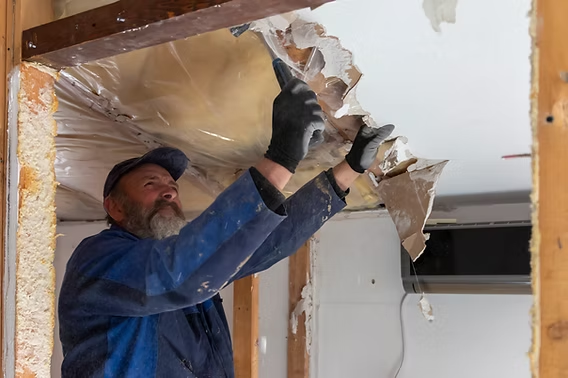

Excess liability is the line that adds height. Every primary policy on your program — the general liability, the commercial auto, and the other underlying lines — carries a limit, and a large enough loss can run straight through it. Excess liability sits on top of those primary layers and responds once a covered loss exhausts the policy beneath it, giving the program more total limit than any one primary policy could carry on its own. For a restoration or radon business it is the coverage a serious reconstruction claim, a bad response-fleet accident, or a demanding contract makes necessary.
Two things about this line have to be said plainly, because both are easy to get wrong. First, on this program the form is excess, not umbrella — a deliberate choice, and a real distinction rather than a naming preference. Second, and more important here, excess adds limit, not coverage: its follow-form promise is hedged, and an excess policy that says it follows the underlying form may not follow the pollution or professional wording beneath it — which is precisely the gap that matters on a restoration or radon program, where those two lines carry the defining exposure. This page walks through how the tower is built, why excess is not umbrella, and where the follow-form gap opens.
How the limit tower is built
Think of the program as a tower rather than a stack of separate policies. At the ground sit the primary lines that do the everyday work — general liability answering third-party harm, commercial auto answering the response fleet on the road, and the other underlying coverages each carrying their own limit. Excess liability is the floor above them: it attaches at the top of a named underlying policy and adds limit from that point up, responding only after a covered loss has exhausted the primary beneath it.
Because the excess layer attaches at a specific point, the tower has to be continuous. The excess is written to sit over particular underlying policies at particular limits — its schedule of underlying insurance — and it expects those limits to be there. That is why excess is not a substitute for sound primary coverage but an extension of it: it makes a solid program taller, and it depends on the primary layers staying at the amounts it was built to attach above. The whole structure is only as good as the continuity between the layers, which is a placement question long before it is a claim one.
Excess, not umbrella: why the word matters
The trade uses "umbrella" and "excess" almost interchangeably, and on many programs the difference is quietly ignored. On this class it should not be, and this brand names the form as excess on purpose. The two are different instruments. An umbrella is generally written to be broader than the policies beneath it in some respects — it can drop down to fill certain gaps in the underlying coverage, acting as both additional limit and, in places, additional coverage. An excess policy is narrower by design: it is built to add limit above specific underlying policies and to answer on their terms, not to broaden them.
For a restoration or radon operation that distinction is not academic. The exposures that can produce the largest losses — a mold or Category 3 claim, a professional-opinion claim on a measurement, a reconstruction that fails — live in specialty lines with specialized wording, and how a top layer treats that wording is the whole question. Calling the layer "excess" and reading exactly how it follows the coverages beneath it is the honest way to describe what you are buying. An umbrella that is assumed to broaden everything, and an excess that is assumed to follow everything, can both leave the same surprise at claim time.
The follow-form gap: where the height stops being real
This is the seam that makes excess liability worth reading closely on a restoration or radon program, and it is stated here from the excess side of the line. A follow-form excess policy is one that adopts the terms of the underlying coverage it sits over, so the excess answers the way the primary does. The trouble is that follow-form is rarely total. An excess policy that says it follows form still carries its own exclusions and conditions, and — the point that matters most here — it may follow the general-liability and auto forms beneath it while not following the specialized wording of a contractors pollution liability or a professional liability policy in the same program.
On this class, that is precisely the gap that matters. The pollution and professional lines are where a restoration or radon business carries its defining exposure — the mold and Category 3 claim, the measurement opinion relied on at a closing. An excess layer that adds real height over general liability and auto but does not truly follow the pollution or professional form leaves the tallest part of the risk capped at its primary limit while everything else reaches higher. The layer can look like full higher limits and quietly not be, right where the largest loss is most likely to come from. Checking how far the follow-form promise actually reaches — and whether the pollution and professional policies are even named as underlying — is the entire reason to place this line deliberately rather than bolt it on.
The contracts that demand it
Most of the time, excess liability enters the conversation because a contract requires it. General contractors, property managers, facility owners, and program or third-party-administrator agreements routinely demand total limits above what a primary general liability and commercial auto policy carry on their own, and an excess layer is how a restoration or radon business reaches that number without tearing up the underlying program. These requirements are part of working within the claims process and the contracts the trade runs on — the environment the business operates inside, described rather than advised upon.
The right approach is to read the actual contract language rather than guess at a figure: the total limit required, which underlying lines it has to sit over, and whether the demanding party needs to be named. We build the layer to satisfy what the contract actually says, so a certificate request does not arrive asking for a limit the program cannot show. And because the same contracts often drive additional-insured and certificate obligations on the primary policies, the excess and the underlying program get read together, as one structure, against the agreements on your books.
Why restoration and radon businesses need it
The case for excess liability on this class rests on two facts about the work. The first is that the losses can be large: a reconstruction that fails, a Category 3 or mold claim, a professional-opinion claim on a measurement, or a serious response-fleet accident can each run past what a primary limit alone absorbs, and the excess layer is what stands behind the primary when it does. The second is that the work runs on other people’s contracts, and those contracts increasingly demand limits a primary program cannot reach on its own.
What makes placing it on this brand different is the follow-form discipline. Adding height is the easy part; making sure the height actually reaches over the pollution and professional lines — the ones that carry the defining exposure — is the part that takes reading the form rather than trusting the label. We build the tower so it is continuous from the primary layers up, name the underlying lines the excess has to follow, and check the follow-form reach before binding, so the limit you are paying for is limit you actually have where you are most likely to need it.
Learn more
Coverage for a restoration or radon business works as a system. Excess liability sits above the whole primary program — most directly over general liability and commercial auto, and, where it is written to, over the two lines that carry the defining exposure: contractors pollution liability for the mold, sewage, and smoke and soot your crew removes, and professional liability for the measurement opinion. The rest of the program it can extend includes bailees coverage for the customers’ contents in your care, contractors equipment for your drying and radon gear, and workers compensation for the crew. How it is written also differs by the operation across the two service pillars — Restoration Contractor Insurance and Radon Mitigation Business Insurance.
The follow-form gap: read what the excess sits over
- General Liability Insurance
- Contractors Pollution Liability Insurance
- Professional Liability Insurance
The rest of the program
- Bailees Coverage
- Contractors Equipment Insurance
- Workers Compensation Insurance
- Commercial Auto Insurance
Insurance by the operation you run
Get covered
Primary sources
Frequently asked questions about Excess Liability Insurance
What does excess liability do for a restoration or radon business?
Excess liability adds height above the limits you already carry. It sits on top of your primary general liability, your commercial auto, and the other underlying lines it is written over, and it responds once a covered loss exhausts the limit of the policy beneath it. It is bought for the large loss — the reconstruction that goes badly wrong, the response-fleet accident with serious injuries, the claim that runs past what a primary policy alone can absorb — and for the contracts that require more limit than the underlying policies carry on their own. What it does not do is add a new kind of coverage: excess adds limit, not scope, so a loss the underlying policy does not cover is not suddenly covered because an excess layer sits above it.
Is this an umbrella or an excess policy?
On this program the form is excess, not umbrella, and the distinction is deliberate. The two are often used interchangeably, but they are not the same instrument. An umbrella is typically written to be broader than the policies beneath it in some respects, sometimes dropping down to fill certain gaps. An excess policy is written to add limit above specific underlying policies and to answer on their terms, not to broaden them. For a restoration or radon operation, where the exposures that matter most sit in specialty lines with specific wording, treating the top layer as excess — and reading how it follows the layers beneath it — is the honest way to describe what you are actually buying.
What does "follow-form" mean, and why is it hedged here?
A follow-form excess policy is one that adopts the terms of the underlying policy it sits over — it "follows the form" of what is beneath it, so the excess layer answers the way the primary does. The reason we hedge it is that follow-form is rarely total. An excess policy that says it follows form can still carry its own exclusions and its own conditions, and it may not follow the specialized wording of a contractors pollution or a professional-liability policy underneath it. That is exactly the wording that carries the exposure on a restoration or radon program, so a layer that adds height over general liability and auto but does not truly follow the pollution or professional form beneath it leaves the gap precisely where the risk lives. Reading how far the follow-form promise actually reaches is the whole point of placing this line with care.
A general contractor is demanding limits higher than my primary policy — is this the answer?
Often, yes — this is the line that satisfies a limit requirement your primary policies cannot meet on their own. General contractors, property managers, facility owners, and program or third-party-administrator agreements frequently require total limits above what a primary general liability and commercial auto policy carry, and an excess layer is how you reach that number without rewriting the underlying program. We read the actual contract language — the required total limit and which underlying lines it has to sit over — and build the layer to satisfy it, rather than quoting a figure that may not match what the contract demands. The requirement is part of working within the claims process and the contracts the trade runs on, not advice about anyone else’s policy.
Does excess liability sit over my pollution and professional coverage too?
It can, but only if it is written to — and this is the question that matters most on this brand. An excess policy sits over the specific underlying lines named in its schedule. If your contractors pollution liability and your professional liability are meant to have excess limits above them, those policies have to be listed as underlying and the excess form has to actually follow their wording, not just the general-liability form. Because the pollution and professional lines are where a restoration or radon business carries its defining exposure, an excess layer that quietly covers only the general liability and auto beneath it can look like full higher limits while leaving the two most important lines capped at their primary amounts. We check what the excess actually sits over before it is bound.
Does adding an excess layer mean I can carry less on my primary policies?
No, and it is a costly assumption to make. An excess policy depends on the underlying limits staying in place — it is written to attach at a specific point, and it generally will not respond until the underlying limit is exhausted by a covered loss. If you thin out a primary policy below what the excess requires as its attachment point, you can open a gap between where the primary stops paying and where the excess begins, and that gap falls on the business. Excess is built to extend a sound primary program upward, not to prop up a thin one. We structure the primary layers and the excess together so the tower is continuous from the ground up.
Get excess limits that actually reach over the risk that matters
Tell us the contract limit you are being asked for and the lines it has to sit over, and we will build the tower continuous from the ground up — with the follow-form reach over your pollution and professional coverage read, not assumed.