
Who we insure
Restoration Contractor Insurance
Insurance for the after-the-loss operation — water, fire, smoke, mold, and storm damage mitigation, cleanup, contents pack-out, and the rebuild that follows.
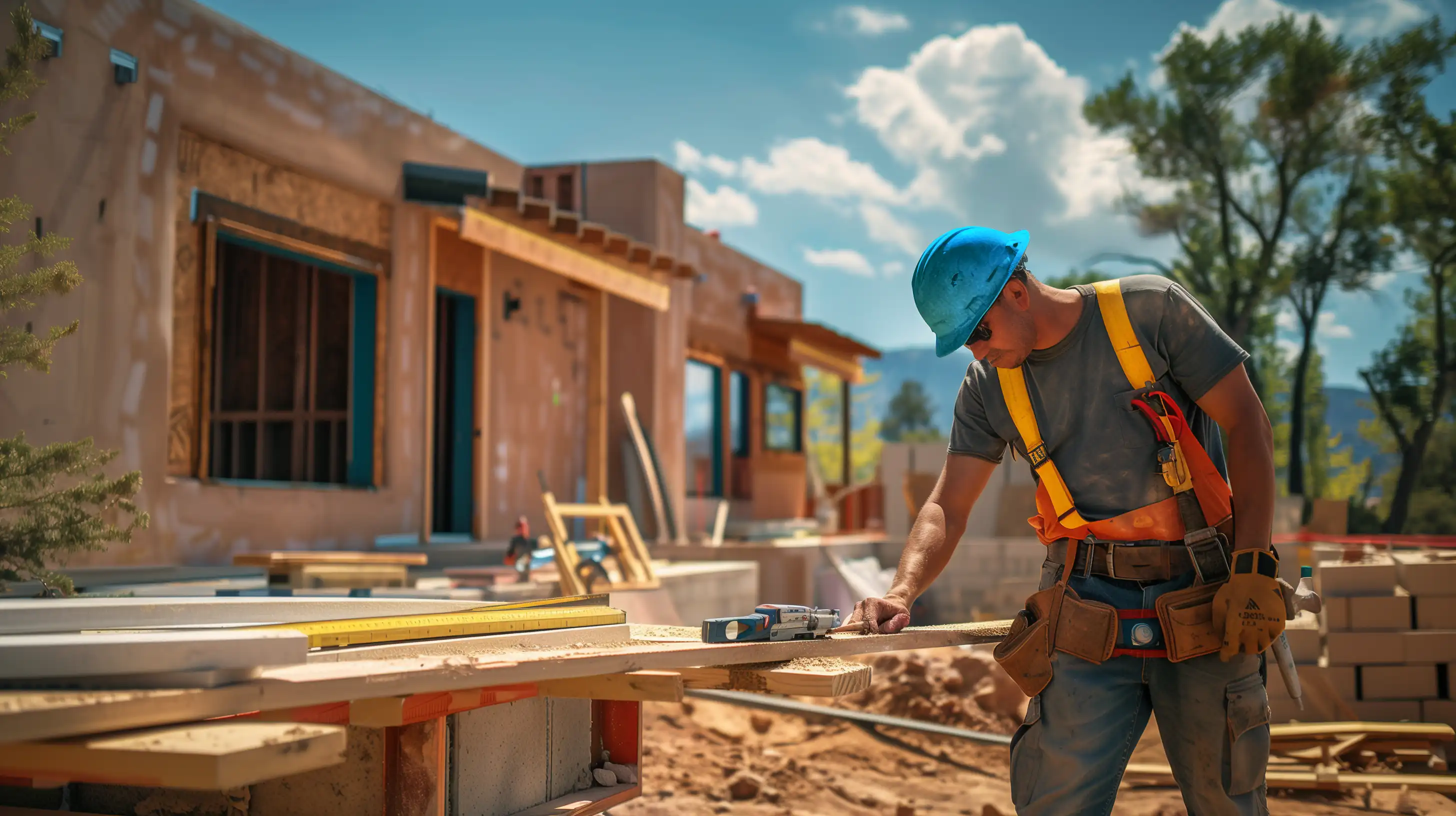

A restoration contractor works after the loss. The water has already come through the ceiling, the fire has already put smoke into the walls, the storm has already opened the roof — and your crew is the one that shows up, often at an odd hour, to a structure that is occupied, damaged, and full of the owner’s belongings. Restoration contractor insurance is the program built around that reality: emergency dispatch, contaminated and confined environments, other people’s contents in your care, a drying-equipment fleet deployed on sites you do not control, and the reconstruction that closes the file months later. A generic commercial policy misreads all of it, starting with the one exposure that defines the trade.
That exposure is the pollution exclusion. A standard general-liability policy — the base most contractors assume answers for their work — carries an exclusion that reaches the exact substances restoration exists to remove: mold, the sewage in a Category 3 water loss, and the smoke and soot residues after a fire, along with the contaminated material you haul away. The base policy, by its own terms, does not answer for the contaminant itself. That single carve-out is the reason restoration is a specialty class at all, and it is why contractors pollution liability leads every program we write. An operator who assumes general liability covers the mold discovers otherwise during a claim, not before one.
One line to place this trade against its sibling. Restoration responds to damage that already happened; the sibling discipline of radon mitigation works before the hazard — preventing a hazard from becoming harm rather than cleaning up after one. Some firms genuinely do both, adding radon services to a restoration operation, and the state layer serves both trades; but this page stays on the after-the-loss reality, and the before-the-hazard side lives on Radon Mitigation Business Insurance. What follows walks the catastrophe-response reality, then the coverage that answers it, the state and regulatory picture, what drives cost, the claims that actually happen, and what carriers look at.
What makes restoration contractor insurance different
The work does not happen at your shop. It happens at a house or a business that is mid-crisis, and almost everything distinctive about the class follows from that. Emergency dispatch means crews rolling at any hour into structures they have never seen, making fast decisions in wet, smoke-filled, or contaminated conditions. Confined and contaminated environments — a crawlspace under a sewage loss, an attic full of soot, a sealed containment during mold work — put technicians in respirators and protective equipment on nearly every job, which is a workers-compensation reality before it is anything else. And the finished, occupied structure around your crew is full of surfaces and belongings that are not yours, so third-party property damage is a constant companion to the work.
Then there is the part outsiders miss: a restoration business does not just work on the property, it works within a claims economy. Most of the volume arrives insurer-funded, and the property owner’s carrier sets the scope you are paid on — the carrier’s scope of repair, not your estimate, is what your receivables run against. The carrier also draws the line between a sudden loss and progressive damage — the slow leak treated as excluded maintenance — and that determination shapes which jobs arrive funded at all. Program and TPA relationships route much of the work, and the estimating platform the carrier accepts shapes how a job is priced and how fast it pays. We describe that economy because it is the environment your business operates inside; we do not advise any property owner about their claim, because that is theirs to have with their own carrier. Finally, when you rebuild what you mitigate, the file does not close when the crew leaves — a loss-driven reconstruction carries a completed-operations tail that can surface a claim months or years later. No single generic form is priced for this combination, which is why the class is written line by line.
The coverage that answers it
Contractors pollution liability — the signature. Start with the line that makes restoration a specialty class at all. A standard general-liability policy carries a pollution exclusion, and that exclusion reaches the exact substances your crews remove: mold, the sewage in a Category 3 water loss, and the smoke and soot residues after a fire, along with the contaminated material you transport and dispose of. The base policy does not answer for the contaminant itself. Contractors Pollution Liability Insurance is written to answer the environmental exposure general liability carves out — and because these forms are largely a manuscript, non-standard specialty market, how one is worded matters far more than the label on the declarations page. It leads every restoration program we place.
General liability — the operations base. General Liability Insurance answers the everyday third-party risk of working inside somebody else’s occupied structure: a building occupant who slips near your air movers, a hose run someone trips over, a finished floor a tool gouges, and the physical damage your work does to property that is not yours and is not the contaminant. It also carries the completed-operations tail on a rebuild that develops a problem after the crew has gone. It is the base a general contractor wants to see before letting you onto a reconstruction job.
Bailees coverage — the contents in your care. When you pack out a customer’s furniture, electronics, textiles, and documents and hold them at a climate-controlled storage facility, or move them in your truck, those goods are in your care, custody, and control — exactly what general liability carves out. Bailees Coverage is what answers for them, and the honest distinction between a narrower legal-liability standard and a broader all-risk bailee form is worth drawing before a pack-out, not after one.
Workers compensation — the crew. Workers Compensation Insurance answers your own technicians — in respirators in a contaminated attic, in a crawlspace on a sewage loss, or on storm work at height, often at odd hours the day after the loss. In the four monopolistic state-fund states the coverage does not come from a carrier at all, and that reality is handled plainly rather than papered over.
Contractors equipment — your own gear. Contractors Equipment Insurance covers your dehumidifiers, air movers, air scrubbers, and generators — a fleet that lives on customers’ loss sites for days or weeks at a time, not in your yard. Gear in transit, gear deployed on a property you do not control, and gear that simply walks off a site are the exposure the line is built for.
Commercial auto — the response fleet. Commercial Auto Insurance covers the trucks that roll on an emergency call, the trailers that haul drying equipment, and the box trucks that move a pack-out. One note on language this trade uses constantly: your insurance carrier is the company that writes your coverage, a different thing from a motor carrier that hauls freight for hire — we insure the fleet a restoration business runs in service of its own work, not a for-hire trucking operation.
Excess liability — the added limit. Excess Liability Insurance adds limit above the underlying lines when a general contractor, a property manager, or a large-loss contract demands more than your primary layer carries. On this brand the form is excess, not umbrella, and follow-form is not assumed — an excess policy that says it follows form may still not follow the pollution wording beneath it, which is precisely the gap that matters on a restoration program.
Professional liability — the context tail. Finally, Professional Liability Insurance appears here as context rather than a headline. The restoration side occasionally produces a judgment someone relies on — moisture mapping, or a clearance test signed after a mold remediation — and when the loss is the opinion rather than the object, general liability does not answer it. It is the signature line for the radon side of the brand; on the restoration side it is the tail a post-remediation verification can quietly produce.
State and regulatory considerations
Where you work changes what you carry, which is why the state layer runs deep. A restoration business in Texas or Florida lives with a different catastrophe profile than one in Indiana, Ohio, or Pennsylvania, and the regulatory picture varies just as much from Illinois to Colorado, North Carolina, California, New York, Iowa, and Georgia. Each of those states has its own page — the destiny is Restoration Contractor Insurance in Texas, Restoration Contractor Insurance in Florida, and so on across every state we serve — and the states we serve index routes to all of them.
Three regulatory threads shape the class. First, mold licensing: a minority of states license mold assessment or remediation as a distinct credential — the group generally understood to include Florida, Texas, New York, and Louisiana — and where such a regime exists, the credential and its insurance requirements need to be priced into a job rather than discovered after the bid. Where a state has no such program, we say so only where that is genuinely established; the absence of a rule is a claim that has to be verified like any other, not assumed from silence. Second, contractor licensing for the reconstruction side, since a loss-driven rebuild is still building work and the general-contractor or residential-builder credential a state requires travels with it. Third, disaster-response registration, which some jurisdictions require of contractors working in a declared-emergency area. We name the real regime in each state where it is verified, and we do not fabricate a board, a statute, or a number to fill the slot.
What drives the cost
We do not publish premium figures — every number belongs to your own quote once an underwriter has seen the operation. What we can do honestly is name the drivers that move it. In rough order of weight for a restoration business:
- Pollution limits and mold appetite. The limit you carry on contractors pollution liability, and whether a market has appetite for heavy mold and Category 3 sewage work, is the single largest lever on the signature line.
- Payroll and workers-compensation class codes. Restoration payroll spans several class codes, and how your crew’s hours map across mitigation, demolition, and reconstruction work drives the workers-compensation cost more than headcount alone.
- The drying-equipment fleet. The size and value of the dehumidifiers, air movers, air scrubbers, and generators you schedule sets the contractors-equipment exposure.
- Vehicle fleet count. The number and type of response trucks, trailers, and pack-out box trucks drives the commercial-auto piece.
- Revenue mix between mitigation and reconstruction. A mitigation-only shop and a mitigation-and-reconstruction shop carry different completed-operations tails, and the split moves the general-liability and excess pricing.
- Claims history. Prior pollution, liability, auto, and workers-compensation losses are read closely — restoration is a loss-severity trade, and an underwriter reads your file for how the work is actually run.
Claims scenarios
These are described qualitatively — no dollar amounts, no severity figures, and no carrier named — because the point is the shape of the exposure, not a number.
- The mold claim denied under the pollution exclusion. A crew finishes a mold remediation, a dispute follows over spread or a recurrence, and the general-liability policy the operator assumed would respond declines it under the pollution exclusion — the exact gap contractors pollution liability exists to close.
- The Category 3 water loss. What looked like a water job is sewage, and the contaminant, the disposal, and any bodily-injury allegation from exposure all fall on the pollution side rather than the base liability policy.
- Contents lost from a pack-out storage facility. A fire, water event, or theft at your climate-controlled storage facility damages a customer’s belongings held after a pack-out — goods in your care, custody, and control, and squarely a bailees exposure.
- Drying equipment gone from a loss site. A trailer of dehumidifiers and air movers deployed at a property you do not control for weeks disappears one morning, and the loss to your own gear is a contractors-equipment matter, not a liability one.
What carriers look at
Underwriters who write this class read a restoration file for how the work is actually run, not just the revenue. The realities they weigh most:
- Mitigation-only versus mitigation-and-reconstruction. Adding the rebuild adds a completed-operations tail, contractor-licensing exposure, and a different claims profile — carriers price the two operations differently.
- Mold and sewage appetite. How much of your revenue comes from mold and Category 3 work, and how you contain and document it, drives whether a market will write the pollution line and at what limit.
- Respirator and confined-space protocols. Documented respiratory-protection and confined-space entry practices are read as a proxy for how the crew is protected — and how a loss is likely to be defended. Whether you clear mold work with an independent industrial hygienist rather than self-certifying is part of the same read.
- The equipment schedule. An accurate, current schedule of the drying-equipment fleet tells an underwriter both the exposure and the discipline of the operation.
- Program and TPA relationships. The insurer programs and third-party-administrator relationships that route your work carry their own insurance and additional-insured requirements, and they signal the volume and type of loss you handle.
- The estimating platform the carrier accepts. Which estimating platform your work is priced on, and how cleanly your files reconcile against the carrier’s scope of repair, tells an underwriter how the business is run.
Why Restoration Guard Insurance
We are an independent agency that writes one world — restoration and radon mitigation — and we place coverage with the insurance carriers that actually want the work. That focus is the point. We know to ask whether you respond to water, fire, smoke, mold, and storm losses, whether you rebuild what you mitigate, and how much of your revenue is mold and Category 3 sewage, before we quote. We draw the pollution exclusion so the substance you remove is answered by contractors pollution liability rather than assumed into general liability, we set bailees coverage against the value you actually hold after a pack-out, and we schedule your drying-equipment fleet honestly. When a certificate request or a program requirement lands on your desk that you do not recognize, that is a call we take. Start with a quote, or talk it through with us first.
Learn more
Coverage for a restoration business works as a system, and it starts with the line that makes the trade a specialty class: contractors pollution liability for the mold, Category 3 sewage, and smoke and soot the standard general-liability policy excludes. Around it sit general liability for third-party injury and the rebuild tail, bailees coverage for the contents in your care, workers compensation for the crew, contractors equipment for the drying fleet, commercial auto for the response vehicles, excess liability for the added limit, and professional liability where the work produces a judgment rather than a repair.
The signature line
The rest of the program
- General Liability Insurance
- Bailees Coverage
- Workers Compensation Insurance
- Contractors Equipment Insurance
- Commercial Auto Insurance
- Excess Liability Insurance
- Professional Liability Insurance
The other side of the axis
Get covered
Primary sources
Frequently asked questions about Restoration Contractor Insurance
What does restoration contractor insurance cover?
It is the program a water, fire, smoke, mold, or storm restoration business runs on — built around the after-the-loss reality rather than a generic commercial form. The signature line is contractors pollution liability, because the standard general-liability pollution exclusion reaches the very substances the trade removes: mold, the sewage in a Category 3 water loss, and smoke and soot residues. Around it sit general liability for third-party injury and property damage inside occupied structures, bailees coverage for the customers’ contents you pack out and store, workers compensation for crews in respirators in contaminated and confined spaces, contractors equipment for the drying-equipment fleet, commercial auto for the response vehicles, and excess liability where a contract demands limits above the primary layer. The rebuild that follows the loss carries its own completed-operations tail on the general-liability side.
Does my general liability cover the mold, sewage, or smoke my crew is removing?
No — and this is the single most important thing to understand about the class. A standard general-liability policy carries a pollution exclusion, and that exclusion reaches the exact substances restoration exists to remove: mold, the sewage in a Category 3 water loss, and the smoke and soot residues after a fire, along with the contaminated material you haul away. So the base policy does not answer for the contaminant itself. That is not a defect to argue about at claim time; it is the reason a separate line exists. Contractors pollution liability is written precisely to answer the environmental exposure general liability carves out, and because these forms are largely a manuscript, non-standard specialty market, how one is written matters more than the name on the declarations page.
Do you insure the property owner’s claim, or my restoration business?
Your restoration business — always. Restoration is the trade whose entire commercial world is somebody else’s insurance claim, so it is worth being exact: we place coverage on the contractor, not on the property owner, and nothing here is advice to a property owner about their own loss, policy, or deductible. What we do describe is the environment you sell into. Most of the work arrives insurer-funded, and the property owner’s carrier sets the scope you are paid on — the carrier’s scope of repair, not your estimate, is what your receivables track against. Program and TPA relationships route much of the volume, and the estimating platform the carrier accepts shapes how a job is priced. Those are facts about your operating economy, and they belong on your policy conversation; the property owner’s claim is theirs to have with their own carrier.
Does this cover my response trucks and pack-out vehicles?
Yes — through commercial auto, which sits alongside the liability and property lines in the program. The trucks that roll on an emergency call, the trailers that haul drying equipment, and the box trucks that move a pack-out run through commercial auto the moment a loss involves a vehicle on the road. One note on language, because this trade says “carrier” constantly: your insurance carrier is the company that writes your coverage, which is a different thing from a motor carrier that hauls freight for hire. We insure the fleet a restoration business runs in service of its own work — the response and pack-out vehicles — not a for-hire trucking operation, and the two meanings of the word are worth keeping straight when you read a policy.
What happens to a customer’s belongings while they are in my storage facility?
When you pack out a customer’s furniture, electronics, textiles, and irreplaceable documents and hold them at a climate-controlled storage facility, or move them in your truck, those goods are in your care, custody, and control — and that is exactly what a general-liability policy carves out. The line that answers for them is bailees coverage. It is worth understanding the difference between a narrower legal-liability standard, which responds only when your negligence caused the loss, and a broader all-risk bailee form that answers for physical loss to the property in your care however it happened. Which one you carry, and at what limit against the value you are holding after a large pack-out, is a real underwriting choice rather than a formality.
Do I still need the full program if I only do mitigation and subcontract the rebuild?
You need a program built to what you actually do, which is the point of writing the class specifically rather than off a generic form. A mitigation-only operation still carries the pollution exposure on every mold, sewage, and smoke loss, still puts crews in respirators in contaminated spaces, still deploys a drying-equipment fleet on properties it does not control, and still packs out and stores contents — so pollution liability, workers compensation, contractors equipment, and bailees coverage all remain live. What changes when you add reconstruction is the completed-operations tail: a loss-driven rebuild can produce a claim months or years after the crew leaves, and that tail is a general-liability and excess consideration your mitigation-only peer does not carry the same way. We rate the operation in front of us, not the label.
Get restoration coverage built around the loss you respond to
Tell us what you respond to — water, fire, smoke, mold, storm — and whether you rebuild what you mitigate, and we will market it to insurers that write the class, with the pollution exposure handled, not assumed.