
Coverage line
Bailees Coverage for Restoration & Radon Contractors
The contents line. When you pack out a customer’s furniture, electronics, textiles, and documents and hold them at your storage facility or move them in your truck, those goods are in your care, custody, and control — the exact exposure a general liability policy carves out, and the one bailees coverage is written to answer.
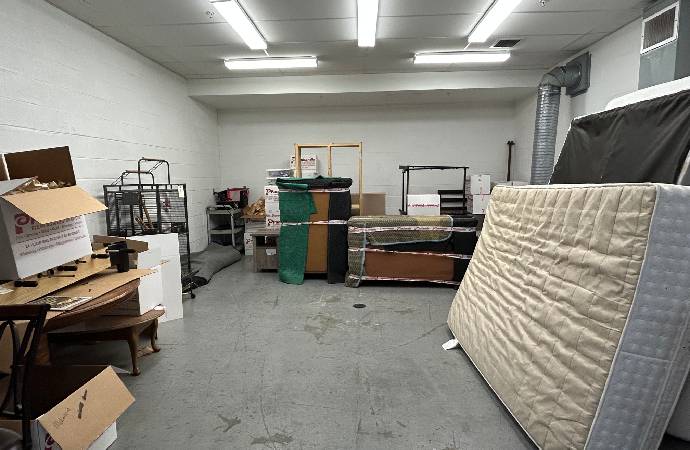

Bailees coverage is the line that answers for property that is not yours but is in your keeping. For a restoration contractor that means one thing above all: the customers’ contents. When a loss forces a pack-out — when the furniture, electronics, textiles, artwork, and documents have to come out of a damaged structure so the drying and the rebuild can happen — those belongings go into your truck, sit at your storage facility, and stay in your care for as long as the reconstruction takes. They are not your property. But the moment they leave the loss site in your hands, they are your responsibility, and if they are damaged, lost, or stolen while they are with you, that exposure lands on your business.
This is the single closest point where a restoration business brushes up against the property owner’s world, so it is worth being precise about whose exposure this is. We insure the contractor. The belongings belong to the customer, and their loss runs on the claims economy your business sells into — most restoration work arrives insurer-funded, and the property owner’s carrier sets the scope you are paid on for the repair itself. But the contents in your truck and at your storage facility are a separate responsibility that rides on your operation, and bailees coverage is what answers for them. Not advice to a property owner about their own loss — coverage on your business, for the goods that are in your care, custody, and control while they are in your hands.
The contents in your care: the pack-out, your truck, your storage facility
A pack-out is a distinct operation inside restoration, and it creates a distinct exposure. A water, fire, or smoke loss makes a home or a business unusable while the structure is dried, cleaned, and rebuilt, and the contents have to be removed to be protected — and often to be cleaned and deodorized themselves. Your crew inventories the belongings, packs them, loads them into your truck, and moves them to your climate-controlled storage facility, where they are held for the weeks or months the reconstruction runs. Then, when the structure is ready, the whole inventory comes back and is reinstalled.
At every leg of that journey the goods are in your care, custody, and control. Staged at the loss site, in transit in your truck, held at your contents storage facility, and on the return trip — the belongings never stop being your responsibility until they are back in the customer’s hands. That is what a bailee is: the party holding someone else’s property. And the exposure has real teeth, because the contents in a pack-out are frequently the irreplaceable ones — documents, electronics, textiles, the things a customer most fears losing. A fire at your storage facility, a theft, water damage, a moving accident: any of these is a loss to property that is not yours but is in your keeping, and that is precisely what bailees coverage answers.
The carve-out mirror: why general liability does not answer
Here is the seam that makes this line necessary, and it is the exact mirror of a carve-out on your foundation policy. A standard general liability policy contains a care, custody, or control exclusion — it does not pay for damage to personal property that is in your care, custody, or control. The customers’ contents in a pack-out are the textbook illustration of that exclusion. So the same policy that answers when your crew damages the building itself, or injures a third party on the job, specifically removes the belongings you are holding.
That is not a hole to paper over at claim time; it is the reason bailees coverage exists as its own line. General liability answers the harm you cause to others and their premises; bailees coverage answers the goods that are in your keeping. Read the two together and the division is clean: the wall your ladder punches is general liability, and the antique dresser in your storage facility is bailees. An operator who assumes general liability reaches the pack-out finds the gap during a loss — which is exactly the moment a customer is least forgiving about it.
Legal liability versus all-risk: the form that decides who pays
Not every bailee form answers the same losses, and the difference decides who pays when contents are damaged. The honest distinction is between a legal-liability bailee form and a broader all-risk one, and it is worth understanding before you sign a pack-out contract.
A legal-liability bailee form answers only when your business is legally liable for the damage — that is, when your own negligence caused the loss to the goods. If a customer’s belongings are destroyed in a fire at your storage facility that was not your fault, a strict legal-liability form may leave no recovery, because the trigger is your liability, not the damage itself. A broader all-risk bailee form answers for direct physical loss to the property in your care regardless of fault, up to the terms of the form — here the goods themselves are the thing insured. The gap between the two shows up in exactly the losses where fault is unclear or absent, which are common in contents storage: fire, theft, and water damage rarely come with a clean negligence finding attached. Customers, and the insurer programs and third-party-administrator relationships that route restoration work, frequently expect the broader form. Which one is actually attached to your policy — and whether it carries sub-limits by location or by transit — is what we read against how your operation runs, rather than discovering the standard at a loss.
The ownership line: their contents versus your gear
Two kinds of property move on the same trucks and sit at the same loss sites, and they are answered by two different lines. The dividing question is ownership. The customers’ furniture, electronics, and documents are not yours — they are in your care, and bailees coverage answers for them. Your dehumidifiers, air movers, air scrubbers, and generators are yours — they are your property, and a loss to the gear itself is a first-party contractors equipment claim, not a bailees one. The same theft from the same truck can be two claims on two lines: the customer’s packed contents under bailees, and your drying equipment under contractors equipment. Getting the two named correctly at binding is what keeps a loss from falling into the seam between them.
Bailees also sits inside the wider set of lines this brand carves apart. It is one of the three exposures general liability specifically removes — alongside the pollutant you were hired to remove, answered by contractors pollution liability, and the professional opinion behind a measurement, answered by professional liability. Contents in your care is the third of that carve-out set, and bailees coverage is where it lands.
Where a radon business meets this line: context only
Plainly, this line leans to the restoration side. Pack-out is restoration’s world — the contents operation is a defining feature of water, fire, smoke, and mold response. A Radon Mitigation Business operation works differently: it installs mitigation systems in occupied homes and buildings, and it does not take a customer’s furniture and belongings into its care and hold them at a storage facility. A radon crew may move some stored items to reach a foundation wall or a sump area, but that is incidental handling, not a contents pack-out. So a radon mitigation business generally carries this line lightly, if at all, and leans instead on professional liability for the measurement judgment and general liability for the install work. We name that honestly rather than fit a contents form to an operation that does not run a pack-out.
What bailees coverage responds to
These are the categories underwriters expect on a restoration bailees file. They are described qualitatively and with generic carrier language — every claim is handled by the insurance carrier, never named here — with no fabricated cost or frequency figures.
- Contents damaged in transit. The customers’ belongings harmed while they are loaded in or moving in your truck between the loss site and your storage facility.
- Contents damaged or lost in storage. Fire, theft, or water damage to packed belongings held at your storage facility for the length of the reconstruction — the losses where a legal-liability form and an all-risk form part ways.
- Contents damaged at the jobsite. Belongings harmed while they are staged, handled, or being packed and unpacked at the loss site by your crew.
- Contents damaged on the return. Loss to the inventory on the trip back and during reinstallation after the structure is rebuilt.
- The bailee’s legal exposure. The liability your business carries for property that is not yours but is in your care, custody, and control — the exposure general liability specifically excludes.
How bailees coverage is structured
Bailees coverage is usually written around the value of the contents you can have in your care at one time and the way those goods move through your operation — staged at a loss, in transit, and held in storage — rather than around a single fixed idea of a pack-out. The right structure follows the real work: whether you run frequent large pack-outs or occasional small ones; how long contents sit in storage during a typical reconstruction; whether you hold belongings at your own facility, and how it is secured; and whether your contracts or the insurer programs you work under call for the broader all-risk form rather than a legal-liability standard — the program and contract terms that especially drive the form and the limits. Rather than quote a number, we read how contents actually flow through your business and build the coverage — and the legal-liability-versus-all-risk decision — to match. Where the exposure is your own equipment rather than the customers’ goods, that is what contractors equipment is for; where the loss is the harm your crew causes the building or a third party, that is general liability.
Why Restoration Guard Insurance
We are an independent agency that writes one world — restoration and radon mitigation — and we place coverage with insurance carriers that actually want the work. That focus is the point on a line like this one, where the details decide the outcome. We know to ask whether you run pack-outs, how long contents sit in your storage facility, and whether your contracts or programs expect an all-risk bailee form before we quote; to draw the care, custody, or control seam so the contents general liability excludes are answered rather than assumed; and to keep the ownership line clean so the customers’ belongings and your own drying gear land on the right lines. When a pack-out contract lands with a contents requirement you do not recognize, that is a call we take. Start with a quote, or talk it through with us first.
Learn more
Coverage for a restoration business works as a system. Bailees coverage pairs most directly with the line that carves it out — general liability, whose care, custody, or control exclusion removes the contents in your keeping — and with contractors equipment across the ownership line, since their contents and your gear ride the same trucks. It is one of the three exposures general liability excludes, alongside contractors pollution liability for the substance you remove and professional liability for the measurement opinion. The contents move on your commercial auto fleet, and excess liability sits above the program when a contract demands limits above your primary layer. How coverage is written also differs by the operation across the two service pillars — Restoration Contractor Insurance and Radon Mitigation Business Insurance.
The carve-out triangle — the three lines general liability excludes
- General Liability Insurance
- Contractors Pollution Liability Insurance
- Professional Liability Insurance
The ownership line and the rest of the program
- Contractors Equipment Insurance
- Commercial Auto Insurance
- Workers Compensation Insurance
- Excess Liability Insurance
Insurance by the operation you run
Get covered
Primary sources
Frequently asked questions about Bailees Coverage
What does bailees coverage do for a restoration business?
Bailees coverage answers for the customers’ personal property that is in your care, custody, and control — the furniture, electronics, textiles, artwork, and documents you pack out of a damaged structure and hold while the repair happens. The goods are not yours, but they are your responsibility the moment they leave the property in your truck, sit at your storage facility, or are staged at the jobsite. If they are damaged, lost, or stolen while they are in your hands, that is the exposure bailees coverage exists to answer. It is a different thing from your own equipment, which is a first-party contractors equipment matter, and a different thing from the third-party bodily injury and property damage general liability handles — bailees is specifically about property that belongs to someone else and is in your keeping.
The belongings are the customer’s — why is this on my policy and not theirs?
Because the exposure is yours, not the property owner’s. This page is about the coverage on your business, not advice to any property owner about their own loss. The moment you take a customer’s contents into your care for a pack-out, the law treats you as a bailee — the party holding someone else’s property — and if those goods are damaged in your keeping, the claim comes at your business. The property owner’s carrier sets the scope you are paid on for the restoration work itself, but the contents in your truck and at your storage facility are a separate responsibility that rides on your operation. The right way to say it is simple: the goods are in your care, custody, and control, and bailees coverage is what answers for them if they are damaged in your hands.
Doesn’t my general liability policy already cover the contents I pack out?
No — and this is the single most important thing to understand about the pack-out. A standard general liability policy contains a care, custody, or control exclusion: it does not pay for damage to personal property that is in your care, custody, or control. The customers’ contents in a pack-out are the textbook example of exactly that. So the base policy that answers when your crew damages the building carves out the belongings you are holding. That gap is not a defect to argue about at claim time; it is the reason a separate line exists. Bailees coverage is written precisely for the property general liability removes — property that is not yours but is in your keeping.
What is the difference between a legal-liability bailee form and an all-risk one?
It is the difference that decides who pays. A legal-liability bailee form answers only when your business is legally liable for the damage — that is, when your negligence caused the loss to the goods. A broader all-risk bailee form answers for direct physical loss to the property in your care regardless of whether you were at fault, up to the terms of the form. The distinction matters most in the losses where fault is unclear or absent: a fire at your storage facility, a theft, water damage to stored contents. Under a legal-liability form, a customer whose belongings are destroyed in a fire that was not your fault may have no recovery from your policy; under an all-risk form, the goods themselves are the thing insured. Customers, and the programs that route work to you, often expect the broader form. Which one is actually attached to your policy is worth reading before a loss, not during one.
Where are the contents covered — my truck, my storage facility, the jobsite?
A properly written bailees form follows the goods through the whole pack-out journey, not just one location. That means the contents are meant to be covered while they are staged at the loss site, while they are in transit in your truck, and while they are held at your storage facility for the duration of the rebuild — and again on the return trip when they go back after the repair. The forms differ in how they treat each leg and whether there are sub-limits by location or by transit, which is exactly the kind of detail we read against how your operation actually runs. A business that holds contents for months during a long reconstruction has a different exposure than one that stores them for days, and the coverage should reflect it.
Does a radon mitigation business need bailees coverage?
Usually not the way a restoration contractor does, and it is worth being honest about that. Bailees coverage is built for the contents pack-out, and pack-out is restoration’s world — a radon mitigation business installs systems in occupied homes and buildings but does not take a customer’s furniture and belongings into its care and hold them at a storage facility. A radon crew may move stored items to reach a foundation wall or a sump area, but that is incidental handling, not a contents operation. So this line leans to the restoration side, and a radon business generally carries it lightly, if at all. The lines a radon operation leans on are professional liability for the measurement judgment and general liability for the install work. We match the coverage to the operation rather than selling a contents form to a business that does not run a pack-out.
Get the customers’ contents covered before the next pack-out
Tell us how your pack-outs run and what your contracts expect, and we will market bailees coverage to insurers that write the class — with the care, custody, or control seam handled, not assumed.