
Coverage line
Contractors Pollution Liability Insurance for Restoration & Radon Contractors
Mold is a pollutant under the standard general-liability pollution exclusion — and so are the sewage in a Category 3 water loss and the smoke and soot residues after a fire. This is the line written to answer the substance you were hired to remove, and it is largely a manuscript market rather than a standard form.
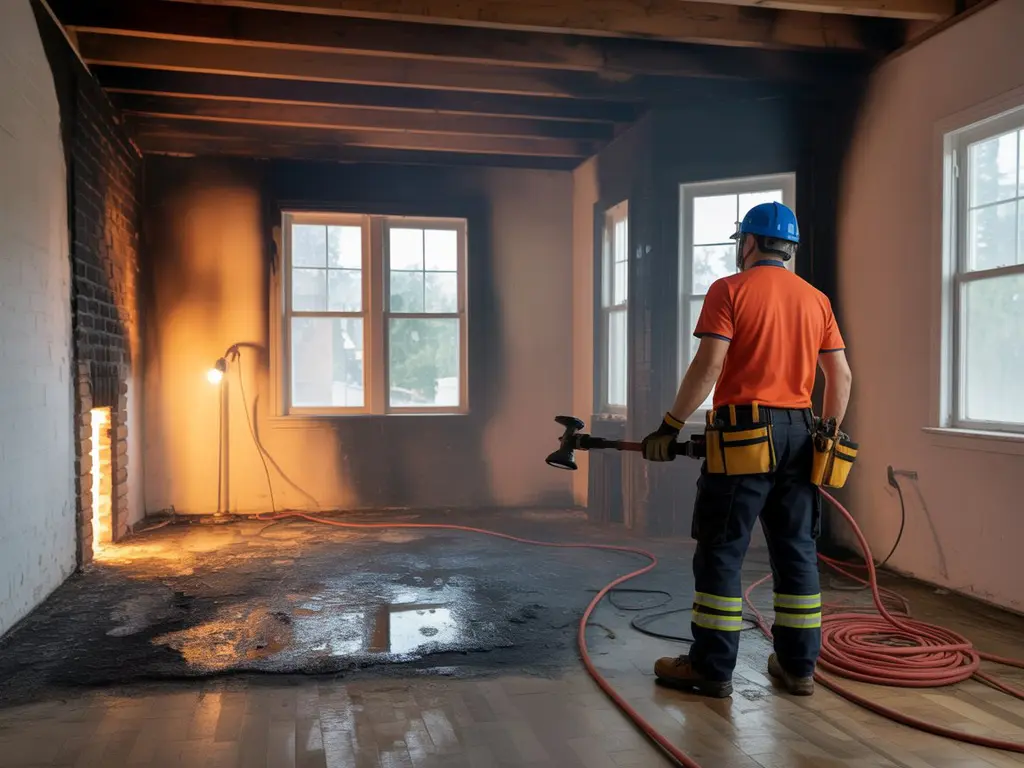

Contractors pollution liability is the line that turns restoration from a general-contracting risk into a specialty class, and it does so because of a single clause most operators never read until a claim forces them to. The standard general liability policy contains a pollution exclusion, and that exclusion reaches the exact substances a restoration crew is hired to remove. Mold. The sewage in a Category 3 water loss. The smoke and soot residues after a fire. The base policy, by its own terms, does not answer for the contaminant itself — which means the one thing that defines the work is the one thing general liability leaves out.
This page says that plainly, because pretending otherwise is how a program looks fine right up until the day it does not. Contractors pollution liability is written to answer precisely the environmental exposure general liability carves out, and it is largely a manuscript, non-standard market rather than a standard form, so how yours is worded is the whole question. It is also a coverage on your business — does your general liability answer the pollutant, and where it does not, does contractors pollution liability — not advice to any property owner about their own loss. What follows is what the pollution exclusion takes out, what this line puts back, and where the seam between the two actually falls.
Mold is a pollutant: the definitional surprise in your general liability
Start with the surprise, because everything else follows from it. Under the pollution language on a standard general liability form, mold and microbial contamination are treated as pollutants — an irritant or contaminant the policy is built to exclude, sitting alongside the smoke, fumes, and chemical contaminants most people picture when they hear the word. To a restoration contractor that is a strange sentence to read, because mold is not an incidental hazard of the work; it is the work. A crew called to a mold job is being paid to find, contain, and remove the exact material the base policy has quietly carved out.
It is worth being precise about why this matters and why it is not something to argue at claim time. The pollution exclusion is not a drafting accident or a gap a good broker can talk a carrier out of after the fact — it is a deliberate, standard feature of the general liability form, and it is the reason a separate market exists at all. When mold spreads behind a wall you opened, cross-contaminates a clean part of the structure during demolition, or returns after a remediation you signed off on, the resulting bodily-injury or property-damage claim runs straight into that exclusion. Contractors pollution liability is the line that answers what general liability, on purpose, does not. We name the exclusion by what it does rather than by a clause letter, because the specific wording varies by form — but the shape of it does not: the substance you were hired to remove is carved out of general liability.
Category 3 water, smoke and soot, and the material you haul away
Mold is the headline, but it is not alone inside the exclusion. A restoration program has to reckon with the full range of contaminants the trade handles, and several of them are pollutants under the same logic.
Category 3 water — the sewage. A Category 3 water loss is not clean water; it is grossly contaminated, and in practice that means sewage, bacteria, and the pathogens that ride with a sewer backup or a flood that has passed through contaminated ground. Your crew is standing in it, pumping it out, and hauling the material it soaked. That is exactly the kind of contamination a general liability pollution exclusion is written to reach — so the water loss that looks like a plumbing problem is, for coverage purposes, a pollution exposure.
Smoke and soot residues. After a fire, the loss is not only what burned; it is the smoke, soot, and combustion residue that migrates through the structure, coats surfaces, and settles into the ductwork. Cleaning it is a core restoration service, and a claim that the residue was spread rather than removed, or that a sensitive occupant was harmed by combustion byproducts, lands in pollution territory rather than ordinary workmanship.
The material you transport and dispose of. Here is the exposure operators most often forget. The moment your crew bags mold-laden drywall, loads soot-covered contents, or pumps Category 3 water into a truck, you have taken custody of a pollutant that is now moving down a public road toward a disposal site. That transportation and disposal exposure — a spill in transit, a contaminant released at a transfer station, a disposal that is later challenged — is a pollution matter, not a general liability one, and a well-drawn contractors pollution form is where it is answered. How far that grant reaches is a manuscript question, which is precisely why the wording is worth reading before a loss rather than during one.
Jobsite pollution versus completed-operations pollution
Contractors pollution liability answers pollution in two modes, and a restoration program needs both because a loss is rarely finished when the crew drives away.
Jobsite pollution is what happens while the work is in progress — a contaminant spread beyond where it started, cross-contamination carried on foot or on equipment into a clean part of the building, a release during demolition, or drying that pushes spores somewhere they were not before. It is the pollution exposure of the active job, and it is the one most operators picture first.
Completed-operations pollution is the mode that surfaces after the crew has left, and it is the one that quietly does the most damage to an underinsured contractor. Mold that returns behind a wall the crew closed up. A contaminant that was present but not fully addressed. A condition tied to a remediation that was signed off months earlier and only becomes a claim when someone gets sick or a buyer’s inspector finds it. Because a loss-driven job can generate a pollution claim long after it closes, the completed-operations side of the form is not optional on a restoration program — and, as with everything in this manuscript market, how the tail is structured varies by the specific policy.
A manuscript market: why there is no standard form to name
General liability has a standard industry form, so a broker can speak about it in shorthand and know roughly what the policy says before it is issued. Contractors pollution liability does not work that way, and the honest thing is to say so. It is largely a manuscript, non-standard market: there is no single industry form to point to, and how a given policy is worded is the whole question — which is why we do not cite a form number that does not exist.
That non-standard reality is not a weakness to hide; it is the reason the coverage is worth placing with care. Because each underwriter builds the grant differently, the questions that decide a claim are wording questions: what the policy defines as a covered pollution condition, whether and how mold and microbial matter are inside the grant, whether transportation and disposal are covered, how the completed-operations tail is handled, and what sits in the exclusions. Two policies that both say "contractors pollution liability" on the declarations can answer the same mold loss very differently. Rather than assume a form, we read the one on offer against the actual operation — the losses you respond to, the material you haul, and the environmental remediation you perform — and place it where the wording fits the work.
Where general liability stops and this line begins
This is the seam the whole brand is built on, and it is worth stating cleanly from the pollution side. General liability answers the third-party harm you cause; contractors pollution liability answers the substance you were hired to remove. The general liability policy responds when your crew injures a bystander or damages property that is not the contaminant — a slip near the air movers, a tool through a finished wall. The moment the loss is the pollutant itself — the mold, the sewage, the soot, the material in transit — the pollution exclusion turns general liability off, and this line is where the exposure is answered.
It sits in a family. General liability carves out three things a restoration business routinely touches, and each has its own line: the substance you remove runs here, to contractors pollution liability; the professional opinion behind a measurement or a clearance decision runs to professional liability; and the customers’ contents in your care during a pack-out run to bailees coverage. Those three are the carve-out triangle, and pollution liability is its restoration spine. Working out which line answers which loss before a claim — rather than discovering the exclusion the hard way — is most of what a specialty program is for.
One note on how the work reaches you. Most restoration work arrives insurer-funded, and the property owner’s carrier sets the scope you are paid on — but whether the pollutant you removed is answered on your program is a separate question about your coverage, not the property owner’s. We keep those two things apart, because conflating them is exactly how a contractor assumes a pollution exposure is handled when it is not.
Environmental remediation, consulting, and the wider exposure
Contractors pollution liability is the environmental line, and its reach is wider than water-and-fire restoration. It is written for environmental contractors and environmental remediation work as squarely as it is for a mitigation crew — microbial remediation, environmental cleanup, and the abatement-adjacent work that lives next door to restoration all sit inside the same environmental exposure. Where a business acts as an environmental consultant — producing an opinion on a contamination condition, a remediation protocol, or a clearance — the pollution exposure runs here, and the opinion exposure runs alongside it in professional liability, because a judgment someone relies on is a different animal from a physical remediation.
The point of naming the environmental breadth is that the exposure does not stay neatly inside one job description. A restoration contractor who takes on a heavier microbial or environmental cleanup, or who advises on a contamination condition, has moved into environmental-contractor territory whether or not the business card says so — and the general liability pollution exclusion follows them there. Placing the environmental exposure honestly against the manuscript market is how the coverage keeps pace with the actual work.
What contractors pollution liability responds to
These are the categories underwriters expect on a restoration or environmental file. They are described qualitatively and with generic carrier language — every claim is handled by the insurance carrier, never named here — with no fabricated cost or frequency figures.
- Microbial and mold contamination. Bodily injury or property damage tied to mold and microbial matter — spread during the work, cross-contaminated into a clean area, or returning after a remediation — the exposure the general liability pollution exclusion carves out.
- Category 3 water and bacterial contamination. The sewage, bacteria, and pathogens in a grossly contaminated water loss, treated as a pollution exposure rather than ordinary water damage.
- Smoke, soot, and combustion residues. The migration and cleanup of fire byproducts through a structure and its ductwork, where a claim turns on contamination rather than workmanship.
- Transportation and disposal. A pollution condition arising from the contaminated material your crew hauls away — a spill in transit or a challenged disposal — while it is in your custody and moving off site.
- Completed-operations pollution. A pollution claim that surfaces after the job is finished, tied to work your crew completed and left behind.
- Environmental remediation and consulting exposure. The pollution exposure of environmental contractors and environmental cleanup work, and of an opinion on a contamination condition where the business acts as an environmental consultant.
Why Restoration Guard Insurance
We are an independent agency that writes one world — restoration and radon mitigation — and pollution liability is the line that world turns on. That focus is the point. We know to ask whether you respond to water, fire, smoke, and mold losses, whether you haul and dispose of contaminated material, and whether your work crosses into environmental remediation, before we quote; to treat the manuscript market as a wording problem rather than a shelf product, reading what a given form actually grants against the losses you handle; and to keep the pollution exposure separate from the professional opinion behind a measurement and the customers’ contents in your care, so each is answered by the line built for it. The base general liability policy carves the pollutant out on purpose — our job is to make sure the line that answers it is written to the work you actually do. Start with a quote, or talk it through with us first.
Learn more
Coverage for a restoration or radon business works as a system. Contractors pollution liability is one corner of the triangle general liability carves out — it pairs most often with professional liability for the measurement or clearance opinion and bailees coverage for the customers’ contents in your care, all three sitting against the base general liability policy — plus contractors equipment for your drying and radon gear, workers compensation for the crew, commercial auto for the response fleet, and excess liability when a contract demands limits above your primary layer. How it is written also differs by the operation across the two service pillars — Restoration Contractor Insurance and Radon Mitigation Business Insurance.
The carve-out triangle: what general liability excludes
The rest of the program
- Contractors Equipment Insurance
- Workers Compensation Insurance
- Commercial Auto Insurance
- Excess Liability Insurance
Insurance by the operation you run
Get covered
Primary sources
Frequently asked questions about Contractors Pollution Liability Insurance
Does general liability cover the mold, sewage, or smoke my crew is removing?
No — and it is the single most important thing to understand about a restoration contractor’s program. A standard general liability policy carries a pollution exclusion, and that exclusion reaches the very substances the trade exists to remove: mold, the sewage in a Category 3 water loss, and the smoke and soot residues after a fire, along with the contaminated material you haul away. So the base policy does not answer for the contaminant itself. That is not a defect to argue about at claim time; it is the reason contractors pollution liability exists. This line is written to answer precisely the environmental exposure general liability carves out. It is a coverage on your business, not advice to any property owner about their own loss.
Is mold really treated as a "pollutant"?
Yes, and it surprises operators every time. Under the pollution language on a standard general liability form, mold and other microbial contamination are treated as pollutants — an irritant or contaminant the policy is built to exclude. The same logic reaches bacteria and the sewage in a Category 3 loss, and the smoke, soot, and combustion residues after a fire. The restoration trade spends its days on exactly these substances, so the exposure that most defines the work is the exposure the base policy most deliberately leaves out. Naming that honestly is the point of a purpose-built line.
What is the difference between jobsite pollution and completed-operations pollution?
They are the two modes contractors pollution liability answers. Jobsite pollution is what happens while the crew is on site and working — a contaminant spread beyond where it started, cross-contamination into a clean part of the structure, or a release during demolition or drying. Completed-operations pollution is what surfaces after the crew has left: mold that returns behind a wall, a contaminant that was not fully addressed, or a condition tied to work that was finished months earlier. A restoration program needs both, because a loss is not truly closed when the trucks leave — the pollution tail can run long, and the form has to reach a claim that arrives well after the job.
Is contractors pollution liability a standard ISO form?
Largely not, and we say so rather than imply otherwise. Contractors pollution liability is largely a manuscript, non-standard market — different underwriters build it differently, and there is no single industry form to point to the way there is for general liability. That means the wording is the whole question: what counts as a covered pollution condition, how mold and microbial matter are treated, whether transportation and disposal are inside the grant, and how the completed-operations tail is handled all vary by the specific form. Because there is no standard to fall back on, reading the actual policy before a loss matters more here than almost anywhere else in the program.
Does it answer the contaminated material my crew hauls away and disposes of?
That is one of the exposures the line is built for, and it is easy to miss. The moment your crew bags mold-laden drywall, pumps out Category 3 water, or loads soot-covered contents and hauls them off, you have a transportation and disposal exposure for a pollutant that is now in your custody and moving down a public road to a disposal site. A standard general liability policy excludes it. Contractors pollution liability is where that transported-and-disposed exposure is answered — though how far the grant reaches depends on the manuscript wording, which is exactly why the form is worth reading.
We do environmental remediation and consulting, not just restoration — does this line fit?
Yes, and this is its natural home. Contractors pollution liability is the environmental line, and it is written for environmental contractors and environmental remediation work as squarely as it is for water-and-fire restoration. If your business handles microbial remediation, environmental cleanup, abatement-adjacent work, or acts as an environmental consultant producing an opinion on a contamination condition, the environmental exposure runs through this line — and where the work produces a professional opinion rather than a physical remediation, professional liability picks up alongside it. We place the environmental exposure honestly against the manuscript market rather than assuming a general liability policy that specifically excludes it.
Get the pollution line written to the substance you actually remove
Tell us the losses you respond to and the material you haul, and we will place the environmental exposure against the manuscript market — read against the work, not assumed into a general liability policy that excludes it.