
Coverage line
Professional Liability Insurance for Restoration & Radon Contractors
A radon test is a professional opinion with a number on it, and somebody relies on that number. This is the line that answers the judgment of your report — the measurement, the clearance decision, the protocol chosen — where general liability answers only the work of your hands.
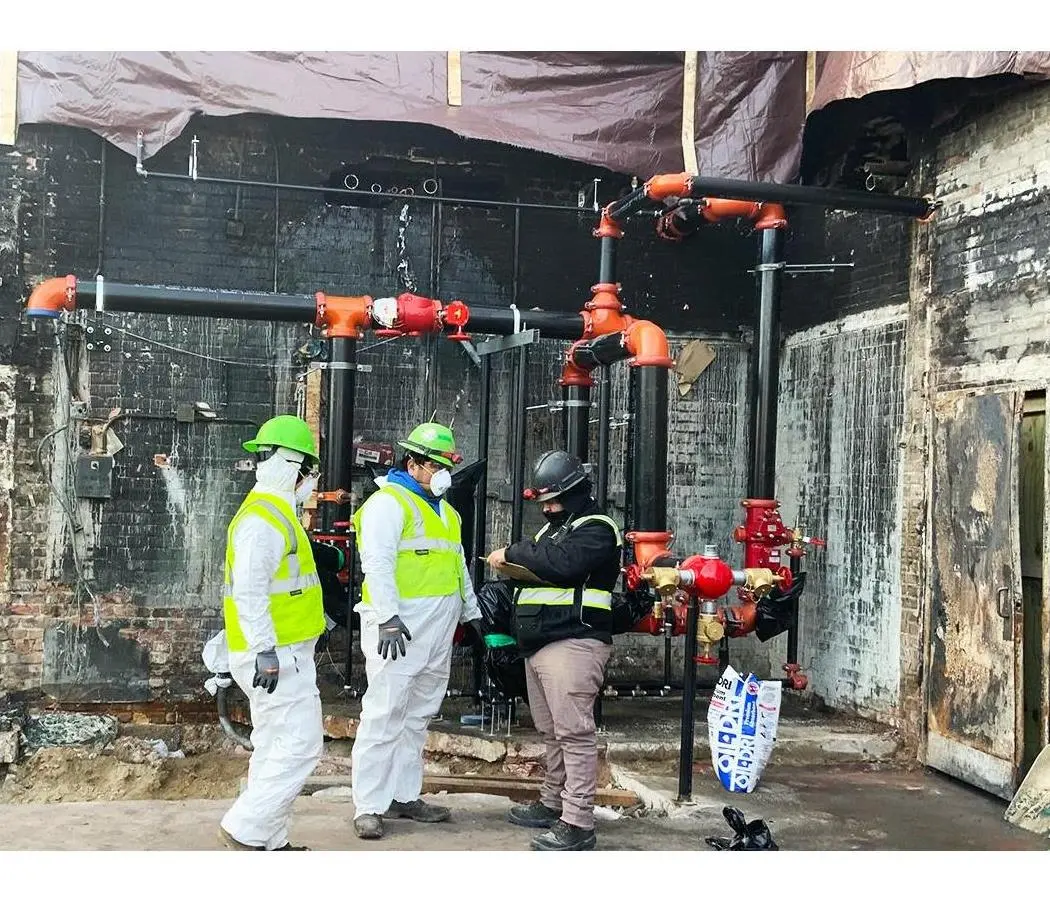

Professional liability is the coverage that answers a different kind of loss than the rest of your program. It is not about the harm your crew’s hands can do to a building or the people in it — that is general liability. It is about the judgment your business is paid to produce: the opinion, the measurement, the number, the sign-off that a customer, a builder, or a party to a real-estate transaction relies on. For a radon business, that judgment is the whole product. You are hired to produce a result and to stand behind it, and the errors-and-omissions exposure — a missed elevation, a questioned protocol, a clearance called too early — is not a side risk. It is the central one.
This is the defining line for the radon side of this brand, and it reaches restoration wherever the work yields an opinion rather than a repair. This page draws that line honestly: what professional liability answers that general liability does not, how a radon measurement becomes an exposure the moment someone relies on it, where it touches the restoration side, and — because it matters — the fact that there is no standard form written for this class, so how the coverage is arranged is worth understanding before a claim rather than during one.
A radon test is a professional opinion with a number on it
Start with what a radon business actually sells. It is not a pipe in a wall or a fan on a roof — those come later, and only sometimes. What a measurement business sells first is a number: a reading that says how much radon is present, produced under a protocol, on a device placed for a duration, in a location chosen by a professional. That number is an opinion in the specific sense that matters to an insurer — it is a professional judgment your business rendered and put its name to, and other people make decisions in reliance on it.
That is what turns a measurement into a liability exposure. When your business signs a result, it is not just reporting a fact; it is asserting a professional judgment about placement, duration, device selection, interference, and interpretation. If that judgment is later challenged — a follow-up reads differently, the placement is questioned, a duration is said to have been too short, an elevated result is alleged to have been missed — the claim is against the opinion your business produced, not against any physical thing your crew installed. General liability, built to answer bodily injury and property damage from your work, does not reach a claim shaped like that. Professional liability is the line that does.
Measurement errors and omissions: the missed elevation, the protocol, the clearance
The professional exposure in a radon operation has a few recognizable shapes, and they are all about judgment rather than construction. The first is the missed elevation — a result that reads within an acceptable range when a later or more careful measurement says it should not have, and a decision that got made on the strength of the lower number. The second is protocol selection — where a device was placed, for how long, in what conditions, and whether closed-building conditions were maintained. Protocol is a professional choice, and a challenge to it is a challenge to your judgment, not to your workmanship.
The third, and often the sharpest, is the clearance decision. After a mitigation system is installed, a follow-up measurement is supposed to confirm the level has been brought down. Signing that clearance is a professional act: it says, in effect, that the system is doing its job and the space is within range. A clearance called too early, or on a measurement that did not hold, is a judgment exposure — the space was represented as clear when it may not have been. None of these are answered by the general-liability policy that covers the physical installation, because none of them are about the physical installation. They are about the opinion attached to it. That is the errors-and-omissions band, and it is exactly where professional liability lives.
When someone relies on the number
A radon measurement rarely sits on a shelf. It is produced because a decision is waiting on it, and the most common decision is a real-estate transaction. A number gets produced, and at a closing a party relies on it — proceeds, renegotiates, or requires a mitigation on the strength of what your business signed. That reliance is what gives the professional exposure its teeth: a measurement nobody acted on is an abstraction, but a measurement someone relied on at a closing is a decision with money attached to it, and a challenge to the number is a challenge to the judgment behind the decision.
It is worth being exact about the lane here, because this is the point where a restoration or radon page can drift into territory that is not ours. We insure the contractor who produced the number. This page describes your professional exposure as the business that signed the report — the reliance that a real-estate transaction places on a measurement your operation rendered. It is not advice to a buyer, a seller, or a property owner about their transaction, their claim, or their coverage; that is their world and their advisers’ job, not ours. The exposure we are underwriting is yours: the judgment your business signed, and the professional-liability coverage that answers a challenge to it. Where your own business needs to make a claim on your policy, that is the contractor’s own claim, and it is always the one we mean.
The restoration side: where the work yields a judgment
Professional liability is the radon spine, but it is honest to say it touches restoration too — in a narrower band, and only where the work produces a judgment rather than a repair. Most of a restoration contractor’s liability runs through general liability and contractors pollution liability, which answer the physical work and the contaminant respectively. But there are places where a restoration business is paid for an opinion, and those places look professional, not general.
The clearest is moisture mapping and drying documentation — the readings and the record that assert a structure has reached a dry standard and is safe to rebuild over. If that assertion is later challenged, the exposure is the judgment, not a slip or a scratch. The other is post-remediation verification — the clearance step after mold work, sometimes run to the protocol of an independent industrial hygienist, where a signature represents that a space is ready to reoccupy. A clearance signed too early after a remediation is a professional exposure in the same shape as a radon clearance: the space was represented as ready when it may not have been. These are the restoration-side threads of the same line, and they are the reason professional liability belongs in the conversation for a restoration business that does its own verification, even though the bulk of its exposure sits elsewhere.
There is no standard form for this class — and that matters
Here is the part an honest broker says out loud. There is no standard ISO errors-and-omissions form written for radon measurement or for restoration professional services the way there is a standard general-liability coverage form that most policies start from. Contractors professional and environmental coverage for this class is largely a manuscript, non-standard market — meaning the coverage is built by the individual insurer rather than assembled from a common industry form, and the wording varies materially from one to the next.
That has practical consequences you should know before you buy, not after a loss. How the professional service is defined — whether a radon measurement, a clearance decision, and a moisture assessment are all inside the grant — varies by wording. Whether professional liability is written on its own or packaged with contractors pollution liability varies, and on a radon operation the two are frequently arranged together because the exposures sit next to each other. And because these forms are typically claims-made, the reporting trigger, the retroactive date, and the continuity of coverage govern whether a claim from an earlier measurement is reached at all. None of that can be assumed from a form number, because there is no single form. It has to be read. That is the work we do before binding: reading the manuscript wording against the actual services your business performs, so the opinion you are paid to produce is inside the coverage rather than outside it.
What professional liability responds to
These are the exposures underwriters expect on a radon or restoration professional-liability file. They are described qualitatively and with generic carrier language — every claim is handled by the insurance carrier, never named here — with no fabricated cost or frequency figures.
- Measurement errors and omissions. A radon result later challenged as wrong — a missed elevation, a questioned placement or duration, an interference not accounted for — where a decision was made in reliance on the number your business signed.
- Clearance and verification judgment. A post-mitigation clearance, or a post-remediation verification after mold work, alleged to have been called too early or on a reading that did not hold, so a space was represented as ready when it may not have been.
- Protocol and professional-service allegations. A claim that the professional standard for how the work was measured, documented, or interpreted was not met — the judgment your business is paid to exercise, rather than the physical work.
- Moisture assessment and drying documentation. On the restoration side, a challenge to an assertion that a structure had reached a dry standard and was safe to rebuild over.
- Defense of professional allegations. The cost of defending a covered professional claim, which the coverage answers alongside any indemnity — often the larger part of the exposure on a judgment claim.
Limits, structure, and the claims-made trigger
Because there is no standard form, structure is a set of choices rather than a default, and the choices matter. Professional liability for this class is usually written on a claims-made basis, which means it responds to claims first made and reported during the policy period, not to work done during it. That makes two things central: the retroactive date, which sets how far back your prior measurements and clearances are reached, and the continuity of coverage, because a gap can strand exposure from work you have already done. A measurement you signed this year can be challenged years later, and whether the coverage in force then reaches back to it depends on how the claims-made structure was set.
The rest of the structure follows the operation. Whether professional liability is written standalone or packaged with contractors pollution liability; whether the professional-service definition captures radon measurement, clearance, and any restoration verification you perform; and the limits your work and your contracts call for — these are read against what your business actually does. Rather than quote a number, we read the manuscript wording and build the structure to match the services you are paid an opinion on. The physical work runs through general liability, the substance you remove through contractors pollution liability, and the customers’ contents in your care through bailees coverage, as separate lines.
Why Restoration Guard Insurance
We are an independent agency that writes one world — restoration and radon mitigation — and we place coverage with insurance carriers that actually want the work. That focus is what lets us treat professional liability as the central line for a radon business rather than an afterthought bolted onto a general-liability quote. We know to ask whether you measure, mitigate, or both; whether your clearances are signed in your own name; whether your restoration work includes moisture verification or post-remediation clearance; and how far back your prior work needs the retroactive date to reach — before we market it. And because this is a manuscript market with no standard form, we read the wording that governs the opinion you are paid to produce, so a challenge to your judgment lands inside the coverage. Start with a quote, or talk it through with us first.
Learn more
Coverage for a restoration or radon business works as a system. Professional liability answers the judgment of your report; it pairs most often with contractors pollution liability — the other spine, frequently written alongside it on a radon operation — and with general liability, which answers the physical work professional liability does not. Around them sit bailees coverage for the customers’ contents in your care, contractors equipment for your measurement and drying gear, workers compensation for the crew, commercial auto for the fleet, and excess liability when a contract demands limits above your primary layer. How it is written differs by the operation across the two service pillars — Restoration Contractor Insurance and Radon Mitigation Business Insurance.
The two lines that carry this brand
The rest of the program
- Contractors Equipment Insurance
- Workers Compensation Insurance
- Commercial Auto Insurance
- Excess Liability Insurance
Insurance by the operation you run
Get covered
Primary sources
Frequently asked questions about Professional Liability Insurance
What does professional liability cover for a radon or restoration business?
Professional liability — the errors-and-omissions line — answers the judgment your business is paid to produce, as distinct from the physical work of your hands. For a radon business that judgment is the measurement itself: a test result someone relies on, a clearance decision made after a mitigation, a protocol chosen for how and where a device was placed, and the elevated reading that should have been caught. For a restoration business it is the narrower band of the work that yields an opinion rather than a repair — moisture mapping that says a wall is dry, or a post-remediation verification signed after mold work. It does not answer the physical harm of the work (that is general liability), the pollutant you were hired to remove (contractors pollution liability), or the customers’ contents in your care (bailees coverage). The exposure is the opinion, not the object.
How is professional liability different from general liability?
General liability answers workmanship — the physical harm your operation causes: a ladder that scratches a floor, a drill that hits a pipe, a slip near your equipment. Professional liability answers the judgment behind your report — the number relied on, the clearance signed, the protocol chosen. The clean way to hold the two apart is this: general liability is the work of your hands, professional liability is the judgment of your report. A radon measurement that later reads high is not a workmanship failure of a pipe or a fan; it is a judgment exposure, and general liability does not respond to it. When the loss is the opinion rather than the object, professional liability is the line built to answer it.
Someone relied on a radon number my business signed at a closing — where does that land?
That is the classic professional-liability exposure for a radon measurement business, and it is worth being precise about what we are describing. The reading your business produced is a professional opinion, and at a real-estate closing a decision gets made in reliance on it. If the measurement is later challenged — a follow-up test reads differently, a placement or duration is questioned, an elevated result is said to have been missed — the allegation is against the judgment your business signed, and that is what professional liability answers. To be clear about our lane: we insure the contractor who produced the number. We are describing your professional exposure as the business that signed the report, not advising any buyer, seller, or property owner about their transaction, their claim, or their coverage.
Does professional liability apply to the restoration side, or only radon?
It applies to restoration too, but in a narrower band — wherever the work produces a judgment rather than a repair. The clearest cases are moisture mapping and drying documentation that assert a structure has reached a dry standard, and post-remediation verification — the clearance step after mold work, sometimes run to an independent industrial hygienist’s protocol — where a signature says a space is ready to reoccupy. If that judgment is later challenged, the exposure looks like a professional one, not a workmanship one. Most restoration liability still runs through general liability and contractors pollution liability; professional liability is the line that answers the specific places where your business is paid for an opinion, and it is the defining line for the radon side of this brand.
Is there a standard form for this coverage?
No — and saying so plainly is more useful than implying otherwise. There is no standard ISO errors-and-omissions form written for radon measurement or for restoration professional services the way there is a standard general-liability coverage form. Contractors professional and pollution coverage for this class is largely a manuscript, non-standard market, which means the wording varies materially from one insurer to the next: how the professional service is defined, whether it is packaged with contractors pollution liability, how the claims-made trigger and retroactive date are set, and what is carved back in or out. Because there is no single form to point at, the wording actually attached to your policy is what governs, and it is worth reading before a loss rather than during one.
Does professional liability replace my pollution or general liability coverage?
No — it sits alongside them, and the three answer different questions. Contractors pollution liability answers the substance you were hired to remove — mold, the sewage in a Category 3 water loss, smoke and soot residues. General liability answers the physical harm of your work to third parties and their property. Professional liability answers the judgment your business is paid to produce — the measurement, the clearance, the protocol. On a radon operation, professional liability leads and is frequently arranged together with the environmental coverage; on a restoration operation, pollution liability and general liability carry most of the exposure and professional liability answers the narrower band where the work yields an opinion. They are separate lines because they answer separate losses.
Get professional liability built around the judgment you are paid for
Tell us whether you measure radon, mitigate, verify a remediation, or all three, and we will market the manuscript wording to insurers that write the class — with the opinion you sign inside the coverage, not outside it.