

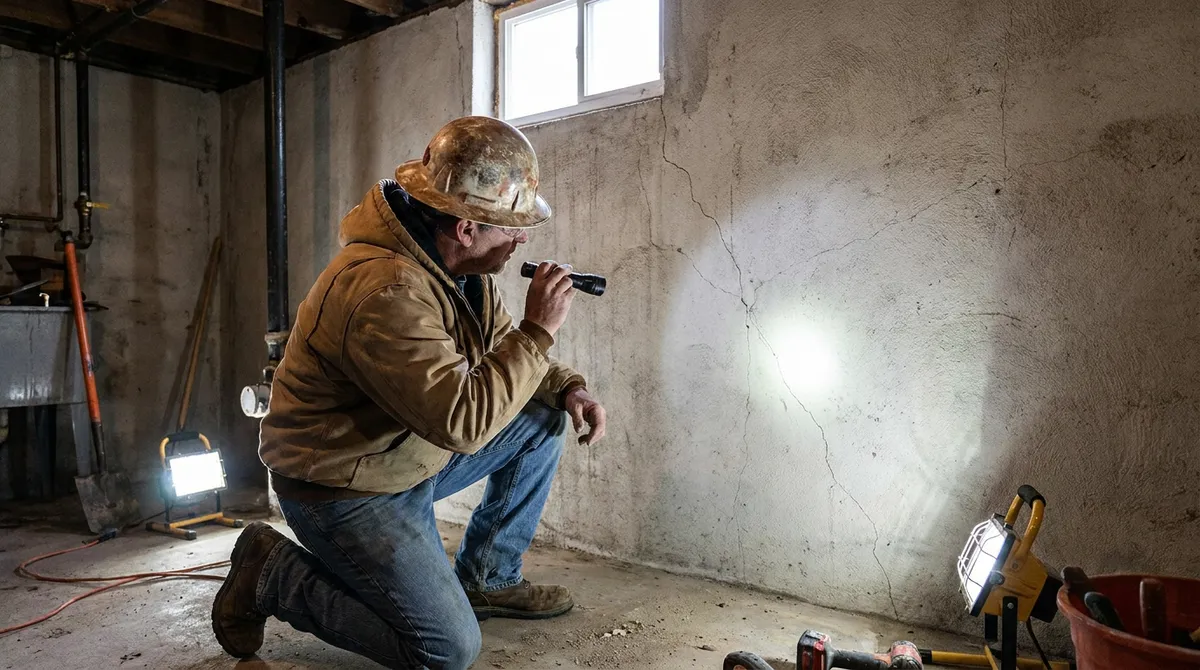
This post explains a federal guidance figure and links to the EPA pages it comes from. It is general education for business owners — not regulatory advice, and not an opinion about what any particular reading requires. What the EPA recommends is a separate question from what your state requires and from what the protocol you work under says. Where those carry real consequences for your business, read them yourself and talk to someone who can look at your actual operation.
There is one number underneath this entire trade. Every measurement you take, every system you install, every report that leaves your office with your name on it is ultimately being compared against it. Contracts reference it. Closings turn on it. Your clearance tests either clear it or they do not.
So it is worth knowing exactly what it is — not the version that circulates on job sites, and not the version a real-estate agent explains at a kitchen table. The number is a recommendation published by the EPA, and the agency’s own description of it is more careful, and considerably more interesting, than the way the market uses it.
The line your whole trade is drawn against
Here is what the EPA says, on the page it maintains for exactly this question:
“The EPA recommends homes be fixed if the radon level is 4 pCi/L (picocuries per liter) … or more.” — What is EPA’s Action Level for Radon and What Does it Mean?
That is the line. It is public, it is unambiguous, and it is the most useful threshold anybody has drawn for this trade. Nothing below is an argument against it.
But read the next sentence on the same page, because the market almost never does.
An action level is not a safety line
The EPA continues:
“Because there is no known safe level of exposure to radon, the EPA also recommends that Americans consider fixing their home for radon levels between 2 pCi/L and 4 pCi/L.” — EPA
Read those two recommendations together and the thing everyone calls a threshold stops behaving like one.
The agency is not saying that air above the line is hazardous and air below it is fine. It is saying the opposite: that no level is known to be safe, and that because of this, action is worth considering well below the point where it is recommended outright. The action level is the place a federal agency recommends acting. It is not a boundary between two kinds of air.
This distinction is invisible in ordinary use and it is the single most consequential fact about your business.
The recommendation that lives below the line
The EPA’s second band — between two and four picocuries per liter — is where the gap between the number and its meaning is widest.
In that band, the EPA’s published recommendation is that fixing be considered. In the market, that band is very often read as a pass. Those are not the same instruction, and the distance between them is occupied by your report.
Consider what that means operationally. A reading lands in the band. Your report states it accurately. The transaction proceeds, because the number cleared the line the contract cared about. Nobody did anything wrong: the reading was right, the report was right, and the threshold the parties chose was the standard public one. And the EPA’s own recommendation about that band never entered the conversation at all — not because anyone suppressed it, but because the commercial machinery only had one line in it.
Your business is the last party in that chain with the technical knowledge to know the difference. That is not a legal duty and this post is not asserting one. It is a description of where you are standing.
A different authority draws it somewhere else
If the number were a physical constant, every authority would land on it. They do not.
The EPA’s health-risk page renders the same recommendation in metric units, describing action at “4 pCi/L (150 Bq/m3) or more”. The World Health Organization, in its radon fact sheet, recommends something different in kind: that countries establish “a national annual average residential radon concentration reference level of 100 Bq/m3, but if this level cannot be reached under the prevailing country-specific conditions, the reference level should not exceed 300 Bq/m3.”
Be precise about what that comparison does and does not show. These are different instruments answering different questions — one is a recommendation to a homeowner about fixing a house, the other is guidance to national governments about where to set policy. They are not two answers to the same question, and reading them as competing numbers would be sloppy.
What they do establish is the point of this post: where the line goes is a decision, made by an institution, for reasons. The WHO calls its figures reference levels and frames them as national policy instruments, not as thresholds of safety. The EPA pairs its own figure with an explicit statement that no safe level is known. Neither authority is describing a cliff. Both are describing a judgment.
Your trade treats that judgment as a switch. It has to. But you should know it is a judgment.
Where the reliance piles up
Now the part that is actually about your business.
Because the market uses the number as a switch, all of the consequence concentrates at the switch. And a switch is a terrible place for consequence to concentrate, because the underlying quantity is continuous.
Real-World Scenario: A measurement business runs a pre-purchase test on a house under contract. The device is current on calibration, the placement follows the protocol the business uses, the conditions are documented, and the result lands just below the action level. The report says so, accurately. The sale closes. Some time later the buyer retests — different season, different conditions, different placement — and the new result lands above the line. Nothing in the first test was done wrong, and a second reading differing from a first is an ordinary feature of measuring a gas whose concentration moves. But there is now a party who paid for a house on the strength of a number, a second number that disagrees, and one business whose name is on the first one. No structure was damaged. No crew touched anything. The entire dispute is about a professional judgment expressed as a figure.
That scenario has no villain, which is exactly why it is the one worth planning for. The exposure was not created by an error. It was created by the fact that a continuous measurement was converted into a binary outcome at a line, and your business is what performed the conversion.
The same geometry shows up everywhere in the trade. The clearance test after a mitigation that reads just under. The pre-mitigation reading a seller disputes. The protocol decision — where the device sits, how long it sits, what counts as closed-house conditions — that quietly determines which number gets written down at all. Every one of those is a judgment your business made, and every one of them is only visible in retrospect if you wrote it down.
What a business built on a line carries
None of this is an argument for measuring differently. It is an argument for knowing what you are carrying.
The exposure here is not property damage and it is not bodily injury. It is a professional opinion that someone relied on. That is a specific kind of risk with a specific line built for it, and two neighbors on this site cover the ground properly rather than in passing: the radon measurement as an opinion with a number on it is the thesis, and the professional liability page carries the coverage architecture — including the fact that this class has no standard industry form behind it, which makes the wording attached to your policy the whole question.
What is worth saying here, because it belongs to the number rather than to the coverage, is what actually holds up when a reading is challenged:
- A protocol you can produce. Not one you follow — one that exists in writing, so that “why was the device there” has an answer that predates the dispute.
- A calibration history that is current. The cheapest possible evidence that the instrument was not the problem.
- Conditions recorded while the crew is still on site. Season, closed-house state, placement, duration. Reconstructed later, these are worth very little.
- A report that says what it measured, not what it concluded. The number is a measurement. “The house is safe” is not a measurement, and it is not a sentence your business should ever be on the record for — the EPA does not say it about any level, and neither should you.
Those four things do not change a single reading. They change whether a reading is defensible as a professional judgment made carefully, which is the only question that will actually be litigated. They also read well to an underwriter — though anybody who tells you a protocol file lowers your premium by a specific amount is guessing.
<rect x="22" y="54" width="150" height="96" rx="9" fill="#F1E5D6" stroke="#DCC9B0"/>
<text x="97" y="82" text-anchor="middle" font-family="Inter, system-ui, -apple-system, 'Segoe UI', Roboto, sans-serif" font-size="13" font-weight="600" fill="#12703F">Your protocol</text>
<text x="97" y="106" text-anchor="middle" font-family="Inter, system-ui, -apple-system, 'Segoe UI', Roboto, sans-serif" font-size="11" fill="#5A5048">Placement, duration,</text>
<text x="97" y="122" text-anchor="middle" font-family="Inter, system-ui, -apple-system, 'Segoe UI', Roboto, sans-serif" font-size="11" fill="#5A5048">conditions — decisions,</text>
<text x="97" y="138" text-anchor="middle" font-family="Inter, system-ui, -apple-system, 'Segoe UI', Roboto, sans-serif" font-size="11" fill="#5A5048">made before measuring</text>

<rect x="196" y="54" width="150" height="96" rx="9" fill="#ffffff" stroke="#DCC9B0"/>
<text x="271" y="82" text-anchor="middle" font-family="Inter, system-ui, -apple-system, 'Segoe UI', Roboto, sans-serif" font-size="13" font-weight="600" fill="#12703F">The measurement</text>
<text x="271" y="106" text-anchor="middle" font-family="Inter, system-ui, -apple-system, 'Segoe UI', Roboto, sans-serif" font-size="11" fill="#5A5048">What the device</text>
<text x="271" y="122" text-anchor="middle" font-family="Inter, system-ui, -apple-system, 'Segoe UI', Roboto, sans-serif" font-size="11" fill="#5A5048">returns under the</text>
<text x="271" y="138" text-anchor="middle" font-family="Inter, system-ui, -apple-system, 'Segoe UI', Roboto, sans-serif" font-size="11" fill="#5A5048">conditions you set</text>

<rect x="370" y="54" width="150" height="96" rx="9" fill="#ffffff" stroke="#DCC9B0"/>
<text x="445" y="82" text-anchor="middle" font-family="Inter, system-ui, -apple-system, 'Segoe UI', Roboto, sans-serif" font-size="13" font-weight="600" fill="#12703F">The report</text>
<text x="445" y="106" text-anchor="middle" font-family="Inter, system-ui, -apple-system, 'Segoe UI', Roboto, sans-serif" font-size="11" fill="#5A5048">The number written</text>
<text x="445" y="122" text-anchor="middle" font-family="Inter, system-ui, -apple-system, 'Segoe UI', Roboto, sans-serif" font-size="11" fill="#5A5048">down, under your</text>
<text x="445" y="138" text-anchor="middle" font-family="Inter, system-ui, -apple-system, 'Segoe UI', Roboto, sans-serif" font-size="11" fill="#5A5048">name</text>

<rect x="544" y="54" width="150" height="96" rx="9" fill="#ffffff" stroke="#DCC9B0"/>
<text x="619" y="82" text-anchor="middle" font-family="Inter, system-ui, -apple-system, 'Segoe UI', Roboto, sans-serif" font-size="13" font-weight="600" fill="#12703F">Their decision</text>
<text x="619" y="106" text-anchor="middle" font-family="Inter, system-ui, -apple-system, 'Segoe UI', Roboto, sans-serif" font-size="11" fill="#5A5048">Somebody acts on</text>
<text x="619" y="122" text-anchor="middle" font-family="Inter, system-ui, -apple-system, 'Segoe UI', Roboto, sans-serif" font-size="11" fill="#5A5048">which side of the</text>
<text x="619" y="138" text-anchor="middle" font-family="Inter, system-ui, -apple-system, 'Segoe UI', Roboto, sans-serif" font-size="11" fill="#5A5048">line it landed on</text>

<path d="M 174 102 L 192 102" fill="none" stroke="#12703F" stroke-width="2" marker-end="url(#reliance-arrow)"/>
<path d="M 348 102 L 366 102" fill="none" stroke="#12703F" stroke-width="2" marker-end="url(#reliance-arrow)"/>
<path d="M 522 102 L 540 102" fill="none" stroke="#12703F" stroke-width="2" marker-end="url(#reliance-arrow)"/>

<rect x="30" y="176" width="640" height="80" rx="10" fill="#C7683F" stroke="#12703F"/>
<text x="350" y="206" text-anchor="middle" font-family="Inter, system-ui, -apple-system, 'Segoe UI', Roboto, sans-serif" font-size="15" font-weight="600" fill="#1A1A1A">The trade uses the line as a switch</text>
<text x="350" y="230" text-anchor="middle" font-family="Inter, system-ui, -apple-system, 'Segoe UI', Roboto, sans-serif" font-size="13" fill="#1A1A1A">but the quantity underneath it is continuous — so every</text>
<text x="350" y="248" text-anchor="middle" font-family="Inter, system-ui, -apple-system, 'Segoe UI', Roboto, sans-serif" font-size="13" fill="#1A1A1A">consequence concentrates exactly at the line</text>

<path d="M 350 258 L 350 284" fill="none" stroke="#12703F" stroke-width="2" marker-end="url(#reliance-arrow)"/>

<rect x="110" y="290" width="480" height="90" rx="9" fill="#ffffff" stroke="#12703F"/>
<text x="350" y="318" text-anchor="middle" font-family="Inter, system-ui, -apple-system, 'Segoe UI', Roboto, sans-serif" font-size="15" font-weight="600" fill="#12703F">The reliance lands on your name</text>
<text x="350" y="342" text-anchor="middle" font-family="Inter, system-ui, -apple-system, 'Segoe UI', Roboto, sans-serif" font-size="12" fill="#5A5048">Not damage, not injury — a judgment somebody relied on.</text>
<text x="350" y="362" text-anchor="middle" font-family="Inter, system-ui, -apple-system, 'Segoe UI', Roboto, sans-serif" font-size="12" fill="#5A5048">The professional line is what answers for it.</text>

<text x="350" y="404" text-anchor="middle" font-family="Inter, system-ui, -apple-system, 'Segoe UI', Roboto, sans-serif" font-size="12" font-style="italic" fill="#5A5048">The air just under the line and just over it is nearly the same air.</text>
<text x="350" y="422" text-anchor="middle" font-family="Inter, system-ui, -apple-system, 'Segoe UI', Roboto, sans-serif" font-size="12" font-style="italic" fill="#5A5048">What happens next is not.</text>Before the next report goes out
The number is a recommendation, and a good one. It is also the most misunderstood object in your business, because the market has quietly converted a careful federal recommendation into a bright line the agency never claimed it was.
You cannot change that, and you should not try. Your closings will keep turning on the line. What you can do is stop being surprised by it: know that the agency recommends considering action below the line, know that no level is claimed to be safe, know that another authority draws its own line elsewhere, and know that everything expensive in your trade happens within a hair of the threshold.
Then write down why the device sat where it sat.
If you want the program underneath your radon mitigation business read against the work you actually do — the measurement, the opinion, and the name on the report — ask us for a quote.
Sources
Every figure above is quoted from the page that publishes it, and every one is linked so you can check it yourself:
- EPA — “What is EPA’s Action Level for Radon and What Does it Mean?” — the recommendation to fix at four picocuries per liter or more, the recommendation to consider fixing between two and four, and the statement that there is no known safe level of exposure. epa.gov
- EPA — “Health Risk of Radon” — the same recommendation expressed in becquerels per cubic meter. epa.gov
- World Health Organization — “Radon and health” — the recommended national annual average residential reference level, and the ceiling where that level cannot be reached. Fact sheet dated 25 January 2023. who.int
- EPA — Map of Radon Zones — the categorical zone classification (Zone 1 highest, then 2 and 3) that our state pages use to describe geography. It is a classification, not a measurement of any particular building. epa.gov
One deliberate absence. You will notice this post carries no lung-cancer or mortality statistic, even though radon posts almost always lead with one. That is on purpose. The EPA’s health-risk page does publish mortality estimates — but it carries figures from more than one assessment, and they do not agree with each other. We could attribute a number from that page honestly. We could not tell you which of them to carry away, and a post for business owners is not the place to adjudicate a question the source itself leaves open. Where a figure could not be reported cleanly, we left it out rather than pick the one that reads best.