

An Alabama radon business is usually described as an Alabama radon business, and that description is the first thing to throw out. The EPA radon map does not treat this state as one place. It runs highest across the northern Tennessee Valley tier, grades down through Zone 2 in the middle of the state, and falls to Zone 3 across the south.
So a company working Huntsville and a company working Mobile hold the same certifications, carry the same instruments, and run structurally different businesses. Which one you are changes the program more than anything you could buy. It is also why nobody can hand you a price off a table — the number is assembled from the operation, and the operation depends on where its trucks actually go.
One state, three radon markets
The gradient is not a curiosity. It is a revenue-mix fact.
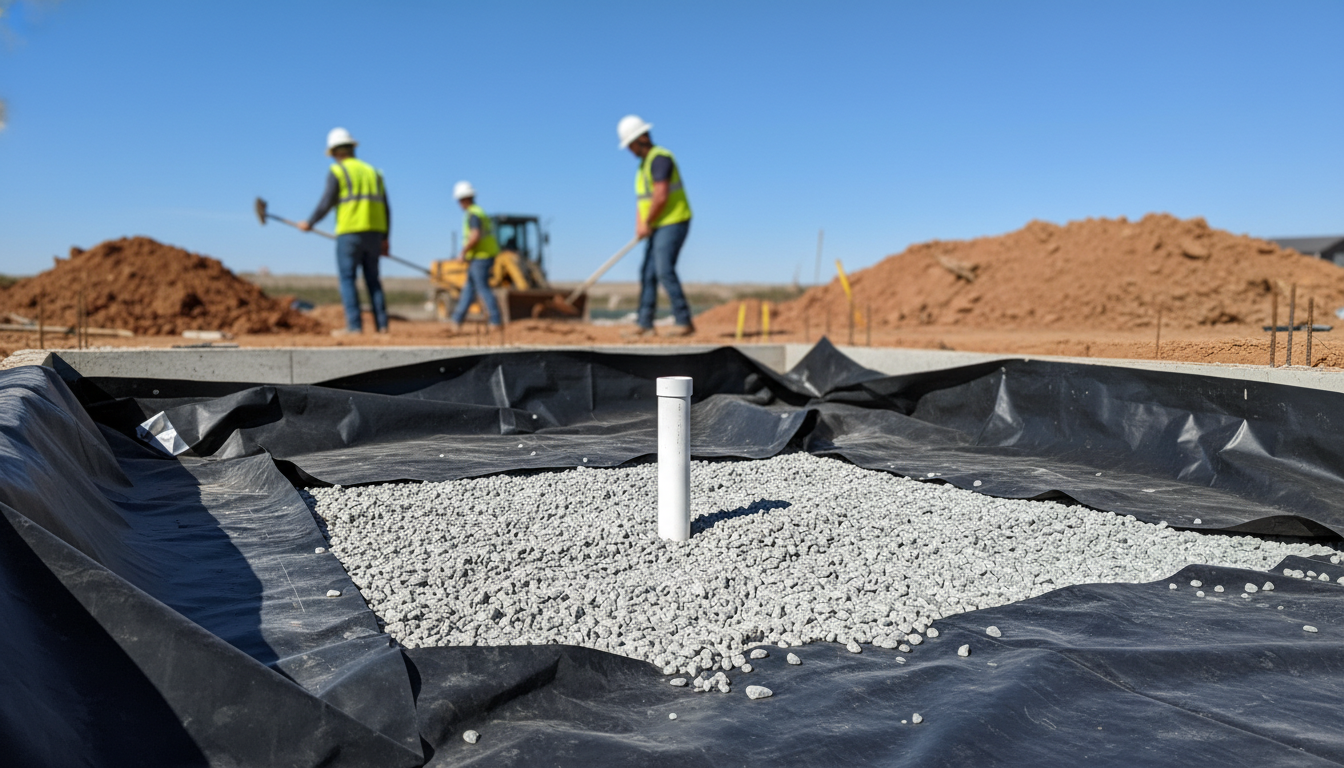
Work the northern counties and elevated readings arrive often. That means mitigation installations at volume: sub-slab depressurization systems, coring and sealing, pipe and fan run through occupied houses. The book tilts toward physical work.
Work the Gulf markets and the same effort produces more tests that come back low and proportionally fewer systems. The book tilts toward measurement — and the trucks carry instruments rather than materials.
The middle of the state sits between the two, which is exactly as unhelpful as it sounds when you are trying to describe your own business in a single sentence. An underwriter wants the split rather than the sentence.
The reading that comes back low is still an opinion
Here is where owners in the southern markets get the risk backwards, and it is worth stating plainly.
The instinct is that a low-reading territory is a low-exposure territory. It is not. A test that comes back low is still a professional judgment that somebody relies on — and it is arguably the result relied on hardest, because it is the one that lets a closing proceed with nothing further done.
The claim you are exposed to in Mobile is not that you installed a system badly. It is that you told someone their house was fine. A monitor placed in the wrong location, a short-term test compromised by an open window, a protocol chosen carelessly — any of those produces a low number on a house that should have read otherwise, and the person who relied on it relied on it precisely because you signed it. Low geography reduces your installation volume. It does not touch your professional exposure.
Why the professional line anchors the program
That is the general principle, and it holds across every market in the state.
A standard policy is built around general liability — the visitor who trips over your equipment, the property you damage by accident. Those are real and they are not what defines this trade. What defines it is that you are paid to produce a number, and somebody makes a decision on that number.
When the number is wrong, the claim is about your judgment, and it is professional liability that answers rather than the general-liability line. So the underwriting question is not how many jobs you run. It is how much of your revenue rides on measurement opinions that other people act on, and how disciplined the protocol behind them is. That question moves your price more than the gradient does, more than your fleet does, and more than your certifications do.
The credential Alabama did not write
Alabama issues no state radon license and defers to national NRPP or NRSB certification.
Read that as an underwriting input rather than a relief. Where a state licenses radon work, the license publishes a standard of care — a benchmark a claim gets measured against, with the state doing part of the defending for you. Alabama publishes none, so the perimeter around a claim is drawn entirely by your written scope, your protocol and device-calibration discipline, and the national certification you chose to carry.
That is why the certification is doing real work here rather than decorating a website, and why an underwriter reads your scope document instead of skimming it. Certification carries its own fees. Those are not insurance and we do not quote them.
Testing volume, install volume, and the instruments between them
The two halves of the work carry different weight.
- Measurement is almost purely a judgment exposure: the device, its placement, the protocol, the call. The equipment is light; the opinion is everything.
- Installation adds a physical dimension — systems in occupied homes, coring through a slab, fans and pipe — which brings general liability, contractors equipment, and workers compensation forward beside the professional line.
The instruments themselves are modest in value and central to the work: continuous monitors, grab-sample devices, manometers and pressure gauges, and the materials for a system. They are scheduled for what they are worth and where they travel — precise tools, not a heavy fleet. Your vehicles ride on commercial auto, and one point of vocabulary: an insurance carrier is the company writing your coverage, a different thing entirely from a motor carrier hauling freight.
The crew exposure is the part owners understate. Mitigation means confined-space entry into crawlspaces and attics, drilling and coring through slabs, and running pipe in tight spaces where a technician can be hurt. Alabama runs a private, competitive workers-compensation market, and the classifications should describe that work rather than the trade name.
Your loss record carries real weight, and a professional claim on it reads far louder than a fender-bender, because it speaks to the judgment the whole business rests on. Limits and retention are the genuine choice: fund the small things yourself and buy a serious professional and excess limit for the exposure you cannot afford to be short on.
One map, three businesses
<rect x="40" y="50" width="620" height="46" rx="9" fill="#F1E5D6" stroke="#12703F"/>
<text x="180" y="70" text-anchor="middle" font-family="Inter, system-ui, -apple-system, 'Segoe UI', Roboto, sans-serif" font-size="12.5" font-weight="600" fill="#12703F">The northern tier — highest zone</text>
<text x="470" y="70" text-anchor="middle" font-family="Inter, system-ui, -apple-system, 'Segoe UI', Roboto, sans-serif" font-size="11" fill="#5A5048">Elevated readings often — an installation-heavy book</text>
<text x="470" y="87" text-anchor="middle" font-family="Inter, system-ui, -apple-system, 'Segoe UI', Roboto, sans-serif" font-size="11" fill="#5A5048">Coring, pipe, fans, occupied homes</text>

<rect x="40" y="104" width="620" height="46" rx="9" fill="#ffffff" stroke="#DCC9B0"/>
<text x="180" y="124" text-anchor="middle" font-family="Inter, system-ui, -apple-system, 'Segoe UI', Roboto, sans-serif" font-size="12.5" font-weight="600" fill="#12703F">The center — grading down</text>
<text x="470" y="124" text-anchor="middle" font-family="Inter, system-ui, -apple-system, 'Segoe UI', Roboto, sans-serif" font-size="11" fill="#5A5048">A mixed book — measurement and install both live</text>
<text x="470" y="141" text-anchor="middle" font-family="Inter, system-ui, -apple-system, 'Segoe UI', Roboto, sans-serif" font-size="11" fill="#5A5048">Hardest to describe in one sentence</text>

<rect x="40" y="158" width="620" height="46" rx="9" fill="#ffffff" stroke="#DCC9B0"/>
<text x="180" y="178" text-anchor="middle" font-family="Inter, system-ui, -apple-system, 'Segoe UI', Roboto, sans-serif" font-size="12.5" font-weight="600" fill="#12703F">The Gulf markets — lowest zone</text>
<text x="470" y="178" text-anchor="middle" font-family="Inter, system-ui, -apple-system, 'Segoe UI', Roboto, sans-serif" font-size="11" fill="#5A5048">Mostly low readings — a measurement-heavy book</text>
<text x="470" y="195" text-anchor="middle" font-family="Inter, system-ui, -apple-system, 'Segoe UI', Roboto, sans-serif" font-size="11" fill="#5A5048">Fewer systems, same reliance</text>

<path d="M350 208 L350 226" fill="none" stroke="#12703F" stroke-width="2"/>

<rect x="60" y="230" width="580" height="52" rx="9" fill="#C7683F" stroke="#12703F"/>
<text x="350" y="252" text-anchor="middle" font-family="Inter, system-ui, -apple-system, 'Segoe UI', Roboto, sans-serif" font-size="14" font-weight="600" fill="#1A1A1A">Every reading is an opinion someone relies on</text>
<text x="350" y="272" text-anchor="middle" font-family="Inter, system-ui, -apple-system, 'Segoe UI', Roboto, sans-serif" font-size="11.5" font-weight="600" fill="#1A1A1A">The low one most of all — it is the result that lets a closing proceed</text>The short of it
Work out which Alabama you are working in and describe it honestly — northern tier, middle, or Gulf — because that gradient sets your revenue mix, your installation volume, and half your program. Then hold on to the thing the gradient does not touch: you sell a judgment, people act on it, and the low reading is relied on as heavily as the high one.
The state has written no credential to stand behind that judgment, so your scope, your protocol, and your certification stand behind it instead.
For the coverage rather than the pricing, start with professional liability — the line this whole conversation turns on — or step back to the radon mitigation insurance program; the Alabama radon mitigation insurance page carries the state detail. For a figure built on your real operation, start a quote. And if you respond to water, fire, and mold losses rather than testing and mitigating radon, this is the wrong guide — the restoration cost guide is yours.