

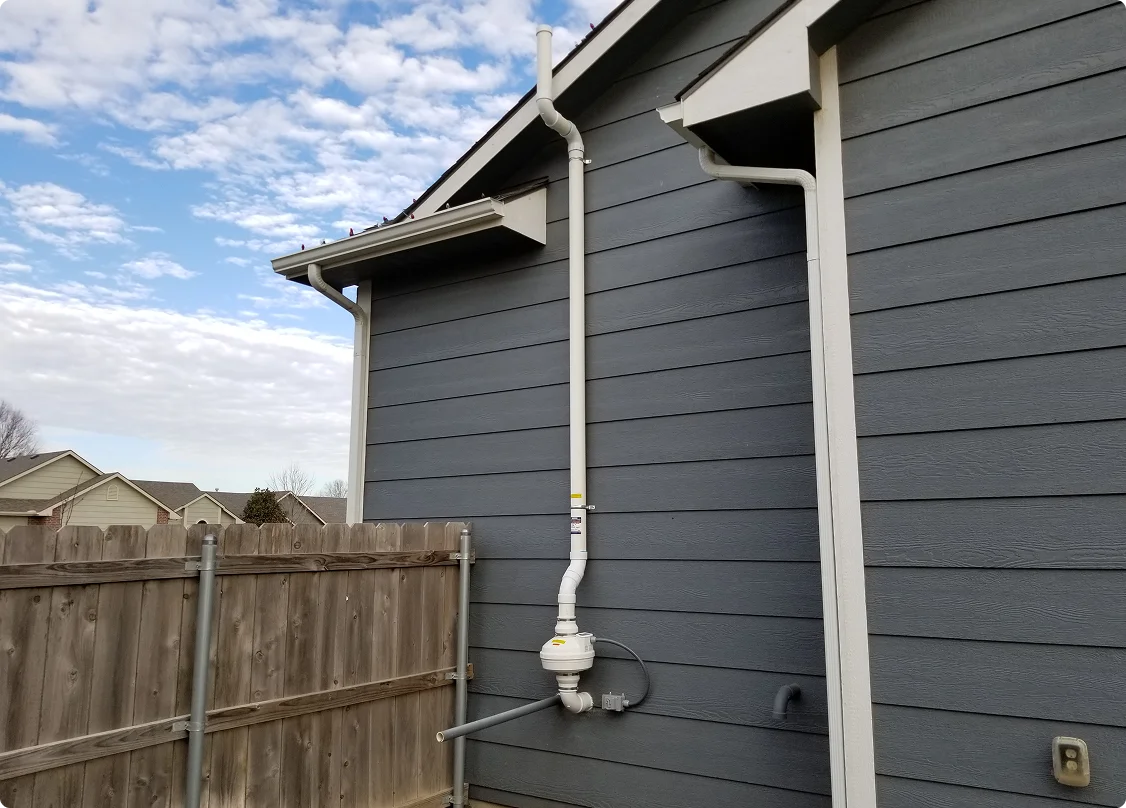
Two facts about Delaware sit oddly together, and the space between them is where a Delaware radon business actually lives.
The first: the Division of Public Health runs a radon education and outreach program. The state actively tells householders that radon matters and that they ought to do something about it.
The second: Delaware issues no radon license to anyone. Not a light one. None.
So the state has taken up the work of persuading your customers, and declined the work of saying who is competent to serve them. It built you a market and left you standing in the middle of it, indistinguishable from anybody else with a monitor in a van. That arrangement gives you something valuable and hands you a problem, and neither shows up on a rate table — which is part of why there is not one.
The state does your marketing and none of your vouching
Take the gift first, because it is real. In a lot of places this trade begins with persuasion: convincing somebody that an invisible thing deserves money. Delaware does a portion of that for you. A meaningful share of your customers arrive already knowing what radon is and already believing something should be done.
Now the problem. Those same customers have no state-issued means of telling one operator from another. There is no license to look up, no register to check, no state list conferring standing. The public has been told to act, and has been given no help whatsoever choosing who acts for them.
A customer who cannot distinguish operators defaults to price. That is a race with an unpleasant winner.
The expectation you did not set
There is a subtler consequence, and it is the one that reaches your claims file rather than your margin.
Public-health outreach describes what radon is, why it matters, and broadly what testing and mitigation accomplish. That framing is general by design — written for a population, not for the house your customer lives in.
Your customer arrives holding it. And when your reading, your protocol, or your clearance does not line up with what they understood from a public message, the mismatch is yours to explain. Not the state’s. The state was not describing your engagement; it was raising awareness, which is a different job with different obligations.
So Delaware quietly hands you an inherited expectation. The only defense is boring and effective: define in writing what your specific engagement establishes and what it does not, because the public message never did that and was never attempting to.
Why the reading is still the exposure
Underneath the market oddity sits the thing that does not move.
A standard policy is built around general liability — the visitor who trips over your equipment, the property you damage by accident. Both real; neither definitive. What defines this trade is that you are paid to produce a number, and somebody makes a decision on it.
A device placed somewhere unrepresentative, a short-term test run under conditions that flattered the result, a protocol chosen loosely, a clearance passing a house that should have failed — each is a claim about your judgment, and professional liability is what answers, not the general-liability line. How much of your revenue rides on opinions people act on, and how disciplined the protocol behind them is, sets your price. An informed customer does not reduce that; if anything a customer who was told to expect something specific is a customer with a clearer idea of what they think went wrong.
Three counties, three zones, and no room to specialise
Delaware carries the full national range inside a state you can drive across in about an hour. EPA radon zones fall from Zone 1 in New Castle, through Zone 2 in Kent, to Zone 3 in coastal Sussex.
In a large state, you can build a book around one zone and become the operator who knows that market cold. Here your service area contains all three whether you planned it or not, so your work mix is decided by where the calls come from rather than by any strategy you chose.
It also removes a crutch. The house in front of you may sit in a different zone from the last three, and the zone describes potential across an area rather than anything dependable about this address — which is the whole reason somebody hired you rather than reading a map.
Instruments, crew, and the record
The equipment is modest and specific: continuous monitors, grab-sample devices, manometers and pressure gauges, and system materials. Contractors equipment schedules it for what it is worth and where it travels — precise instruments rather than a heavy fleet. Vehicles ride on commercial auto, where the vocabulary needs care: an insurance carrier writes your coverage, while a motor carrier hauls freight for hire.
Where you install, the crew exposure is real: confined-space entry into crawlspaces and attics, coring through slab, pipe and fan run in tight spaces. Workers compensation runs through a private, competitive market here, and the classifications should describe that work rather than the trade name. Coastal and Delaware Bay named-storm and nor’easter wind reach Sussex, with tidal and coastal flood a separate NFIP placement — context for the building stock rather than an exposure your radon program answers for.
Your loss record carries weight beyond its length, because a professional claim speaks to the judgment the business rests on. Limits and retention are the genuine choice: fund the small things and buy a serious professional and excess limit.
Who created the expectation, and who carries it
<rect x="26" y="60" width="196" height="104" rx="9" fill="#F1E5D6" stroke="#12703F"/>
<text x="124" y="84" text-anchor="middle" font-family="Inter, system-ui, -apple-system, 'Segoe UI', Roboto, sans-serif" font-size="12.5" font-weight="600" fill="#12703F">Public Health outreach</text>
<text x="124" y="106" text-anchor="middle" font-family="Inter, system-ui, -apple-system, 'Segoe UI', Roboto, sans-serif" font-size="10.5" fill="#5A5048">Radon matters — act on it</text>
<text x="124" y="126" text-anchor="middle" font-family="Inter, system-ui, -apple-system, 'Segoe UI', Roboto, sans-serif" font-size="10.5" fill="#5A5048">A general framing, for everyone</text>
<text x="124" y="150" text-anchor="middle" font-family="Inter, system-ui, -apple-system, 'Segoe UI', Roboto, sans-serif" font-size="10.5" font-style="italic" fill="#5A5048">Your customer arrives persuaded</text>

<path d="M226 112 L262 112" fill="none" stroke="#12703F" stroke-width="2"/>

<rect x="266" y="60" width="168" height="104" rx="9" fill="#ffffff" stroke="#DCC9B0" stroke-dasharray="6 4"/>
<text x="350" y="90" text-anchor="middle" font-family="Inter, system-ui, -apple-system, 'Segoe UI', Roboto, sans-serif" font-size="12.5" font-weight="600" fill="#12703F">The gap</text>
<text x="350" y="112" text-anchor="middle" font-family="Inter, system-ui, -apple-system, 'Segoe UI', Roboto, sans-serif" font-size="10.5" fill="#5A5048">No license, no register</text>
<text x="350" y="132" text-anchor="middle" font-family="Inter, system-ui, -apple-system, 'Segoe UI', Roboto, sans-serif" font-size="10.5" fill="#5A5048">No way to tell you apart</text>
<text x="350" y="152" text-anchor="middle" font-family="Inter, system-ui, -apple-system, 'Segoe UI', Roboto, sans-serif" font-size="10.5" font-style="italic" fill="#5A5048">So they choose on price</text>

<path d="M438 112 L474 112" fill="none" stroke="#12703F" stroke-width="2"/>

<rect x="478" y="60" width="196" height="104" rx="9" fill="#C7683F" stroke="#12703F"/>
<text x="576" y="88" text-anchor="middle" font-family="Inter, system-ui, -apple-system, 'Segoe UI', Roboto, sans-serif" font-size="12.5" font-weight="600" fill="#1A1A1A">You</text>
<text x="576" y="110" text-anchor="middle" font-family="Inter, system-ui, -apple-system, 'Segoe UI', Roboto, sans-serif" font-size="10.5" font-weight="600" fill="#1A1A1A">Inherit the expectation</text>
<text x="576" y="130" text-anchor="middle" font-family="Inter, system-ui, -apple-system, 'Segoe UI', Roboto, sans-serif" font-size="10.5" font-weight="600" fill="#1A1A1A">Carry the professional exposure</text>
<text x="576" y="152" text-anchor="middle" font-family="Inter, system-ui, -apple-system, 'Segoe UI', Roboto, sans-serif" font-size="10.5" font-weight="600" fill="#1A1A1A">Scope, protocol, certification</text>

<rect x="26" y="186" width="648" height="66" rx="9" fill="#ffffff" stroke="#12703F"/>
<text x="350" y="212" text-anchor="middle" font-family="Inter, system-ui, -apple-system, 'Segoe UI', Roboto, sans-serif" font-size="13" font-weight="600" fill="#12703F">The public message did not define your engagement — so your scope has to</text>
<text x="350" y="234" text-anchor="middle" font-family="Inter, system-ui, -apple-system, 'Segoe UI', Roboto, sans-serif" font-size="11" fill="#5A5048">What this test establishes, and what it does not. Professional liability answers the rest.</text>Delaware, briefly
The state gave you a persuaded customer and no way to be chosen by them, which pushes the market toward price and pushes your differentiation onto paper. Hold the national certification — its absence is conspicuous where the state named nothing else — and write the scope so it says what your engagement does and does not establish.
That last document is doing double duty here. It is your defense, and it is the only visible difference between you and the cheapest van in the state.
For the coverage rather than the pricing, start with professional liability; the radon mitigation insurance program shows how it assembles, and the Delaware radon mitigation insurance page carries the state detail. For a figure built on your real operation, start a quote. And if you respond to water, fire, and mold losses rather than testing and mitigating radon, the restoration cost guide is your program.