

There is no published price for radon mitigation insurance in Idaho, and a number quoted before an underwriter has studied your work is a guess. A carrier builds the cost from your specific operation — and for a radon business, the input that moves the number most is not the fan on the wall or the truck on the gravel. It is the number you write down.
Owners expect to talk about hardware. It is not the conversation. A radon business is paid to produce a measurement — a reading with a figure attached — and somebody makes a decision on that figure, most often when a home changes hands. The exposure that defines the trade is not a leaking pipe or a technician who trips; it is a professional judgment that turns out wrong. What follows are the inputs a carrier weighs, opening with the anchor.
Paid for a number someone relies on
This is the driver a generic contractor policy misses entirely. A standard program is built around general liability — the third party hurt on your site, the property you damage by accident. That exposure is real, but it does not define your trade.
Your defining exposure is the reading. A continuous monitor placed in the wrong spot, a short-term test disturbed by an open window, a protocol chosen badly, a post-mitigation clearance that passes a home it should have failed — each is a claim about your judgment, and it is professional liability that answers, not the general-liability line. The underwriting question is never how many jobs you run. It is how much of your revenue rides on measurement opinions other people rely on, and how disciplined the protocol behind them is. A business producing numbers a sale depends on is a professional-services risk first and a contracting risk second.
Idaho trains but licenses no one
Most state-rule conversations concern a license you must hold. Idaho’s is unusual: the state actively supports training yet writes no credential of its own — and that posture is a cost driver, not a footnote.
Idaho issues no radon license. The state radon program provides education and even reimburses training costs, but it grants no credential and defers to national NRPP or NRSB certification. It is a telling posture — Idaho wants professionals trained and helps pay for it, while declining to write a license. Where a state licenses radon work, that license sets a floor an underwriter can lean on when a claim lands. Idaho leaves that floor unwritten, so the entire perimeter around a claim is your contract, your protocol, and the national certification you carry.
That shifts weight onto the professional line and onto the agreement you sign. An underwriter reads whether your scope names what you measured and what you did not, whether your report states its limits, and whether you hold and maintain a recognized certification — the one the state’s own training pushes you toward. Where the state licenses no one, the contract and the E&O do the job a credential does elsewhere, which is exactly why they price it.
Testing volume, install volume, and a footprint that shifts fast
What you do shapes what you pay, because measurement and mitigation are different risks.
- Measurement-heavy work is almost purely a professional-opinion exposure: the device, the placement, the protocol, and the clearance. The equipment is light; the judgment is everything.
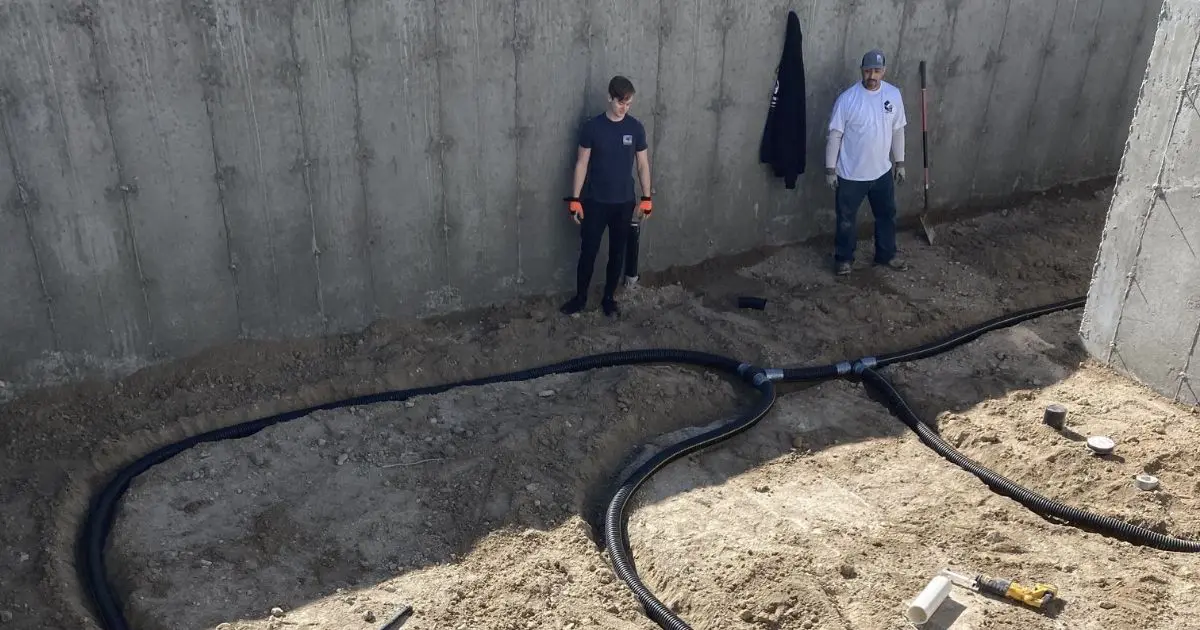
- Installation-heavy work adds a physical dimension — sub-slab depressurization systems, coring and sealing, and pipe and fan run through an occupied home — pulling general liability, equipment, and workers compensation forward beside the professional line.
Idaho’s radon geography changes fast: Boise sits in Zone 2 while neighboring Canyon County is Zone 1, and a large share of the state carries the highest category, so mitigation demand follows genuinely elevated readings. Testing demand, though, is transaction-driven — home sales drive it, concentrated around Boise, Meridian, and Idaho Falls — so a book weighted toward real-estate testing moves with the market it serves. An underwriter reads both alongside your split.
Equipment and the crew
The equipment is modest but specific: continuous radon monitors, grab-sample canisters, manometers and pressure gauges, and the fans and materials for a mitigation system. Contractors equipment schedules it for what it is worth and where it travels — precise instruments, not a heavy deployable fleet.
The crew exposure is the part owners understate. Workers compensation scales with payroll, and radon mitigation payroll is not clerical: confined-space entry into crawlspaces and attics, drilling and coring through a slab, and pipe run in tight, low spaces where a technician can be hurt. Idaho runs a private, competitive comp market, so the pricing question is the injury profile behind that payroll rather than any state-fund wrinkle.
Fleet, limits, and claims
Three lighter inputs close the file. The fleet is usually light — service vehicles carrying instruments and system materials, not a storm-response fleet — and commercial auto sizes to it. One point of language: your insurance carrier is the company that writes your coverage, distinct from a motor carrier that hauls freight; we insure the vehicles a radon business runs for its own work.
Your loss record carries real weight, and a professional-liability claim reads far louder here than a fender-bender, because it speaks to the judgment the business is built on. Limits and retention are a genuine choice: how much of the small stuff you fund yourself in exchange for a better price on the professional and excess limits you cannot afford to be short on.
What an underwriter is weighing
<line x1="350" y1="160" x2="150" y2="90" stroke="#12703F" stroke-width="1.5"/>
<line x1="350" y1="160" x2="550" y2="90" stroke="#12703F" stroke-width="1.5"/>
<line x1="350" y1="160" x2="150" y2="230" stroke="#12703F" stroke-width="1.5"/>
<line x1="350" y1="160" x2="550" y2="230" stroke="#12703F" stroke-width="1.5"/>

<circle cx="350" cy="160" r="76" fill="#C7683F" stroke="#12703F"/>
<text x="350" y="150" text-anchor="middle" font-family="Inter, system-ui, -apple-system, 'Segoe UI', Roboto, sans-serif" font-size="13.5" font-weight="600" fill="#1A1A1A">The professional</text>
<text x="350" y="168" text-anchor="middle" font-family="Inter, system-ui, -apple-system, 'Segoe UI', Roboto, sans-serif" font-size="13.5" font-weight="600" fill="#1A1A1A">line</text>
<text x="350" y="188" text-anchor="middle" font-family="Inter, system-ui, -apple-system, 'Segoe UI', Roboto, sans-serif" font-size="10.5" fill="#1A1A1A">The reading a sale relies on</text>

<rect x="60" y="68" width="180" height="44" rx="8" fill="#ffffff" stroke="#DCC9B0"/>
<text x="150" y="94" text-anchor="middle" font-family="Inter, system-ui, -apple-system, 'Segoe UI', Roboto, sans-serif" font-size="11.5" font-weight="600" fill="#12703F">Testing-vs-install mix</text>

<rect x="460" y="68" width="180" height="44" rx="8" fill="#ffffff" stroke="#DCC9B0"/>
<text x="550" y="94" text-anchor="middle" font-family="Inter, system-ui, -apple-system, 'Segoe UI', Roboto, sans-serif" font-size="11.5" font-weight="600" fill="#12703F">Equipment and crew</text>

<rect x="60" y="208" width="180" height="44" rx="8" fill="#ffffff" stroke="#DCC9B0"/>
<text x="150" y="234" text-anchor="middle" font-family="Inter, system-ui, -apple-system, 'Segoe UI', Roboto, sans-serif" font-size="11.5" font-weight="600" fill="#12703F">Fleet and limits</text>

<rect x="460" y="208" width="180" height="44" rx="8" fill="#ffffff" stroke="#DCC9B0"/>
<text x="550" y="234" text-anchor="middle" font-family="Inter, system-ui, -apple-system, 'Segoe UI', Roboto, sans-serif" font-size="11.5" font-weight="600" fill="#12703F">Claims record</text>

<rect x="70" y="284" width="560" height="42" rx="9" fill="#F1E5D6" stroke="#12703F"/>
<text x="350" y="303" text-anchor="middle" font-family="Inter, system-ui, -apple-system, 'Segoe UI', Roboto, sans-serif" font-size="12.5" font-weight="600" fill="#12703F">Idaho trains professionals but issues no credential</text>
<text x="350" y="320" text-anchor="middle" font-family="Inter, system-ui, -apple-system, 'Segoe UI', Roboto, sans-serif" font-size="11" fill="#5A5048">So the contract and the national certification carry the weight</text>

<text x="350" y="348" text-anchor="middle" font-family="Inter, system-ui, -apple-system, 'Segoe UI', Roboto, sans-serif" font-size="11.5" font-style="italic" fill="#5A5048">None of these is a price. Together they are how one is built.</text>The honest summary
An Idaho radon business is priced on judgment, not on hardware. The fans matter, the crew matters, the trucks matter — but the input that moves the number most is the reading you produce and the opinion behind it, underwritten in a state that pays to train professionals yet issues no credential, so your contract and your professional line carry the weight a license carries elsewhere.
To see how the coverage works rather than what it costs, start with professional liability — the line this conversation is really about — or step back to the radon mitigation insurance program and the full Idaho radon mitigation insurance page. When you want a number built on your real operation, start a quote. And if you respond to water, fire, and mold losses rather than test and mitigate radon, none of the above is your program — you want the restoration cost guide instead.