

A short-term radon measurement only means what it is supposed to mean if the house is closed while you take it. Doors shut, windows shut, air exchange low — the protocol assumes those conditions, and the number it produces is only about the house to the extent that they held.
South Dakota supplies them generously for a long stretch of the year, and then takes them away. That is not a piece of trivia about the weather. It is a fact about when your work is defensible, and it belongs near the front of any honest conversation about what a South Dakota radon business is exposed to — which is also why the price gets built from the operation rather than read off a list.
The season that makes a test valid
A house sealed against a South Dakota winter is behaving exactly as the test protocol expects. The same house in a mild stretch, with windows open and air moving through it, is not — and a reading taken then can understate what the household actually breathes across a year.
So the season is part of your protocol rather than a footnote to it. The same device, the same technician, and the same address can produce a defensible reading in February and a contestable one in July, and nothing about the instrument changed.
When a reading is challenged, the first question is what the conditions were. The second is whether you wrote them down. The second question is the one that decides how the first one goes.
What a Zone 1 map does to a book
South Dakota sits predominantly in Zone 1, with the balance in Zone 2 and no Zone 3 at all. That is about as high-prevalence as the map gets.
The obvious consequence is volume: most houses are candidates, awareness is reasonable, and the work is there. The less obvious consequence is what volume does to a process — because when most readings come back elevated, an elevated reading stops feeling like a finding and starts feeling like a formality.
That is worth naming, because it is the actual risk in a state like this. Nobody gets hurt by the house that reads high in a Zone 1 county. The claim comes from the house that read differently from how it should have, on a day when the process had quietly loosened because everyone already knew the answer.
The reading is still the product
Underneath the geography sits the thing that does not move.
A standard policy is built around general liability — the visitor who trips over your equipment, the property you damage by accident. Both real; neither definitive. What defines this trade is that you are paid to produce a number, and somebody makes a decision on it.
An EPA zone describes geological potential across an area. It says nothing dependable about the address you are standing in front of — which is precisely why the homeowner called you. So a claim never argues that the map was wrong. It argues that your reading was, or your clearance was, or your protocol was chosen badly. That is a claim about judgment, and professional liability is what answers for it. How much of your revenue rides on opinions other people act on, and how disciplined the protocol behind them is, is the heaviest single input into your program.
Volume, routine, and drift
Volume is not a risk factor by itself. It is a multiplier on whatever your process already is.
Run many readings with disciplined placement, current calibration, and recorded conditions, and the volume makes your file stronger — it demonstrates repeatability, which is the thing an underwriter most wants and most rarely sees proven. Run the same volume on habit, and you have simply created many opportunities for one of them to be wrong.
Drift arrives in a predictable order. Recording the closed-house state stops feeling necessary in January when it is obviously closed. Placement drifts toward convenient rather than representative. Calibration runs a cycle long because nothing seems amiss. None of those produces a bad reading most of the time, which is exactly why they survive as habits — and why they surface on the one file that gets contested.
No license, and the protocol that replaces it
South Dakota issues no state radon license. The environmental agency runs a radon program and recommends nationally certified professionals through NRPP or NRSB.
Where a state licenses radon work, the license publishes a standard governing how a measurement is taken and under what conditions, and a claim gets measured against the state’s document. South Dakota publishes none — so your protocol, your calibration records, and the national certification you hold are the entire standard.
Combine that with a state where conditions swing seasonally and volume runs high, and the conclusion is uncomfortably concrete: the only thing separating a defensible reading from a contestable one is a record you decided to keep on an ordinary day. Certification carries its own fees; not insurance, and not something we quote.
Instruments, crew, and the record
The equipment is modest and specific — continuous monitors, grab-sample devices, manometers and pressure gauges, and system materials — and contractors equipment schedules it for what it is worth and where it travels. Vehicles ride on commercial auto; a vocabulary note, because this trade collides with it: an insurance carrier writes your coverage, while a motor carrier hauls freight for hire.
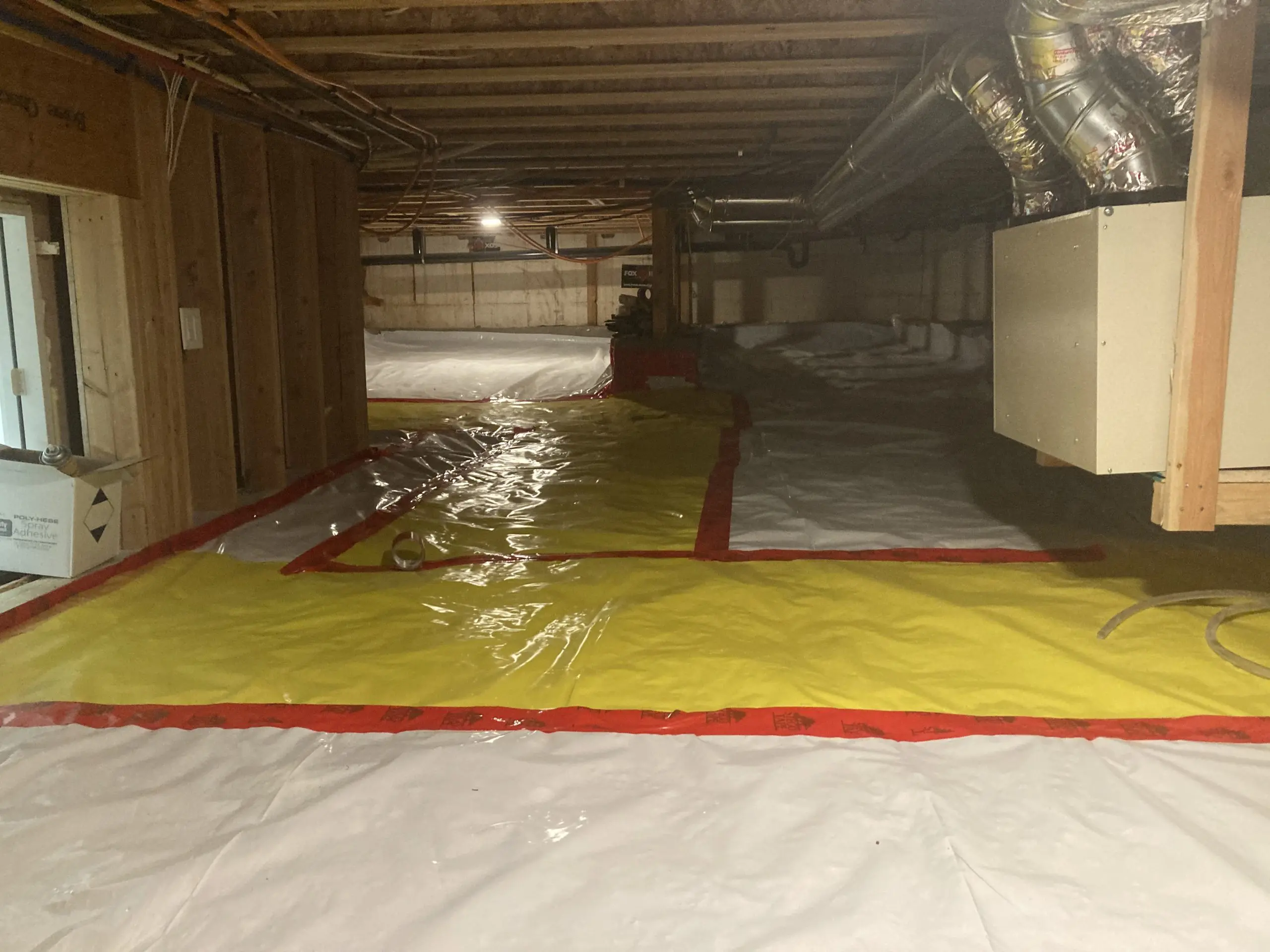
Where you install, the crew exposure is real — confined-space entry into crawlspaces and attics, coring through slab, pipe and fan in tight spaces, in a state where winter is the busy season and the ground is not forgiving. Workers compensation runs through a private, competitive market here and the classifications should describe that work.
Your loss record carries disproportionate weight, because a professional claim on it speaks to the judgment the business rests on. Limits and retention are the genuine choice: fund the small things and buy a serious professional and excess limit.
When the house is closed, and when it is not
<rect x="30" y="54" width="300" height="112" rx="9" fill="#F1E5D6" stroke="#12703F"/>
<text x="180" y="78" text-anchor="middle" font-family="Inter, system-ui, -apple-system, 'Segoe UI', Roboto, sans-serif" font-size="13" font-weight="600" fill="#12703F">Sealed against winter</text>
<text x="180" y="100" text-anchor="middle" font-family="Inter, system-ui, -apple-system, 'Segoe UI', Roboto, sans-serif" font-size="11" fill="#5A5048">Doors shut, windows shut</text>
<text x="180" y="120" text-anchor="middle" font-family="Inter, system-ui, -apple-system, 'Segoe UI', Roboto, sans-serif" font-size="11" fill="#5A5048">Air exchange low — as assumed</text>
<text x="180" y="146" text-anchor="middle" font-family="Inter, system-ui, -apple-system, 'Segoe UI', Roboto, sans-serif" font-size="11.5" font-style="italic" fill="#12703F">A defensible reading</text>

<rect x="370" y="54" width="300" height="112" rx="9" fill="#ffffff" stroke="#DCC9B0"/>
<text x="520" y="78" text-anchor="middle" font-family="Inter, system-ui, -apple-system, 'Segoe UI', Roboto, sans-serif" font-size="13" font-weight="600" fill="#12703F">Open in a mild stretch</text>
<text x="520" y="100" text-anchor="middle" font-family="Inter, system-ui, -apple-system, 'Segoe UI', Roboto, sans-serif" font-size="11" fill="#5A5048">Windows open, air moving</text>
<text x="520" y="120" text-anchor="middle" font-family="Inter, system-ui, -apple-system, 'Segoe UI', Roboto, sans-serif" font-size="11" fill="#5A5048">The protocol’s assumption broken</text>
<text x="520" y="146" text-anchor="middle" font-family="Inter, system-ui, -apple-system, 'Segoe UI', Roboto, sans-serif" font-size="11.5" font-style="italic" fill="#5A5048">A contestable one</text>

<rect x="30" y="182" width="640" height="72" rx="9" fill="#C7683F" stroke="#12703F"/>
<text x="350" y="208" text-anchor="middle" font-family="Inter, system-ui, -apple-system, 'Segoe UI', Roboto, sans-serif" font-size="14" font-weight="600" fill="#1A1A1A">The difference is not the instrument — it is whether you wrote the conditions down</text>
<text x="350" y="232" text-anchor="middle" font-family="Inter, system-ui, -apple-system, 'Segoe UI', Roboto, sans-serif" font-size="12" font-weight="600" fill="#1A1A1A">No state standard governs the call. Your record is the standard.</text>Plainly put
South Dakota gives you high prevalence, real volume, and a winter that hands you valid testing conditions for months. All three are good for the business, and the third one is the one that can quietly hurt you — because conditions you never have to think about are conditions you stop recording.
Write them down on every job, including the obvious ones. In a state that has published no standard, that record is the standard, and it is the difference between a reading that holds and a reading that merely was.
For the coverage rather than the pricing, start with professional liability; the radon mitigation insurance program shows how it fits together, and the South Dakota radon mitigation insurance page carries the state detail. For a figure built on your real operation, start a quote. And if you respond to water, fire, and mold losses rather than testing and mitigating radon, the restoration cost guide is your program.