

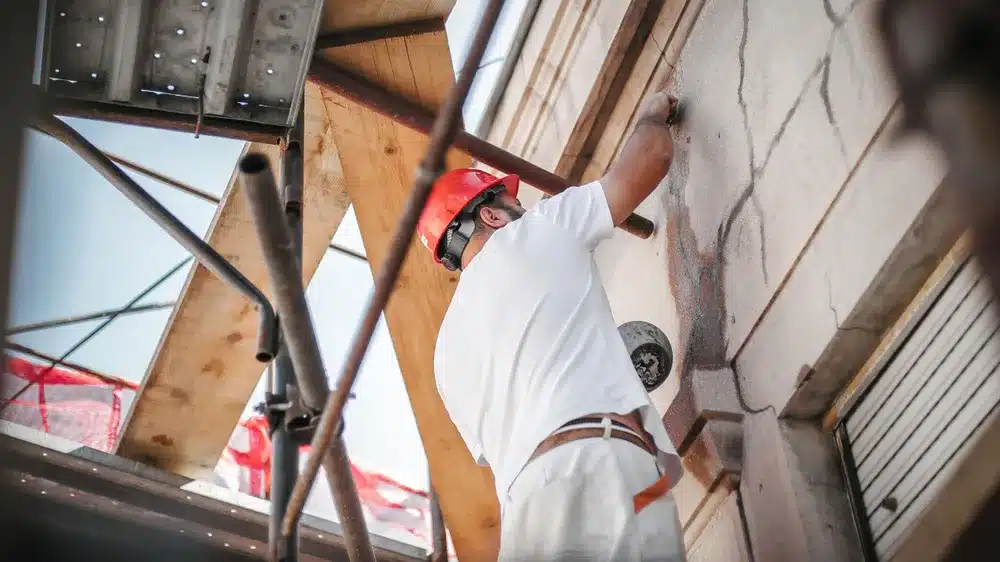
Ask a Nebraska restoration contractor a simple question — where does the work come from? — and most of the submission falls out of the answer.
For a lot of operators here, the phone rings because somebody else decided it should. An assignment arrives through a program or a third-party administrator, with a scope attached, a timeline attached, and a set of insurance requirements that were settled before the first job ever landed. For other operators the phone rings because a property owner found them. Those are two different businesses wearing the same trade name, and they do not underwrite alike.
Who actually hands you the job
The distinction runs deeper than lead generation. Work that arrives insurer-funded — where the property owner’s carrier sets the scope you are paid on — brings a particular operating reality with it: receivables that behave on someone else’s schedule, volume that swings with decisions made upstream of you, and a documentation burden that is part of getting paid rather than part of doing the work.
We describe that economy because it is the environment your business lives in and an underwriter reads it as a business-model fact. We do not advise property owners on their own claims, and this guide does not either. The point here is narrower and entirely about you: how the work arrives changes what your program has to do.
What a program relationship asks of your program
Program and TPA agreements do not merely route work. They specify. Lines, limits, additional-insured status, sometimes waivers of subrogation — written into the agreement, enforced through certificates, and agreed before the first assignment.
Two consequences follow, and both are easy to miss until they bite. First, your program has to satisfy the agreements you actually signed rather than your own reading of the exposure. Second, obligations stack: three relationships with three requirement sets quietly establish a floor beneath your entire program, and no single agreement announces that it is doing so.
Bring the agreements to the conversation. The alternative is finding the mismatch when a certificate is rejected, which is always the most expensive moment to find it.
The exposure no assignment covers
Here is the correction worth making plainly, because the paperwork can create the opposite impression.
An assignment routes work to you and often defines the scope you are paid on. It does not transfer the consequences of how you perform the work. A general liability policy answers for the third party injured on your jobsite and the property you damage by accident — and it carries a pollution exclusion. Mold, the sewage in a Category 3 water loss, and the smoke and soot after a fire all read as pollutants under it. So the material you are hired to remove is the material your base policy declines.
Spread spores during a demolition, miss a hidden reservoir, certify a clearance that later fails, and the claim that follows is environmental and it belongs to your business, not to whoever sent the job. Contractors pollution liability is the line that answers. How much of your revenue touches mold, Category 3, and fire work — and how disciplined the containment and clearance protocol around it is — is the heaviest single input into where your program prices. No assignment moves that anywhere.
Hail season, and the shape of the year
Nebraska weather sets volume and timing rather than a rate. Hail, tornado, and straight-line wind arrive in bursts across Omaha, Lincoln, and Grand Island, and a burst means many jobs opening at once. The freeze season adds burst-pipe work on the same pattern.
An underwriter reads capacity and dwell time in that. Staffing and equipping for a surge is structurally different from running level all year. And when everything opens at once, structures wait — which is the interval in which a clean-water loss becomes a mold loss, and a general-liability job becomes a pollution job. Flood and earthquake are separate placements.
The crew, and the credential Nebraska did not write
Workers compensation runs through a private, competitive market here and scales with payroll, with the classifications mattering as much as the figure. A technician in a respirator in a contaminated crawlspace and an estimator at a desk are different injury profiles under one company name.
Alongside it: Nebraska issues no state mold-assessment or mold-remediation license. General construction licensing may reach your repair scope; no mold-specific credential exists. Where a state licenses mold work, the license publishes a standard of care that does part of the defending when a claim lands. Nebraska publishes none, so your scope, your protocol, and your certifications are the standard — read closely, for that reason. It is a compliance reality rather than a fee, and it is not something we quote.
Fleet, contents, and what you retain
Contractors equipment schedules the dehumidifiers, air movers, air scrubbers, and generators that spend the dry-out on property you do not control — in transit, deployed, and easy to lose. If you pack out, household goods in your care, custody, and control are what general liability excludes, and bailees coverage is what answers.
Vehicles run on commercial auto. One vocabulary note this trade needs: an insurance carrier writes your coverage, while a motor carrier hauls freight for hire — we mean the first, and this business says the word both ways in a single sentence.
Limits and retention are the genuine choice: fund routine damage yourself and buy a serious pollution and excess limit for the environmental tail. Your loss record does the rest of the arguing, and it carries additional weight where no credential sets a floor.
Two ways the work arrives
<rect x="30" y="54" width="290" height="92" rx="9" fill="#F1E5D6" stroke="#12703F"/>
<text x="175" y="78" text-anchor="middle" font-family="Inter, system-ui, -apple-system, 'Segoe UI', Roboto, sans-serif" font-size="13" font-weight="600" fill="#12703F">Program and TPA assignment</text>
<text x="175" y="99" text-anchor="middle" font-family="Inter, system-ui, -apple-system, 'Segoe UI', Roboto, sans-serif" font-size="11" fill="#5A5048">Their scope, their timeline</text>
<text x="175" y="117" text-anchor="middle" font-family="Inter, system-ui, -apple-system, 'Segoe UI', Roboto, sans-serif" font-size="11" fill="#5A5048">Lines, limits, and status written in</text>
<text x="175" y="135" text-anchor="middle" font-family="Inter, system-ui, -apple-system, 'Segoe UI', Roboto, sans-serif" font-size="11" fill="#5A5048">Receivables on someone else’s clock</text>

<rect x="380" y="54" width="290" height="92" rx="9" fill="#ffffff" stroke="#DCC9B0"/>
<text x="525" y="78" text-anchor="middle" font-family="Inter, system-ui, -apple-system, 'Segoe UI', Roboto, sans-serif" font-size="13" font-weight="600" fill="#12703F">Direct retail loss</text>
<text x="525" y="99" text-anchor="middle" font-family="Inter, system-ui, -apple-system, 'Segoe UI', Roboto, sans-serif" font-size="11" fill="#5A5048">Your scope, your terms</text>
<text x="525" y="117" text-anchor="middle" font-family="Inter, system-ui, -apple-system, 'Segoe UI', Roboto, sans-serif" font-size="11" fill="#5A5048">No inherited requirements</text>
<text x="525" y="135" text-anchor="middle" font-family="Inter, system-ui, -apple-system, 'Segoe UI', Roboto, sans-serif" font-size="11" fill="#5A5048">Volume you generate yourself</text>

<path d="M175 150 L320 194" fill="none" stroke="#12703F" stroke-width="2"/>
<path d="M525 150 L380 194" fill="none" stroke="#12703F" stroke-width="2"/>

<rect x="70" y="200" width="560" height="76" rx="9" fill="#C7683F" stroke="#12703F"/>
<text x="350" y="228" text-anchor="middle" font-family="Inter, system-ui, -apple-system, 'Segoe UI', Roboto, sans-serif" font-size="14.5" font-weight="600" fill="#1A1A1A">The pollution exposure stays with you</text>
<text x="350" y="250" text-anchor="middle" font-family="Inter, system-ui, -apple-system, 'Segoe UI', Roboto, sans-serif" font-size="12" font-weight="600" fill="#1A1A1A">Sized by how deep the mold, Category 3, and smoke work runs</text>
<text x="350" y="268" text-anchor="middle" font-family="Inter, system-ui, -apple-system, 'Segoe UI', Roboto, sans-serif" font-size="12" font-weight="600" fill="#1A1A1A">The base policy excludes it. The assignment does not cover it.</text>In short
Where the work comes from shapes a Nebraska program more than most owners expect: program and TPA agreements set obligations you have already accepted, and they stack quietly across relationships. Bring the agreements. Know the split.
Then keep the central fact in view. Whoever hands you the job, the mold, sewage, and fire work is yours, the base policy excludes it, and the pollution line is the only thing standing behind it — in a state that has written no credential to stand there instead.
For the coverage rather than the pricing, start with contractors pollution liability; the restoration contractor insurance program shows how it assembles, and the Nebraska restoration contractor insurance page carries the state detail. For a figure built on your real operation, start a quote. And if you test and mitigate radon rather than respond to losses, this is not your guide — the radon mitigation cost guide is.