States we serve · Arkansas
Radon mitigation insurance in Arkansas
Coverage for the before-the-hazard trade across Arkansas — radon measurement, sub-slab depressurization, and mitigation installs from the Ozark highlands to the Delta flatland. What defines the risk is the figure your business certifies on a report no state credential stands behind.
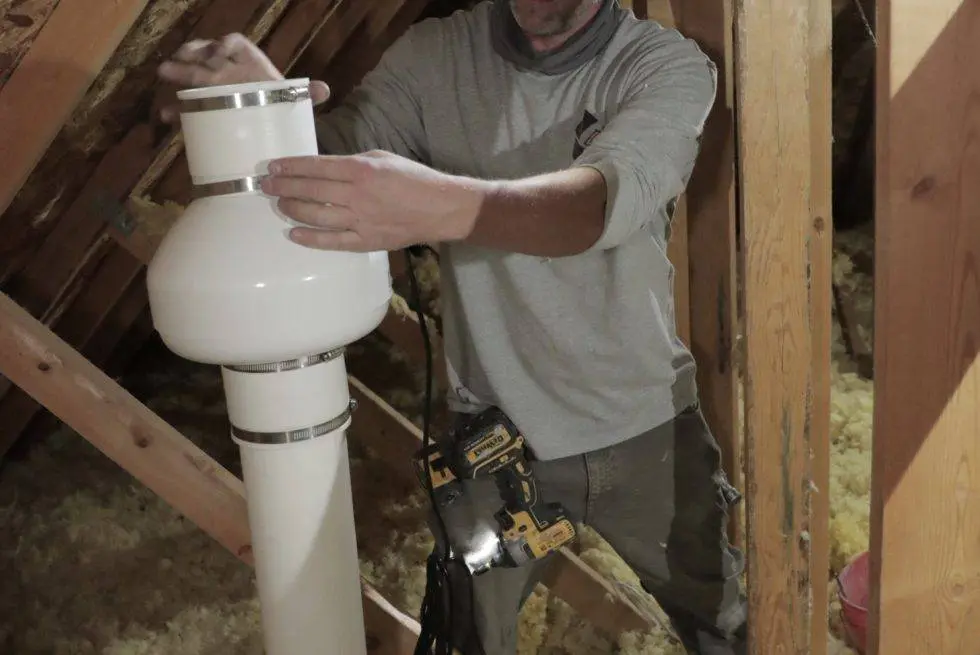

Radon work sits on the before-the-hazard side of this brand. An Arkansas operation exists to answer one question about a building — does it hold an elevated level of a colorless, odorless, naturally occurring gas — and, where the answer is yes, to build the system that pulls that gas back out before it becomes anyone’s harm: testing and measurement first, then sub-slab depressurization, vapor barriers, crawlspace sealing, and the air-quality work around them. The Arkansas particular is regulatory rather than climatic: the state credentials none of it, so the report your business issues carries only your name, not a license number.
And that report is where the exposure concentrates. A radon result is a professional opinion carrying a figure, and an Arkansas sale frequently turns on which side of the action level that figure lands. No ISO form is written for a judgment of that kind; nor, in Arkansas, is there a state credential to share the weight of it. The business that certified the reading answers for it on its own — which is exactly why the coverage here is organized around professional liability instead of around premises risk. The pages that follow walk what shapes an Arkansas program’s cost, the credential picture, the risks that define the class, the claims a specialty underwriter actually sees, and the Arkansas markets where the work clusters.
One boundary before the detail: this is the before-the-hazard trade. Crews that arrive after water, fire, or mold has already done its damage are running a different operation on a different exposure, and that work lives on the Restoration Contractor Insurance in Arkansas page.
What shapes an Arkansas radon program’s price
No premium appears on this page on purpose — an Arkansas program is quoted to the operation, not to a template — but the inputs that move it are worth naming. The heaviest is the professional-liability limit you carry against the measurement opinion, since in a state that credentials no one, that opinion is the concentrated exposure. Then the revenue mix: whether you test, mitigate, or do both changes how the file reads, and in Arkansas that balance itself tilts by geography, mitigation-weighted in the Ozark north and testing-weighted across the Delta. From there it is the ordinary contractor arithmetic — payroll and headcount behind the workers compensation line for crawlspace crews, the instrument and fan schedule behind contractors equipment, and the fleet and its mileage behind commercial auto across a state that runs from mountain county to river town. Loss history underlies the whole quote. We weigh those against the actual operation rather than a generic radon rate.
How Arkansas handles radon credentials
Arkansas leaves radon work uncredentialed, and reading the account honestly starts there. No state examination gates entry to the trade, no state registry lists who may perform it, and no state number is issued to stand behind a result. In place of a license, the state points toward the national proficiency programs — the National Radon Proficiency Program and the National Radon Safety Board — whose certifications are the accepted signal of competence. A good operator holds one; it is a real quality mark. It is simply not a state license, and it does not become one because a report relies on it.
What that open posture does is push the discipline elsewhere. Where a licensing state inserts a credential between the professional and the party acting on a number, Arkansas inserts nothing, so the standard of care and the contract carry the load instead. A figure certified on an Arkansas report, and then acted on in a sale, rests on the business’s own competence and its own paperwork — the textbook shape of an professional liability exposure, and the reason we place that line deliberately rather than trust a general-liability policy to reach it.
The map, meanwhile, refuses to be uniform. Federal zoning reads Zone 2 across most of Arkansas, climbs to Zone 1 in the north-central Ozarks, and falls to Zone 3 through the southern and eastern Delta. Where the map runs high the geology itself generates testing and more of it converts to mitigation; where it runs low the sale calendar generates nearly all the work. An underwriter reads both the gradient and the counties an operation actually covers into an Arkansas file.
The risks that define Arkansas radon work
The exposures that matter here are not the catastrophe losses that drive this brand’s restoration side. Arkansas crews work through tornado season and winter ice, but weather is not the defining risk of the trade — the certified figure is. The central one is a reading acted on in a sale that a later test contradicts: a short-term device sited badly, closed-house conditions that were not held, a run cut short, any of which can produce a number the next measurement disputes. With no state credential absorbing any of that, the business that put its name to the result carries it alone — the professional liability exposure at the center of this page.
Two related judgment exposures sit beside it. A clearance signed too soon — a post-mitigation test called effective before conditions had settled — repeats the same opinion risk on the install side, and it is more live in the Ozark markets where mitigation is common. And a system that quits working after the crew has gone raises a completed-operations question, running through general liability for the physical damage with the design judgment trailing it.
Then the crew. Coring a slab, cutting a suction point, and threading pipe and a fan through the tight, low-oxygen crawlspaces common in Arkansas’s pier-and-beam housing is confined-space work — the trade’s defining physical hazard. A technician injured under an Arkansas house is a workers compensation matter, settled through the state’s private, competitive market rather than a state fund.
Claims an Arkansas radon underwriter actually sees
Described in general terms, without dollar amounts or severities and without naming an insurer — every matter below is handled by the insurance carrier on the file.
- The contradicted result. A property tests below the action level, a sale proceeds on that figure, and a follow-up months later reads high. With no state credential to absorb the question, the business that certified the original number is pulled into it — an opinion dispute, not a workmanship one, and squarely professional liability.
- The premature clearance. In an Ozark mitigation, a post-install verification is called good before the building had settled to normal conditions; a re-test would have read otherwise. The loss lives in the judgment that signed off, not the pipe that was installed.
- The system that quits. A depressurization fan stops moving air long after the crew has left, and damage follows from work already completed — a completed-operations claim carried by general liability, the design decision riding alongside it.
- The crawlspace injury. A technician is hurt working beneath an Arkansas house on a sub-slab job — the workers compensation line, run through the state’s private market.
Where Arkansas radon work concentrates
The calendar fills from the metros where sales happen, with the Ozark north layering in geology-driven testing on top. A quick read of the major Arkansas markets and what each means for a book of work.
Little Rock
The capital sits in the Zone 2 middle of the state and runs a steady, government-and-medical economy with year-round residential turnover. Its moderate map reading makes it a testing-forward market with a measured share of mitigation — the dependable core of a central-Arkansas book.
Fayetteville
Up in the Northwest Arkansas highlands near the state’s Zone 1 pockets, Fayetteville tests elevated more often, so mitigation follows more frequently than anywhere else in Arkansas. A fast corporate-and-university economy keeps the deal flow high, leaving a local operation with the most mitigation-heavy book in the state.
Fort Smith
On the Oklahoma line where the Arkansas River cuts through, Fort Smith carries a manufacturing-and-logistics base and a practical housing stock. Its western-Ozark position reads moderate on the map and turns over steadily, and its regional pull makes it a hub for the surrounding river-valley counties.
Springdale
Anchoring the booming Northwest corridor, Springdale combines heavy food-processing and logistics employment with rapid new-home construction. That first-sale volume, on Ozark geology, drives demand for builder-installed passive systems and for testing on a continuous stream of new closings.
Jonesboro
The northeast Delta’s largest city sits in low-reading Zone 3 flatland near the New Madrid seismic zone, so its radon work is almost entirely sale-driven on a university-and-agriculture economy. Here the certified figure, not the geology, is effectively the whole exposure.
Why Arkansas radon businesses work with Restoration Guard
We are an independent agency built around a single world — restoration and radon mitigation — placing coverage only with insurers that genuinely want the class. In Arkansas the payoff of that focus is concrete: a generalist broker treats professional liability as a rider, when in an uncredentialed state it is the spine of the whole program, and the same broker tends to price one Arkansas rather than the two it actually is — a mitigation-leaning Ozark north and a testing-driven Delta. We start by asking whether you test, mitigate, or both, and which counties you run; we place the professional line on purpose for a figure that answers to your judgment and your contract alone; and we quote to a gradient market instead of a generic form. When a contract arrives with limits or endorsements you did not expect, that review is a phone call. Begin with a quote, or talk it through with us first.
Learn more
An Arkansas radon program is one system organized around a single signature line. Professional liability leads it, answering for the certified figure no state credential backs; general liability carries the third-party and completed-operations risk of install work; workers compensation covers the crew in crawlspaces; contractors equipment schedules the fans, monitors, and instruments; commercial auto runs the fleet; and excess liability steps in when a contract calls for higher limits.
The signature line
The rest of the program
- General Liability Insurance
- Workers Compensation Insurance
- Contractors Equipment Insurance
- Commercial Auto Insurance
- Excess Liability Insurance
Insurance by the operation you run
The other Arkansas page
Get covered
Primary sources
Arkansas radon mitigation insurance FAQs
Why is professional liability the line an Arkansas radon program is built around?
Because the product an Arkansas radon business ultimately sells is a judgment — a figure on a report that a buyer, a lender, or a seller acts on, most often at a closing. General liability answers for a slip, a gouged floor, an accidental fire; it does not answer for a number that later proves wrong. Filling that gap is the whole job of professional liability, the errors-and-omissions cover for the class, and it matters more here than in a licensed state: because Arkansas issues no radon credential, there is no license record to fall back on when a reading is questioned — only your work and the contract you performed it under. So the program leads with that line, sizes its limits to the volume of readings you certify, and arranges general liability, workers compensation, equipment, and auto as the structure built around it.
Does Arkansas make a radon business get certified before it can test or mitigate?
No. Arkansas requires no state credential to measure or mitigate radon for pay — no state examination, no state registry, and no state number that attaches to a job. What the state does instead is point toward the national proficiency programs, the National Radon Proficiency Program and the National Radon Safety Board, whose certifications are the recognized mark of competence in a market Arkansas itself leaves open. Earning one is worth doing even though nothing compels it, because with no license in the picture it is the credential a lender or an underwriter actually looks for. The insurance consequence is the point of this page: with no state gate standing in front of the work, the discipline a licensing regime would impose falls instead on your standard of care and the coverage you carry.
The Arkansas radon map is not uniform — does that change where the work comes from?
It does. The federal Map of Radon Zones puts most of Arkansas in the middle category, lifts the north-central Ozarks into the highest, and drops the southern and eastern Delta into the lowest, so the state runs a genuine gradient rather than a single reading. In the Ozark counties the elevated map produces testing driven partly by the geology, and mitigation follows more often; across the Delta the map reads low and nearly all the work is generated by the sale calendar — a test ordered because a deal needs one. The upshot for a business is that the book looks different depending on where it operates, and an underwriter reads that mix into the file. What does not shift with the map is the exposure: wherever the reading is taken, it is a signed opinion someone acts on.
A lot of Arkansas radon work runs through home sales — do you cover the buyer or seller side of that?
No, and the boundary is worth stating plainly. We insure the radon business, not the parties on either side of the deal your reading feeds. The Arkansas transaction is your marketplace and the reason a professional exposure exists for you, but nothing here is guidance to a buyer or a seller about their sale, their result, or what their own policy might do. Where this page mentions a claim, it means a claim against your operation — the business standing behind the figure it certified, or working a covered matter through its own insurer. The people relying on your report have their own advisors and their own coverage; our work begins and ends with the business that performed the test.
What covers the trucks my crew drives to jobs, and why do you keep distinguishing the word carrier?
The vans and trucks that move pipe, fans, and monitors to a site across Arkansas are a commercial auto matter — an on-road accident, the damage to the vehicle, and the liability that follows a crash all sit there, not under the general-liability policy. On the word itself: this trade leans on carrier constantly, so it pays to be exact — your insurance carrier is the company issuing your coverage, which is not the same as a motor carrier, the term for a business that hauls freight for hire. What we insure is the fleet a radon operation runs to do its own testing and installation, and keeping the two senses apart changes how the auto piece is written and rated.
With no rates published here, what actually moves what an Arkansas radon business pays?
A handful of things, and the largest is the professional-liability side — the limits you carry on the measurement opinion, because in an uncredentialed state that opinion is where the real exposure concentrates. Next is the shape of your revenue: a testing-only shop, a mitigation-only installer, and a business doing both read differently to an underwriter, and in Arkansas the balance tends to shift between the mitigation-heavier Ozark north and the testing-driven Delta. Payroll and crew size drive the workers-compensation piece for crawlspace work; the schedule of monitors and fans drives the equipment cover; and the fleet size and the distances it runs drive the auto line. Your loss history sits under all of it. We price to the operation in front of us rather than to a generic radon form — which is the whole reason we post no number.
Get Arkansas radon coverage built around the number someone relies on
Tell us whether you test, mitigate, or both, and where in the state you work, and we will market it to insurers that write the class — with the measurement exposure arranged, not assumed, in a state that puts no credential behind it.