States we serve · Nevada
Radon mitigation insurance in Nevada
Insurance for the before-the-hazard trade in Nevada — radon measurement and testing, sub-slab depressurization, and mitigation-system installs. Nevada splits sharply north to south, and the signature exposure is the number your business signs, with no state license behind it.
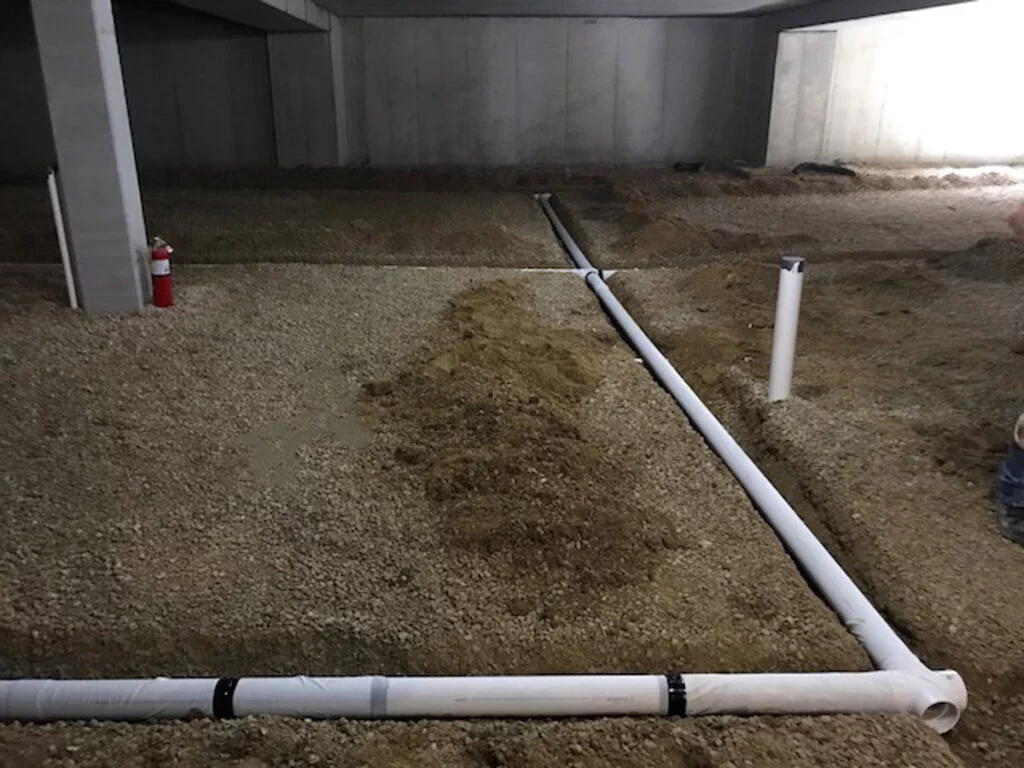

A Nevada radon business works before the hazard. The job is to find out whether a building carries an elevated level of a naturally occurring, colorless, odorless gas and, where it does, to install the system that draws that hazard back out before it can become harm — measurement and testing, sub-slab depressurization, vapor barriers and crawlspace sealing, and indoor air-quality work. Nevada is really two radon markets in one state, and knowing which one you are in is the first thing that shapes the account.
In the north and east — around Reno and across the rural interior — the federal map raises the classification, and the geology genuinely drives testing: elevated readings are common and mitigation is frequent. In the Las Vegas valley — Clark County — the map reads low, and the demand is transaction-driven, following the closings on one of the country’s fastest-moving housing markets. Both produce a professional opinion with a figure attached that someone relies on, and neither has a state license behind it: Nevada does not license radon work, and there is no ISO form written for the exposure. That is why radon coverage in Nevada is built around professional liability rather than around premises risk alone — no matter which half of the state the reading comes from.
This page walks what a Nevada radon program costs to build, the credential picture, the risks that define the work, the claims a specialty carrier sees, and the major Nevada markets where the work concentrates. It stays on the before-the-hazard side; the after-the-loss side — restoration work that responds to flood, wildfire, and water damage already done — lives on the Restoration Contractor Insurance in Nevada page.
What radon mitigation business insurance costs in Nevada
We do not quote a number on a state page, and there are no premium figures here by design — a Nevada radon program is priced to the operation, and these are the drivers that move it. The largest is your professional-liability posture: the limits you carry on the measurement opinion, because with no radon license behind the number, that signed opinion is where the defining exposure lives. Distinctive to Nevada is which region you work — a northern operation on high-radon ground carries a heavier mitigation and completed-operations profile, while a Las Vegas-valley operation carries a volume-heavy testing profile, and where you operate is a real rating input. Then come crew size and payroll, which drive the workers compensation piece for technicians in crawlspaces and confined spaces — a private-market placement in Nevada. Your equipment schedule under contractors equipment and your fleet under commercial auto round out the operating drivers — and Nevada’s long distances between markets can make the fleet exposure matter more here than in a compact state. Your claims history sits underneath all of it. We read those drivers against your actual Nevada operation rather than pricing a generic radon form.
Nevada radon regulations and licensing
Nevada does not license radon work, and it is worth being precise about what stands in its place. There is no state radon license or certification. Anyone may measure or mitigate radon for compensation without holding a state radon credential — there is no state exam and no state license number. What Nevada has instead is a state radon education program, run through the university extension, which endorses national certification through the recognized proficiency programs, the National Radon Proficiency Program and the National Radon Safety Board. That program is outreach and education; it points professionals toward a national credential, but it is not a state license and does not create one.
The consequence for a radon business is the same one that defines the class wherever the credential is voluntary: the reliance on your reading falls on the professional who signed the measurement and the contract it was performed under. A reading relied on at a Nevada closing stands on your own judgment and your own paper — a professional liability exposure in its purest form, which is why we arrange that line deliberately rather than assuming a general-liability policy reaches it.
The geography is the backdrop, and in Nevada it is genuinely two-sided. The northern and eastern counties carry higher Zone 1 and Zone 2 classifications, while Clark County and Las Vegas sit in the lower Zone 3. So a carrier underwriting a Nevada radon file reads the account partly by where it works: a northern operation on elevated ground looks different from a Las Vegas-valley testing shop, even though both are unlicensed and both live on the same professional-opinion exposure. Nevada’s workers-compensation market, for a growing crew, is a private, competitive one — no state-fund complication to plan around here.
Common radon risks in Nevada
The risks that define a Nevada radon operation are not the flash-flood and wildfire catastrophe risks that drive the restoration side of this brand — those are a different trade. Crews work the desert and mountain climate, but the exposure that actually defines the work is the measurement and the installed system, not the weather. The central risk is a number relied on at a closing that later reads differently. In the higher-radon north, readings can be genuinely elevated, raising the stakes on getting the measurement right; in the Las Vegas valley, the sheer volume of transaction-driven readings raises the stakes a different way, because there are simply more chances for a placement or timing error. Either way — a device placed wrong, closed-house conditions not held, a test cut short — a reading a later measurement contradicts is a professional-opinion problem, and with no state license behind the result the business that signed it stands alone. This is the professional liability exposure at the center of the page.
Two more judgment exposures sit alongside it, weighted toward the north. A clearance called too early — a post-mitigation test signed off before conditions were held — is the same opinion exposure on the install side, and it comes up more often where mitigation is frequent. And a system that fails after it is installed, months after the crew has left, is a completed-operations question that runs through general liability for the physical harm, with the design judgment sitting alongside it — heavier for a northern operation putting in a steady stream of systems than for a valley testing shop.
Then there is the crew. Sub-slab work means cutting through a slab, coring a suction point, and running pipe and a fan in tight, low-oxygen spaces — confined-space entry that is the defining physical exposure of the trade. A technician hurt on a Nevada sub-slab job is a workers compensation matter, placed in Nevada’s private, competitive market. The after-the-loss version of this work — crews responding to flood, wildfire, and water damage that has already happened — is a different trade on a different exposure, covered on the Restoration Contractor Insurance in Nevada page.
Common Nevada radon claims we see
These are described qualitatively, with generic carrier language and no dollar or severity figures — every claim is handled by the insurance carrier, never named here.
- A measurement contradicted after a Nevada closing. Your business tests a property, reports a reading, and a deal closes on it. A later test reads differently, and — with no state license to point to — the business that signed the number is drawn in. The exposure is the opinion, not the pipe: a professional-liability matter, whether the reading came from the high-radon north or the volume-heavy south.
- A clearance called too early. After a mitigation — more common in the north — a post-installation test is run and the system is signed off as effective, but conditions were not held and a follow-up would have read differently. The judgment behind the clearance is where the loss sits.
- A system that fails after install. A sub-slab depressurization system stops drawing the way it was designed to, months after the crew left, and a covered event follows from the completed work — a completed-operations question that weighs heavier on a northern operation putting in a steady stream of systems.
- A confined-space crew injury. A technician is hurt in a crawlspace on a Nevada sub-slab job — the kind of injury workers compensation answers, placed in Nevada’s private, competitive market.
Major Nevada radon markets
Radon demand in Nevada runs on geology in the north and on transaction volume in the south, and the major markets sit on both sides of that line. These are the markets that fill a Nevada radon calendar, and what each one means for the work.
Las Vegas
Las Vegas anchors the southern market, where the map reads low but the housing market is enormous and fast-moving. Testing here is transaction-driven — a steady stream of relocation and resale closings on a large valley of slab-on-grade construction — so the professional-opinion exposure rides on sheer volume rather than elevated ground.
Henderson
Henderson’s master-planned suburban growth gives the Las Vegas valley much of its new-construction and first-sale testing. On lower-radon ground, the demand is transaction- and construction-based, and the newer housing stock shapes how a mitigation system is designed on the rare occasions one is called for.
Reno
Reno anchors the northern market, where the map steps up and the geology genuinely drives testing. In-migration and a growing tech-and-logistics economy keep closings high, and the higher-radon ground of the Truckee Meadows means readings are more often elevated and mitigation more frequent than in the south.
North Las Vegas
North Las Vegas’s rapid residential and industrial expansion adds first-sale closings to the southern valley’s calendar. Like the rest of Clark County it sits on lower-radon ground, so testing is transaction-driven, and the pace of new construction keeps the volume steady.
Sparks
Sparks sits alongside Reno in the higher-radon Truckee Meadows, sharing the northern market’s geology-driven demand. Its warehouse-and-logistics growth corridor drives workforce-housing turnover, feeding both resale testing and the mitigation work the elevated ground makes common.
Carson City
The state capital sits in the northern high country, on ground that reads higher than the southern valley, so testing here follows the geology as much as the closings. A stable government-and-regional-hub economy keeps residential turnover steady, and the terrain makes mitigation design a local judgment.
Why Nevada radon businesses choose Restoration Guard
We are an independent agency that writes one world — restoration and radon mitigation — and we place coverage with insurance carriers that actually want the work. In Nevada that focus matters because the state is genuinely two markets, and a generic broker tends to price it as one: the high-radon north around Reno, where the geology drives testing and mitigation is frequent, looks nothing like the low-radon Las Vegas valley, where testing is transaction-driven and volume-heavy — yet both are unlicensed, and both live on the same professional-opinion exposure. We know to ask where you work and how your book splits between testing and mitigation before we quote; to arrange professional liability deliberately for a number that stands on your own judgment and your own contract, since the university program endorses a credential but no state license backs it; and to account for the long-distance fleet exposure a spread-out state creates. When a contract lands with limits or endorsements you do not recognize, that is a call we take. Start with a quote, or talk it through with us first.
Learn more
Coverage for a Nevada radon business works as a system built around one signature line. It leads with professional liability for the measurement opinion no state license stands behind, then adds general liability for the third-party and completed-operations exposure of install work, workers compensation for the crew in crawlspaces and confined spaces, contractors equipment for the fans, monitors, and instruments, commercial auto for the fleet, and excess liability when a contract demands higher limits.
The signature line
The rest of the program
- General Liability Insurance
- Workers Compensation Insurance
- Contractors Equipment Insurance
- Commercial Auto Insurance
- Excess Liability Insurance
Insurance by the operation you run
The other Nevada page
Get covered
Primary sources
Nevada radon mitigation insurance FAQs
What does radon mitigation business insurance cover for a Nevada radon business?
It is the coverage program for a radon operation working in Nevada — measurement and testing, mitigation-system design and installation, sub-slab depressurization, vapor barriers and crawlspace sealing, and indoor air-quality work. The line that defines the class is professional liability, because the measurement your business signs is an opinion with a figure attached that someone relies on, very often at a real-estate closing, and there is no ISO form written for that exposure. Around that signature sit the everyday lines: general liability for third-party injury and property damage, workers compensation for the crew in crawlspaces and confined spaces, contractors equipment for the fans and monitors, commercial auto for the trucks, and excess liability when a contract calls for higher limits. Nevada is a state of two very different radon markets, north and south, so we build the program to the region and the operation you actually run.
Does Nevada license radon measurement or radon mitigation?
No. Nevada has no state radon license or certification. The state radon education program, run through the university extension, endorses national certification through the recognized proficiency programs — the National Radon Proficiency Program and the National Radon Safety Board — rather than issuing a state credential. That endorsement is education and outreach, not a state license, and it does not create one. The practical effect is that the reliance on your reading falls on the professional who signed it and the contract it was performed under, which is exactly why professional liability carries the weight it does for a Nevada radon business — the university program points to a national credential, but nothing puts a state license number behind the number you sign.
Is radon a real exposure in Nevada, or only in Las Vegas?
It is real, and it is strongest away from Las Vegas — which is the opposite of what many assume. By the federal Map of Radon Zones, Nevada is split: the northern and eastern counties carry higher Zone 1 and Zone 2 classifications, while Clark County and Las Vegas sit in the lower Zone 3. So in the north, around Reno and the rural east, the geology drives testing; in the Las Vegas valley, the demand is transaction-driven, following the closings on a large, fast-moving housing market rather than a hot map. Both produce readings someone relies on, and both are professional-opinion exposures — the difference is what fills the calendar, not whether the exposure exists.
Do you insure the home buyer or the seller at a Nevada closing?
No. We insure the radon business, never the property owner, the buyer, or the seller. The Nevada closing where your reading gets relied on is your operating environment — it is why a professional-liability exposure exists for you — but nothing on this page is advice to anyone about their transaction, their result, or whether their loss is covered. When we talk about a claim, we mean a claim on your policy: the radon business defending the number it signed, or working within the claims process on a covered matter. The people relying on your measurement have their own advisors; our job is the coverage on your operation.
Does the north–south split change how my coverage is built?
It can, because the two markets present the exposure differently. A northern Nevada operation around Reno and the rural east works genuinely elevated ground, where readings are often high and mitigation systems get installed frequently — which weights the completed-operations and design-judgment side of the risk. A Las Vegas-valley operation works lower-radon ground where testing is transaction-driven and volume-heavy, so the professional-opinion exposure rides on the sheer number of readings tied to closings. We ask where you work and how your book splits between testing and mitigation before we quote, so the program reflects the region you actually operate in rather than a single statewide assumption.
Does this insurance cover my trucks, and what do you mean by carrier?
Your service vans and the trucks that carry pipe, fans, and instruments to a Nevada job run through commercial auto — the at-fault accident, the physical damage, and the auto liability on the road are an auto matter, not a general-liability one. One note on language, because this trade uses the word constantly: your insurance carrier is the company that writes your coverage, which is a different thing from a motor carrier that hauls freight for hire. We insure the fleet a radon business runs in service of its own testing and installation work, not a for-hire trucking operation, and the distinction changes how the auto exposure is rated.
Get Nevada radon coverage built around the number someone relies on
Tell us where you work and how your book splits between testing and mitigation, and we will market it to insurers that write the class — with the measurement exposure arranged, not assumed, in a state that puts no license behind it.