
States we serve · Vermont
Radon mitigation insurance in Vermont
Coverage for the before-the-hazard trade in Vermont — radon testing, sub-slab depressurization, and mitigation installs across an honestly moderate state that reads Zone 2 nearly everywhere. The defining exposure is the reading your operation logs, in a state whose health department refers the work but licenses none of it.
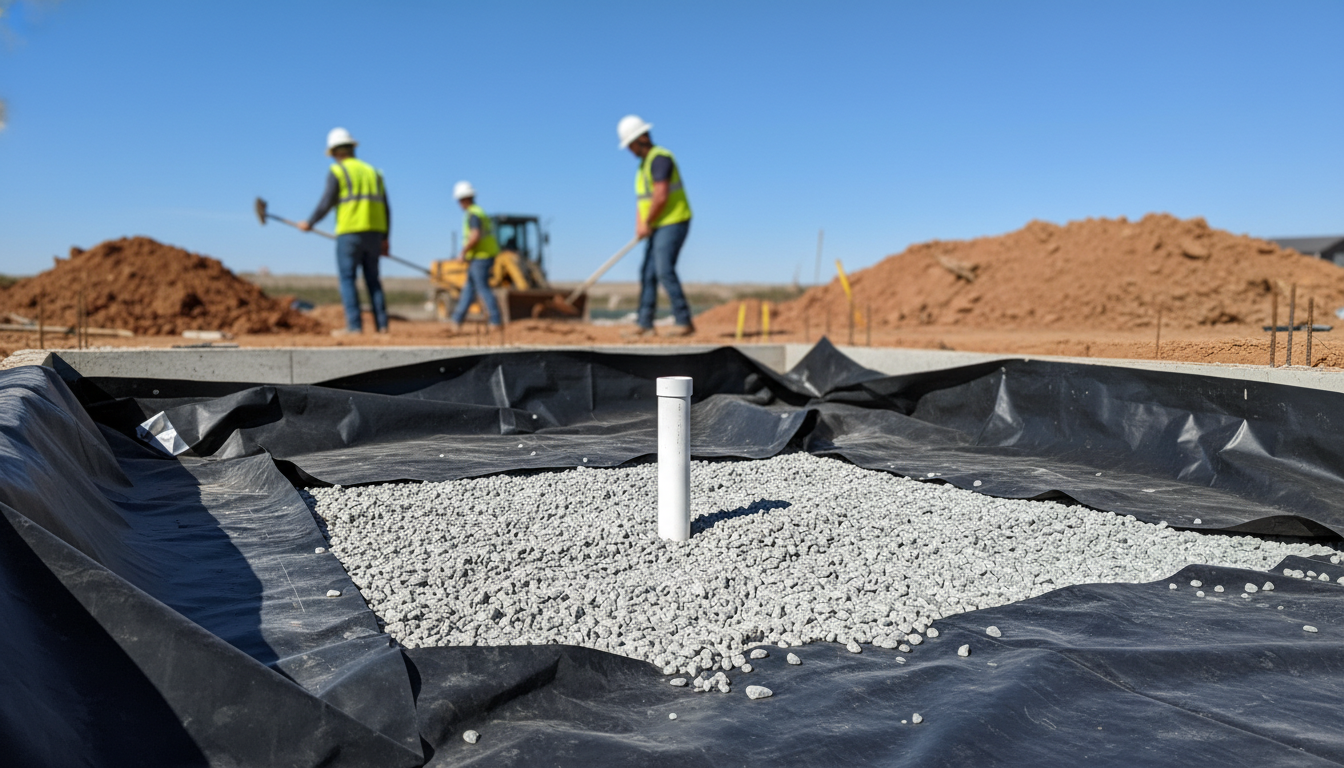

Radon is before-the-hazard work on this brand’s map. A Vermont operation is hired to find out whether a building holds too much of a colorless, odorless gas that rises out of the ground on its own, and, where it does, to install the system that draws that gas back outside before it becomes harm — testing and measurement first, then sub-slab depressurization, vapor barriers, and the sealing Vermont’s old cellars call for. What sets the Vermont version apart is an honestly middle geography: the state is neither a radon hot spot nor a low-reading outlier, so the map keeps the work relevant everywhere without ever making the case on its own.
The figure your operation logs is where the exposure concentrates. A radon reading is a professional opinion carrying a number, and a Vermont sale often turns on whether that number sits above or below the action level. No ordinary property form is written for a judgment like that, and Vermont supplies no state credential to share it — the health department refers the public to certified professionals but does not license them, so the business that logged the reading owns it. That is why coverage here is organized around professional liability rather than premises risk. What follows: what shapes a Vermont program’s price, how the state handles credentials, the honest middle-zone geography, the defining risks, the claims an underwriter sees, and the Vermont markets where the work gathers.
One boundary first: this is before-the-hazard work. Crews that arrive after water, fire, or mold has already struck run a separate trade under a separate policy, and that belongs on the Restoration Contractor Insurance in Vermont page.
What shapes a Vermont radon program’s price
No premium appears here on purpose — a Vermont program is quoted to the operation, not to a form — but the inputs deserve naming. The heaviest is the professional-liability limit on the logged reading, because a state that credentials no one leaves that opinion as the account’s exposed edge. Next the work mix: testing-only, mitigation-only, and full-service operations read differently, and in an evenly moderate state that balance tends to sit in the middle rather than swing with the geology. From there the usual levers — payroll and crew count behind the workers compensation line for cellar work, the schedule of fans and monitors behind contractors equipment, and the fleet that covers a rural, mountainous state under commercial auto, where drive time between jobs is a factor of its own. Loss history underlies the quote. We weigh the real operation instead of a generic radon rate.
How Vermont handles radon credentials
Vermont issues no radon credential, and reading an account here begins with saying so plainly. No state exam admits anyone to the trade, no roster lists who may work in it, and no state number stands behind a result. What the state does is refer: the health department points the public toward professionals certified through the national proficiency programs — the National Radon Proficiency Program and the National Radon Safety Board — for both measurement and mitigation. A referral is a genuine quality signal and the credential a lender looks for. It is still not a license, and it does not become one.
The effect is to move the discipline onto the business. A licensing state sets a credential between the professional and the party acting on a number; Vermont sets nothing there, so competence and contract carry the load. A figure logged on a Vermont report and then relied on in a sale rests on the operation’s own judgment and its own paperwork — the pure form of a professional liability exposure, and the reason we place that line deliberately rather than expect a general-liability policy to reach it.
The geography is the part most worth stating exactly, because it is easy to overstate. Federal zoning reads Vermont as Zone 2 statewide — the moderate middle — with no Zone 1 county anywhere in the state; Chittenden and Grand Isle are its only two Zone 3 counties, at the lower end. Vermont is neither high-radon nor low: it sits in the middle nearly everywhere. So the map keeps testing worthwhile across the state without flagging a hot county, and the demand is a real mix, steady enough for a testing calendar and timed by the sale calendar. An underwriter reads that honest middle posture straight into a Vermont file.
The risks that define Vermont radon work
The exposures that count here are not the disaster losses that drive this brand’s restoration side. Vermont crews work through deep winters and ice-dam season, but the weather is not the trade’s defining risk — the logged figure is. The central one is a reading acted on in a sale that a later test contradicts: a device placed poorly, closed-house conditions that were not held, a run ended early — each can produce a number the next measurement disputes. With no state credential to share it, the business that logged the reading answers alone. This is the professional liability risk at the heart of the page.
Two related judgment exposures round it out, and Vermont’s winters sharpen one of them. A clearance signed too soon — a post-mitigation check called good before a house buttoned against the cold had truly settled — carries the same opinion risk onto the install side. And a system that fails after handoff raises a completed-operations question running through general liability for the physical damage, the design decision examined beside it.
Then the crew. Coring a slab, cutting a suction point, and threading pipe and a fan through the deep basements and old fieldstone cellars common in Vermont housing is confined-space work — the physical hazard that defines the trade, below a hard frost line. A technician injured in a Vermont cellar on a sub-slab job is a workers compensation matter, resolved through the state’s private, competitive market.
Claims a Vermont radon underwriter sees
Given in general terms — no dollar figures, no severities, no insurer named — because each is handled by the insurance carrier on the account.
- The reading that did not hold. A property reads under the action level, a Vermont sale closes on that figure, and a later test comes back high. Without a state credential to cite, the business that logged the number is drawn in — a dispute over the opinion, not the hardware, and therefore professional liability.
- The winter sign-off. A post-mitigation verification is called effective before a house closed up against the cold had settled to normal conditions; a re-test would have disagreed. The exposure lives in the clearance judgment.
- The fan that failed. A depressurization system stops drawing air months after handoff, and damage follows the completed work — a completed-operations claim on general liability, the install decision reviewed beside it.
- The cellar injury. A technician is hurt in an old fieldstone-foundation basement on a Vermont sub-slab job — the workers compensation line, run through the state’s private market.
Where the work gathers in Vermont
Moderate geology keeps demand steady statewide, and it pools in the towns where sales happen. A quick tour of the major Vermont markets and what each brings to a book.
Burlington
Vermont’s largest city anchors Chittenden County on Lake Champlain, where a university-and-healthcare economy drives the highest residential turnover in the state. Chittenden reads at the low end of Vermont’s range, so the work here is sale-led — the market where transaction volume, not the map, fills a calendar.
South Burlington
Burlington’s fast-growing neighbor holds the metro’s commercial-and-retail core and a steady flow of newer housing. Its lakeside Chittenden ground reads low, so radon work runs on transactions, and its new-build share feeds some demand for builder-installed passive systems.
Rutland
The largest city in the southwestern marble country, Rutland carries a manufacturing-and-regional-services economy and an older housing stock. Its interior ground reads squarely in the state’s moderate middle, so a Rutland operation sees a steadier testing-and-mitigation blend than the low-reading lakeshore.
Montpelier
The country’s smallest state capital anchors a stable government economy in central Vermont, its sales turning on a steady, non-seasonal cadence. Moderate interior geology and an older building stock give a Montpelier operation a dependable mix of sale-led testing and mitigation.
Barre
The granite center of central Vermont sits on hard rock whose soil-gas behavior rewards a read before a system is drawn. Its working housing and moderate ground keep a Barre-area testing-to-mitigation mix steadier than the lakeshore markets.
Essex Junction
A growing Chittenden community on the metro’s east edge, Essex Junction blends suburban resale with the tech-and-manufacturing employment of greater Burlington. Its lower-reading county ground keeps testing sale-led, on a steady run of family-housing transactions.
Why Vermont radon businesses work with Restoration Guard
We are an independent agency devoted to one world — restoration and radon mitigation — placing coverage only with insurers that want the class. In Vermont the value of that is real, because a middle-zone state is easy to misjudge in either direction: a generalist may inflate the geology and misprice a moderate market, or wave radon off as incidental and miss that, with no state credential behind the figure, the professional-opinion exposure carries the whole account. We ask whether you test, mitigate, or both; we place the professional line deliberately for a number that answers to your judgment and your contract; and we quote to an honest, moderate, unlicensed market rather than a generic form. When a contract turns up with limits or endorsements you did not expect, reviewing it is a phone call. Start with a quote, or talk it through first.
Learn more
A Vermont radon program is a single system built on one signature line. Professional liability anchors it, answering for the logged figure no state credential backs; general liability carries the third-party and completed-operations risk of install work; workers compensation covers crews in cellars and tight spaces; contractors equipment schedules the fans, monitors, and instruments; commercial auto moves the fleet; and excess liability answers when a contract calls for higher limits.
The signature line
The rest of the program
- General Liability Insurance
- Workers Compensation Insurance
- Contractors Equipment Insurance
- Commercial Auto Insurance
- Excess Liability Insurance
Insurance by the operation you run
The other Vermont page
Get covered
Primary sources
Vermont radon mitigation insurance FAQs
How does Vermont’s middle-of-the-range radon map affect the work?
It keeps radon steadily relevant without ever doing the selling for you. Being exact matters here, because the geology is easy to overstate: the federal map reads Vermont as Zone 2 — the moderate middle — across the entire state, with no Zone 1 county anywhere, and its lowest readings, Zone 3, only in Chittenden and Grand Isle. So Vermont is neither a hot-spot state nor a low one; it sits in the middle nearly everywhere. Practically, that produces a genuine mix of work: the moderate map keeps testing worthwhile statewide, while the timing of most jobs follows the sale calendar rather than any flagged county. An underwriter reads that honest middle posture straight into a Vermont file — but it does not soften the core exposure, because a moderate reading acted on in a sale is still a signed judgment the business owns.
What does a Vermont radon business’s coverage take in?
It is a program shaped to one operation working across Vermont — testing and measurement, mitigation-system design, sub-slab depressurization, vapor barriers, and the crawlspace-and-cellar sealing Vermont’s old housing demands, plus air-quality work. The line at its center is professional liability, because the reading your operation logs is an opinion carrying a figure a buyer or lender relies on, usually within a sale, and no standard property form is drafted for that. Around it come the working coverages any contractor inside occupied buildings needs: general liability for injury or damage to others, workers compensation for crews in old cellars and tight spaces, contractors equipment for the fans and monitors on the truck, commercial auto for the vehicles that cover a rural, mountainous state, and excess liability when a contract asks for more limit. One note on a word this trade leans on: your insurance carrier is the company that writes that coverage, not a motor carrier that hauls freight for hire, and keeping the two apart changes how the auto line is rated. Whether you test, mitigate, or do both sets the shape, and we build to it.
Vermont refers radon work to national programs but doesn’t license it — what does that mean?
It means the discipline a license would impose lands on you and your contract instead. Vermont issues no state radon credential — no exam, no registry, no number behind a reading. What the state health department does is refer the public to professionals certified through the national proficiency programs, the National Radon Proficiency Program and the National Radon Safety Board, for both measurement and mitigation. A referral is a real quality signal, and holding a national certification is how a lender or an underwriter checks competence when the state offers no license. But a referral is not a license, and it puts nothing between you and the party acting on your figure. That gap is the reason a Vermont program leads with professional liability, and the reason the credential is worth carrying even though nothing compels it.
If my Vermont reading decides a sale, whose coverage is this — mine or the buyer’s?
Yours — the radon business — without exception. We do not insure the buyer, the seller, or the owner whose sale your reading touches. The Vermont closing is the setting your work is used in, and the reason a professional exposure exists for you, but nothing on this page advises anyone about their own transaction, their outcome, or what their homeowner policy might cover. A claim, in our usage, is a claim against your operation: standing behind the figure it logged, or handling a covered event through its own insurer. The people on the other side of the deal have their own advisors and their own policies; our concern is the coverage on the business that performed the test.
Do I need workers compensation for crews working Vermont’s old cellars?
In nearly every case, yes. Vermont runs a private, competitive workers-compensation market — the cover comes from an insurer, not a state fund — and most employers with staff must carry it. We do not post rates here. For a radon crew the line is a substantive part of the program rather than a box to tick, because sub-slab work in Vermont often means coring and sealing in old, deep-basement and fieldstone-foundation homes below a hard frost line — confined, physical work where injuries are a real risk. It sits in the program beside the professional line and the general-liability base, sized to your payroll and the work your crews actually perform.
Vermont winters are long — does the closed-house testing season create its own exposure?
It can, and it lands on the judgment side of the trade. Radon testing depends on closed-house conditions, and Vermont’s long heating season is exactly when readings tend to run their highest and when most testing gets done — which makes the accuracy of a winter test, and of the sign-off after a mitigation, a live professional-liability question. A post-install clearance called effective before a house buttoned up against the cold had genuinely settled can be contradicted by a later reading; the loss then lives in the clearance judgment rather than the installed system. It is one reason we treat the professional line as central for a Vermont operation, whose calendar concentrates in the season when the readings matter most.
Get Vermont radon coverage built around the number someone relies on
Tell us whether you test, mitigate, or both, and we will market it to insurers that write the class — with the measurement exposure arranged, not assumed, in a middle-zone state that puts no license behind it.