

A fire and water restoration contractor’s insurance should include general liability, contractors pollution liability, workers compensation, commercial auto, contractors equipment coverage, and bailees coverage, with professional liability and excess liability added when the work or the contract requires them. The checklist below goes line by line and names the fire and water exposure each one exists to answer.
The point of a checklist is not to own every line. It is to confirm that each exposure in your work has a line that answers it by name, and not by assumption. Fire and water restoration is a trade where the assumptions fail on the worst day: the policy that looked complete turns out to exclude the thing the crew was hired to remove.
Go down the list with your own policies in hand. For each line, ask three questions. Do I have it? Does it follow the work I actually perform? Does the wording answer fire and water scopes, or only a generic contractor? The sections below give you the exposure for each line so the second and third questions have something to check against.
General liability: the operations base
General liability is the foundation: the damage or injury your crew causes to someone else’s property or person in the course of the work. A drying crew that leaves a hose where a tenant trips, or a fire cleanup that damages a finish the customer did not expect to lose, starts here.
Check the exclusions before you check the limit. General liability typically excludes pollution, and it may exclude professional services, so it answers less of a restoration loss than the label suggests. Confirm that the form addresses your contracts, including any requirement that a client or program be named on the policy. Then look at completed operations: a fire rebuild or a repaired water loss can produce a claim long after your crew has left, and you want to know the form still answers when it does.
It also helps to read the definitions. Terms such as “your work,” “your product,” and “pollutants” decide how far the coverage reaches, and a restoration company is one of the few trades where all three show up in the same job. A checklist can tell you the line exists. Only the wording tells you whether it responds.
Contractors pollution liability: the line fire and water work needs
This is the line most often missing, and it is the one fire and water work leans on hardest. Water damage can involve contaminated water and, if it sits, microbial growth. Fire leaves soot, smoke residue, and the byproducts of burned materials throughout a structure and its air handling. Those are the substances a standard pollution exclusion removes from general liability.
The two loss types stress the line differently. On a water loss, the question is usually what the water carried in and what grows if the structure stays wet, so the exposure is contamination and microbial growth that spreads or returns after you leave. On a fire loss, the question is where the residue travels, including into ductwork and air handling, and whether a cleaning that does not hold becomes an allegation against you. In both cases the line you need is one written for contractors who handle the substance, not for a property owner who owns it.
Contractors pollution liability is written for the exposure of releasing, spreading, or failing to control those conditions while you work. EPA publishes guidance on remediating moisture and mold problems in schools and commercial buildings, a useful reminder that moisture control and mold are a single problem on a water loss.
Workers compensation: crews in damaged structures
Fire and water crews work in buildings that were not built to be worked in at that moment: wet floors, compromised finishes, residue in the air, and in fire work, structures whose condition is uncertain. Workers compensation answers injuries to your own people.
The unusual feature of the trade is respirator and confined-space work, where the line that protects the person is not always insurance. We cover that in Respirators, Crawlspaces, and the Line That Answers Your Crew. Confirm that your classification matches what your crews actually do, because a mismatch between the payroll described and the work performed is a common source of audit disputes. If you use subcontractors or traveling crews during a surge, ask how their injuries are treated under your policy, since the answer depends on how they are engaged and what their own coverage shows.
Commercial auto and contractors equipment: the fleet and the gear
Response time is the product, so the vehicles that earn the work also carry the most exposure on the road. Commercial auto covers the fleet, including vehicles loaded with equipment and moving between losses. Check that it names the vehicles and drivers you actually use, and how it treats owner-supplied or employee-owned vehicles pressed into service during a surge. We take the fleet apart in The Truck Is the Business: Restoration and Commercial Auto.
The gear is the second half of that picture. Drying equipment, air movers, air scrubbers, and cleaning machinery earn by leaving your yard. Contractors equipment coverage is written for property that moves between jobs. Policies built around a location can miss a fleet that sits at customers’ properties for days, which is the subject of Drying Equipment Floater: The Fleet at Someone Else’s Loss. Confirm how the form treats equipment left on a customer’s site, in a vehicle overnight, or in a subcontractor’s hands.
Bailees coverage: other people’s belongings
Fire and water losses move contents. Pack-out, cleaning, and storage put a household or a business inventory into your custody, and none of it is yours. Bailees coverage is the line written for that, and Their Goods, Your Building: Bailees and the Pack-Out explains where assumptions about property coverage fail. Confirm the limit, where it applies, and whether it follows goods to off-site storage. Ask also whether it responds to loss from fire or water in the storage location itself, which is the exposure a restoration company has less excuse than most to overlook.
Professional liability and excess liability: the lines that depend on your work
Two lines are conditional. Professional liability matters where your advice, documentation, or scoping can itself be the allegation, because general liability may exclude professional services. Ask whether your work includes that kind of decision-making.
Excess liability matters when a contract or a large commercial client asks for a limit above your primary lines. The question is not only the limit but which policies it sits over, and whether it follows your pollution wording.
Real-World Scenario: A restoration company handles a kitchen fire and a water loss in the same week. The certificate it sends for both lists general liability, auto, and workers compensation, and a client reads it as complete. When soot spreads into an air handling system during the fire job, the question becomes whether the company holds a pollution line that responds to residue it was hired to clean. The crew did the work correctly. Only the checklist, run before the job, would have shown whether the policy matched it.
Where fire and water pull on the program differently
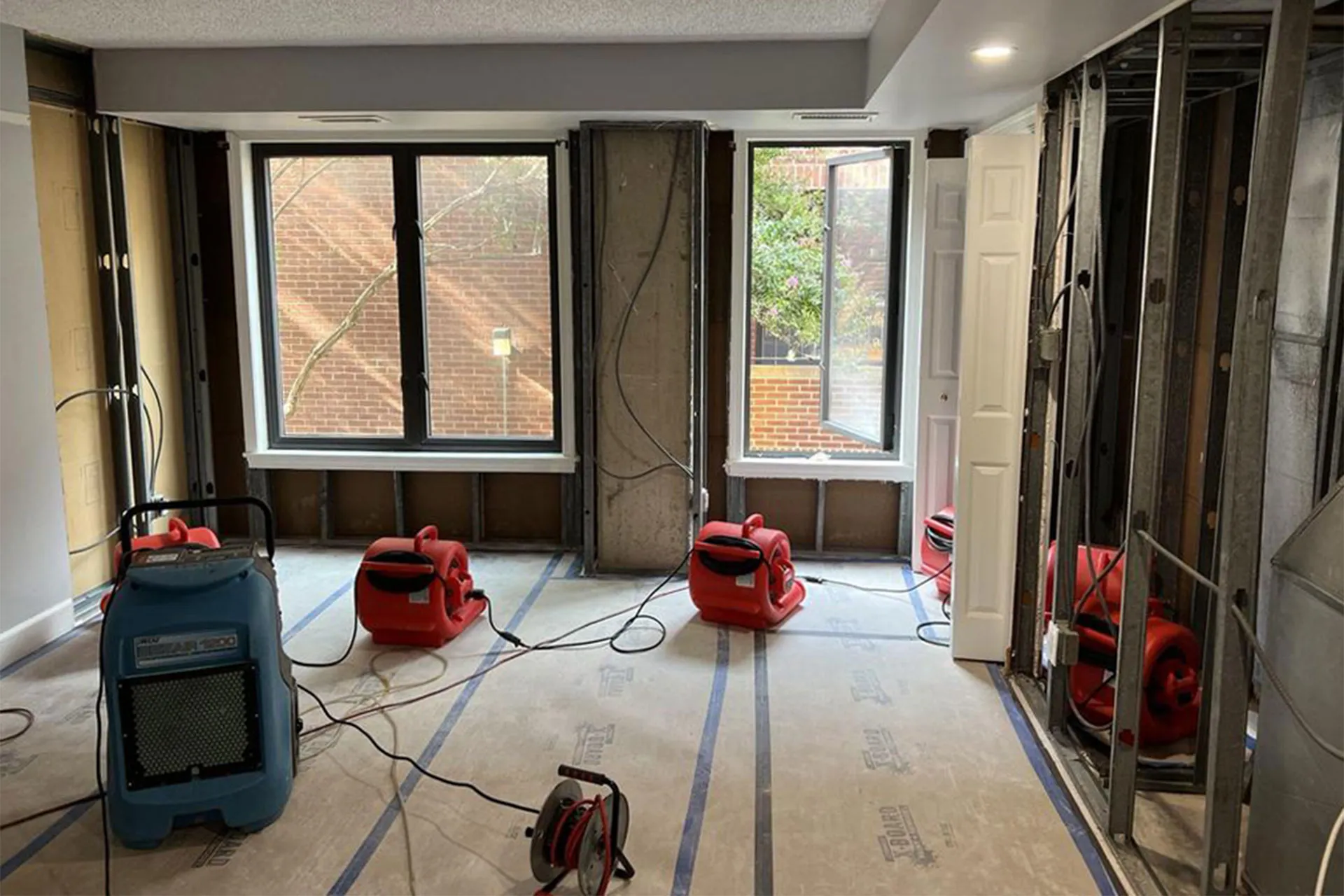
The same company can have a program that fits one loss type better than the other. Water work leans on the equipment line and on the pollution line where contaminated water or mold is involved, and its authority is the ANSI/IICRC S500 standard for professional water damage restoration. Fire work leans harder on pollution for residue, on workers compensation for structures in uncertain condition, and on bailees coverage because fire contents work often runs long.
Neither is the hard case. The hard case is the company that does both and bought its program around one. The checklist is a way to find that out in an afternoon instead of at a claim.
Before you send the next certificate
Run the list against your own policies, mark each line yes, partial, or no, and write the word “by name” next to the ones that answer a specific exposure. Whatever is partial or missing is the work to do before your next job, not after it. Keep the marked-up list with your renewal file, so that when you add a service or a client asks a new question, you are updating a record instead of starting over. The restoration contractor insurance page shows how we build the program, and you can ask for a quote review to have yours read line by line.
Sources
- ANSI/IICRC S500, Standard for Professional Water Damage Restoration — the standard’s published description covers procedures and precautions for water damage restoration in residential, commercial, and institutional buildings. It states nothing about insurance. iicrc.org/s500
- EPA, Mold Remediation in Schools and Commercial Buildings Guide — EPA’s guidelines for cleanup of mold and moisture problems. It does not address insurance coverage. epa.gov/mold