

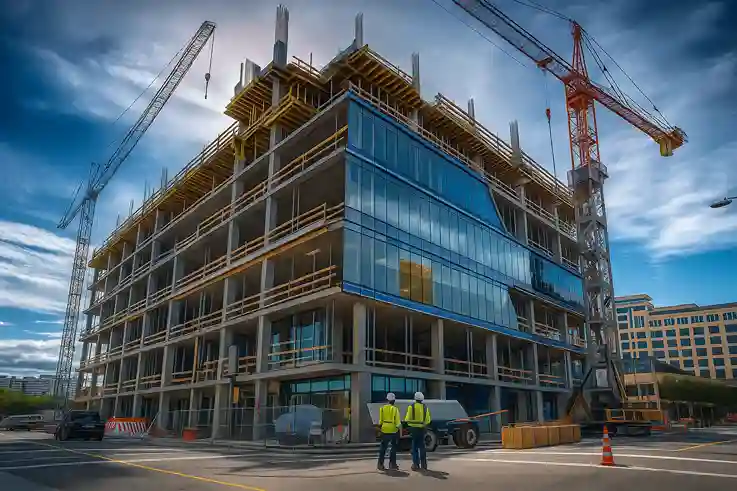
Mold remediation contractors need contractors pollution liability, because general liability typically excludes mold and fungi. A pollution policy for remediation contractors is written to respond to third-party bodily injury, property damage, and cleanup costs from a mold condition your work releases, spreads, or fails to control.
Why remediation contractors buy a separate pollution policy
The reason is the exclusion. General liability is the policy contractors expect to answer when something goes wrong, and for most trades it does. For mold remediation it carries an exclusion for the very condition the contractor was hired to remove. We tell that story at length in Does General Liability Cover Mold Remediation Contractors? and will not repeat it here.
This post starts one step later: you accept that you need the pollution policy, and the question becomes what to look for in it. The pollution line is the subject of the contractors pollution liability page. What follows is how its wording decides outcomes in the mold trade.
What the policy is built to answer
A well-written pollution policy for remediation work responds to three things. The first is bodily injury claimed by a third party, such as an occupant or a neighboring tenant, alleging harm from a condition your work released or spread. The second is property damage, including contamination of materials or contents that were clean before. The third is cleanup cost, the expense of putting right a condition your work caused. Behind all three is defense: the cost of answering the allegation, which can be the largest cost of a claim that never pays out.
The pollution condition has to be one the form recognizes. A policy that describes “pollutants” in general terms and a policy that names mold and fungi make different promises, so check that the word appears.
Does the form describe the work you actually do?
Pollution policies are written around covered operations, and the description is where mismatches hide. A remediation contractor might perform removal, containment, drying, cleaning, air filtration, and demolition of affected materials. Some also test, sample, or consult. Some also rebuild.
The form should describe the operations you perform. If you do something the form does not mention, an insurer may argue the work sits outside the policy. Ask the person placing your coverage to read the operations description against your actual job list, and update it when the list changes. The ANSI/IICRC S520 standard is described by the IICRC as a procedural standard for the remediation of mold-damaged structures and contents, and it is a useful way to describe what you do in terms the underwriter will recognize.
Claims-made terms: when the claim has to be made
Mold problems are patient. A remediation that looks complete can surface as an allegation months or years later, when a tenant complains or a buyer’s inspector finds something. Whether your policy responds depends on its trigger.
Many pollution forms are written on a claims-made basis, which means the policy must be in force when the claim is made, not only when the work was done. That raises three questions. What is the retroactive date, and does it reach back to the jobs you have already completed? What happens if you change carriers or let the policy lapse, and will the new form carry the date forward? And is there an extended reporting option if you leave the market or close the business? A policy with a good limit and an unfavorable retroactive date is a worse policy than it looks. Write the date down at every renewal and compare it to the date of your oldest job still within reach of a complaint; if the two have drifted apart, that is the conversation to have with whoever places the policy before the next renewal, not after a claim.
The exclusions inside the pollution policy
The exclusion that sends you to a pollution policy is on the general liability form. The exclusions that matter next are inside the pollution form itself, and they get less attention.
Four are worth asking about. Known conditions: a policy may decline to cover a condition you knew about before it started. Faulty workmanship or failure to perform: an allegation that the remediation was inadequate, as opposed to having released or spread a condition, can be treated as a performance failure. Professional services: testing, consulting, and clearance decisions may be carved out unless the form includes them. Contractual liability: obligations you assumed in a contract, beyond what the law would impose on you anyway, may be limited.
None of these is unusual, and a good form is not one with no exclusions. It is one whose exclusions you have read and can describe, before a claim makes you read them.
When the job clears and the problem returns
Mold remediation often ends with a verification step, commonly some form of post-remediation testing or inspection. A job can pass and still produce a later allegation: that the problem recurred, that a source was missed, that a neighboring space was affected. Whether the pollution policy responds depends on the allegation.
If it says your work spread or failed to control the condition, a pollution form is aimed at that. If it says the work was never adequate, the faulty-workmanship language may be in play. If it says your testing or clearance was wrong, professional services language may matter. The practical defense is documentation: conditions at start, procedures followed, containment, and results at completion, kept in a file you can produce. EPA’s guide to mold remediation in schools and commercial buildings discusses investigating, evaluating, and remediating moisture and mold problems, and is a useful reference for what a documented job looks like.
Real-World Scenario: A remediation contractor completes a job in a small commercial suite, the post-remediation check passes, and the tenant moves back. Some time later, the tenant alleges that the condition returned and affected stored inventory. The contractor’s pollution policy is claims-made, and the contractor switched carriers during the year without carrying the retroactive date forward. The new form covers the new jobs and not the old one. The remediation was sound. The coverage had a gap because nobody asked about the date at the switch.
Mold remediation contractor insurance beyond the pollution line
The pollution policy is the center of a remediation contractor’s program and not the whole of it. The crew still drives trucks, so commercial auto applies. The air scrubbers, dehumidifiers, and containment equipment still sit at other people’s properties, so contractors equipment coverage applies. And the ordinary damage a crew can do while it works, a cracked fixture or a stained floor, still belongs to general liability.
The point of keeping the pollution line at the center is simple. It is the one policy in the program that answers the thing the business is for, and the one an underwriter will read first when deciding whether to write the rest. The others answer what any contractor might do wrong. This one answers what only a remediation contractor can be accused of, and it is the one most likely to be tested by a stranger’s lawyer.
Subcontractors, crew, and the rest of the program
Mold work rarely stands alone. Many remediation contractors subcontract part of the work, such as demolition or air testing, and the pollution form should be read for how it treats work done on your behalf. Your own crew is covered by workers compensation, and the respirator and containment realities of the trade are discussed in Respirators, Crawlspaces, and the Line That Answers Your Crew.
Where the work extends into asbestos or lead, the pollution form needs to name those materials too, which we cover in Abatement Contractor Insurance: Coverage for Mold, Asbestos and Lead Jobs. Where the contract asks for more limit than the primary lines reach, read The Tower Gap: Does Your Excess Reach the Pollution Line? before relying on the layer above.
Questions to ask before you buy or renew
Read the pollution form against your job list. Does it name mold and fungi? Does it describe the operations you perform, including any testing or consulting? Is it claims-made, and what is the retroactive date? What does it say about defense costs, subcontractors, and known conditions? Does it respond to a remediation allegation that sits near the line between spread and inadequacy?
If you are still working out which coverages the trade needs overall, Insurance Restoration Contractor: Which Coverages Do You Actually Need? ranks them. For a second reader on your pollution form, see how we build the program on the restoration contractor insurance page and ask for a quote review.
Sources
- ANSI/IICRC S520, Standard for Professional Mold Remediation — described by the IICRC as a procedural standard for the remediation of mold-damaged structures and contents. It states nothing about insurance. iicrc.org/s520
- EPA, Mold Remediation in Schools and Commercial Buildings Guide — EPA’s guidelines for investigating, evaluating, and remediating moisture and mold problems. It does not address insurance. epa.gov/mold