

Illinois licenses radon measurement and radon mitigation as separate credentials, through the Illinois Emergency Management Agency, with technician and professional tiers built on approved national qualifying exams.
Separate is the word doing all the work in that sentence.
The state has declined to assume that somebody who can install a system can also produce a defensible reading — or that somebody who can produce one has any idea how to fix what it found. Most people describe themselves as a radon company, singular. Illinois looked at that description and said: no, there are two things here.
It is right, and the reason it is right explains most of what a business here should understand about its own exposure — none of which arrives from a rate table.
The state will not assume one implies the other
The instinct is to read a separated license as administrative fussiness. It is not. It is a claim about competence, and the claim is correct.
Measuring is a judgment act. Where does the device go, and why is that location representative of what this household actually breathes? What conditions will be maintained while it sits there? Which protocol applies? What does the output mean?
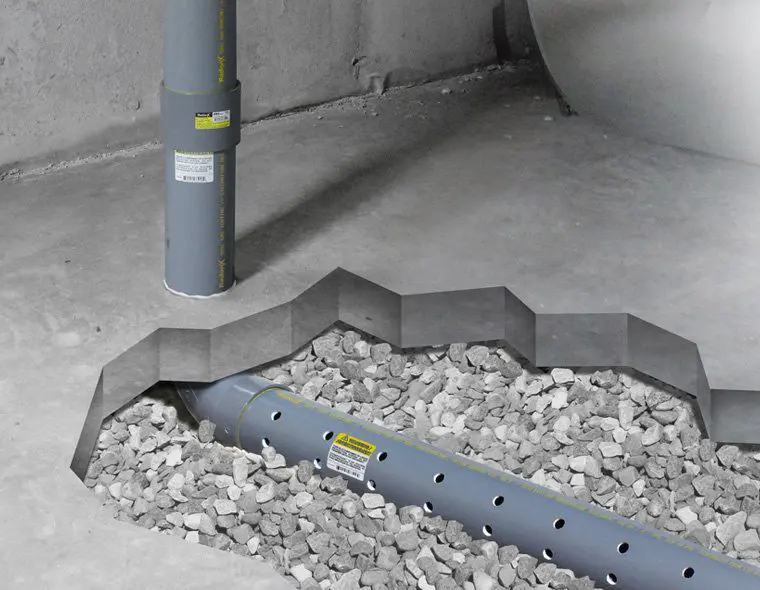
Mitigating is a construction act. How should a system be designed for this particular building? Where does the slab get cored and sealed? How does pipe and fan run through a house somebody lives in? Does the thing work?
Nothing about being good with a slab implies being good with a protocol. They are learned differently, practiced differently, and — this is the part that reaches your program — they fail differently.
Two different competencies wearing one trade name
Which means a business doing both halves is running two professions under one roof, whether or not it has ever put it that way.
That is not a problem. It is extremely common and often the right model — the customer with a high reading wants the system, and sending them elsewhere is friction nobody needs.
But it does mean the honest description of your company has two halves in it, and an underwriter is going to want the split. A business that mostly measures and occasionally installs is a different risk from one that mostly installs and measures to find work.
Which half carries the weight
Here is the part that inverts most owners’ intuition.
Mitigation is the visible half. It has trucks, materials, a crew, and a physical result you can photograph. It can be done badly, it can injure a technician, it can damage a building. Those are real exposures with familiar shapes and, generally, ceilings.
Measurement has a monitor in a bag.
And measurement is the half that prices you. Because it produces an opinion somebody relies on, frequently at a closing, and a wrong opinion has no comparable boundary. It surfaces late. It argues about judgment rather than about events people watched happen. And it lands outside the general-liability line entirely.
So the half with the lighter equipment carries the heavier exposure. The state separated them; the risk did not split evenly.
The reading is still the exposure
A standard policy is built around general liability — the visitor who trips over your equipment, the property you damage by accident. Real; not definitive.
A device placed somewhere unrepresentative, conditions you did not control, a protocol chosen loosely, a clearance passing a house that should have failed — each is a claim about your judgment, and professional liability is what answers, not the general-liability line.
The credentials are entry conditions. They establish that you met a standard and may perform the work; they say nothing about whether this measurement, in this house, on this day, was produced properly — which is the only question a claim ever asks. How much of your revenue rides on opinions people act on, and how disciplined the protocol behind them is, sets your price.
Zone 1, and the instruments between the halves
Illinois sits predominantly in Zone 1, with a large Zone 1 footprint across the northern and central counties. Most houses are candidates and an elevated reading is unremarkable.
The quiet risk is drift: when the answer feels known before you arrive, placement gets convenient rather than representative, and conditions go unrecorded because everybody already knows. The contested file is never the house that read high in a Zone 1 county — it is the one that read differently from how it should have, on a day when nothing seemed to be at stake.
The equipment sits between the two halves and is modest either way: continuous monitors, grab-sample devices, manometers and pressure gauges on the measurement side, and system materials on the other. Contractors equipment schedules it for what it is worth and where it travels — precise instruments rather than a heavy fleet.
The crew, the record, the choice
Where you install, the crew exposure is real: confined-space entry into crawlspaces and attics, coring through slab, pipe and fan run in tight spaces. Workers compensation runs through a private, competitive market here, and the classifications should describe that work rather than the trade name. Vehicles ride on commercial auto, and one vocabulary note: an insurance carrier writes your coverage, while a motor carrier hauls freight for hire.
Your loss record carries weight beyond its length, because a professional claim speaks to the judgment the business rests on. Limits and retention are the genuine choice: fund the small things and buy a serious professional and excess limit. Certification carries its own fees; those are not insurance and we do not quote them.
Two credentials, two competencies, one uneven risk
<rect x="30" y="54" width="300" height="130" rx="9" fill="#F1E5D6" stroke="#12703F"/>
<text x="180" y="78" text-anchor="middle" font-family="Inter, system-ui, -apple-system, 'Segoe UI', Roboto, sans-serif" font-size="13" font-weight="600" fill="#12703F">Mitigation — a construction act</text>
<text x="180" y="100" text-anchor="middle" font-family="Inter, system-ui, -apple-system, 'Segoe UI', Roboto, sans-serif" font-size="11" fill="#5A5048">Design, coring, sealing, pipe and fan</text>
<text x="180" y="120" text-anchor="middle" font-family="Inter, system-ui, -apple-system, 'Segoe UI', Roboto, sans-serif" font-size="11" fill="#5A5048">Visible, physical, photographable</text>
<text x="180" y="140" text-anchor="middle" font-family="Inter, system-ui, -apple-system, 'Segoe UI', Roboto, sans-serif" font-size="11" fill="#5A5048">Trucks, materials, a crew</text>
<text x="180" y="166" text-anchor="middle" font-family="Inter, system-ui, -apple-system, 'Segoe UI', Roboto, sans-serif" font-size="11" font-style="italic" fill="#5A5048">Real exposures — with ceilings</text>

<rect x="370" y="54" width="300" height="130" rx="9" fill="#C7683F" stroke="#12703F"/>
<text x="520" y="78" text-anchor="middle" font-family="Inter, system-ui, -apple-system, 'Segoe UI', Roboto, sans-serif" font-size="13" font-weight="600" fill="#1A1A1A">Measurement — a judgment act</text>
<text x="520" y="100" text-anchor="middle" font-family="Inter, system-ui, -apple-system, 'Segoe UI', Roboto, sans-serif" font-size="11" font-weight="600" fill="#1A1A1A">Placement, conditions, protocol</text>
<text x="520" y="120" text-anchor="middle" font-family="Inter, system-ui, -apple-system, 'Segoe UI', Roboto, sans-serif" font-size="11" font-weight="600" fill="#1A1A1A">Interpretation, and your name on it</text>
<text x="520" y="140" text-anchor="middle" font-family="Inter, system-ui, -apple-system, 'Segoe UI', Roboto, sans-serif" font-size="11" font-weight="600" fill="#1A1A1A">A monitor in a bag</text>
<text x="520" y="166" text-anchor="middle" font-family="Inter, system-ui, -apple-system, 'Segoe UI', Roboto, sans-serif" font-size="11" font-style="italic" font-weight="600" fill="#1A1A1A">An opinion relied on — no ceiling</text>

<rect x="30" y="206" width="640" height="58" rx="9" fill="#ffffff" stroke="#12703F"/>
<text x="350" y="230" text-anchor="middle" font-family="Inter, system-ui, -apple-system, 'Segoe UI', Roboto, sans-serif" font-size="13" font-weight="600" fill="#12703F">The state split them evenly. The exposure did not.</text>
<text x="350" y="251" text-anchor="middle" font-family="Inter, system-ui, -apple-system, 'Segoe UI', Roboto, sans-serif" font-size="11" fill="#5A5048">The half with the lighter equipment is the half professional liability answers for</text>Illinois, briefly
The state told you something useful about your own company: it is two companies. Measuring and fixing are different practices that fail in different ways, and a business doing both should be able to say which one it mostly is — because an underwriter will ask, and because the answer changes the program.
Then keep the weighting straight. The visible half is the construction. The half that prices you is the one where somebody acts on a number with your name on it, in a state whose credential establishes that you may do it and nothing about whether you did.
For the coverage rather than the pricing, start with professional liability; the radon mitigation insurance program shows how it assembles, and the Illinois radon mitigation insurance page carries the state detail. For a figure built on your real operation, start a quote. If you respond to water, fire, and mold losses rather than testing and mitigating radon, read the restoration cost guide instead.