

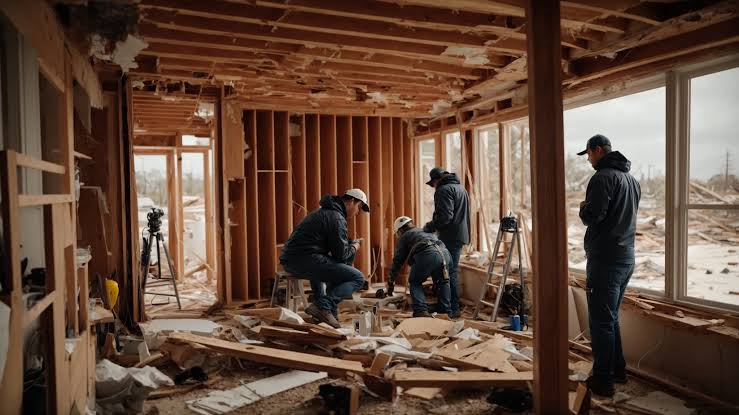
Illinois recently did something that most states have not, and it is recent enough that plenty of operators are still working out what it means.
Mold remediators must register with the Department of Public Health under the Mold Remediation Registration Act, effective January 2025, holding third-party certification and proof of financial responsibility.
Read the shape of that carefully, because three details in it do more work than the headline. It is a registration and not a license. It reaches remediators and not assessors. And it asks you to prove financial responsibility — which is a quiet sentence that changes the status of your insurance program entirely. None of it produces a shelf price, but all of it changes the conversation.
A registration, not a license
The words are not interchangeable and the difference is not pedantry.
A license is a permission with an examination and a professional regime behind it: the state defines competent practice, tests for it, supervises it, and can act when it lapses. A registration records who is doing the work and requires you to meet stated conditions to appear on the list.
Illinois built the second. So being registered establishes that you met the entry conditions. It does not establish that any particular job was performed to a standard, because the Act is not a practice code — and an underwriter knows that even when an owner assumes otherwise. You register in Illinois. You are not licensed, and describing yourself as licensed is a small error that reads badly in exactly the moment you would least like it to.
The half of the trade nobody registers
Here is the asymmetry, and it is the most revealing thing about the Illinois regime.
The registration reaches remediators. Mold assessment is unregulated — nobody registers to inspect a building, write a protocol, or tell a homeowner what is living behind the wall.
Sit with that for a moment. The state has decided it wants to know who removes the mold, and has taken no position at all on who determines the mold is there. The judgment call — the part where somebody looks at a wet building and says what it needs — is the unregulated half. The physical removal is the registered one.
If you do both, half your company sits inside a state framework and half sits outside it. That split is what an underwriter reads, and it is worth describing yourself rather than being asked.
Insurance that became a condition of working
The financial-responsibility requirement deserves its own paragraph, because owners tend to file it under paperwork and it is not.
Before the Act, your program was a commercial judgment: you decided what your exposure was worth and bought accordingly. Now proof of financial responsibility is a condition of being on the list. Your coverage still does the job it always did — and it has quietly acquired a second, unrelated job.
The practical consequence shows up at renewal rather than at purchase. A lapse is no longer only a coverage gap. It is potentially a registration problem, which is a different category of trouble with a different clock on it.
The exclusion the registration does not touch
None of the above changes the driver that sets your number, and it is worth saying plainly because a new state framework invites the assumption that it did.
A general liability policy answers for the third party injured on your jobsite and the property you damage by accident, and it carries a pollution exclusion. Mold, the sewage in a Category 3 water loss, and the smoke and soot residue after a fire all read as pollutants under it. The material you are hired to remove is the material the base policy declines.
Being on a state list does not amend that exclusion by a single word. Release spores during a demolition, miss a reservoir behind a wall, or certify a clearance that later fails, and the claim is environmental, and contractors pollution liability is what answers. How much of your revenue touches mold, Category 3, and fire work — and how disciplined the containment and clearance protocol around it is — remains the heaviest input into where you price.
Storm, freeze, and the waiting
Illinois weather sets volume and timing. Severe convective storm, tornado, hail, and winter freeze fill crews in bursts from Chicago and Aurora out to Rockford and Springfield.
A burst means jobs opening together, supervision stretched, and structures waiting longer before anyone reaches them. That waiting is the mechanism: a structure sitting wet becomes a mold structure, and the job crosses from the general-liability world into the pollution world — and, now, from the unregistered half of your company into the registered one, in the same afternoon. River flooding on the Mississippi and Illinois systems is a separate NFIP placement; the New Madrid zone in the far south makes earthquake a separate placement.
Crew, fleet, contents, and the choice
Workers compensation runs through a private, competitive market here and scales with payroll, with classifications carrying as much weight as the figure — respirator work in a contaminated crawlspace is not a clerical class.
Contractors equipment schedules the dehumidifiers, air movers, air scrubbers, and generators that spend the dry-out on property you do not control. If you pack out, household goods in your care, custody, and control are what general liability excludes and bailees coverage answers for. Vehicles ride on commercial auto — and one vocabulary note this trade needs: an insurance carrier writes your coverage, while a motor carrier hauls freight for hire.
Limits and retention are the genuine choice: fund the routine yourself and buy a serious pollution and excess limit for the environmental tail. Your loss record carries the rest of the argument.
Most of this work arrives insurer-funded — the property owner’s carrier sets the scope you are paid on, and your receivables and program relationships follow. That is your business environment and we describe it as such; we do not advise property owners on their own claims, and this guide does not either.
Where the state drew its line
<rect x="30" y="54" width="300" height="126" rx="9" fill="#ffffff" stroke="#DCC9B0"/>
<text x="180" y="78" text-anchor="middle" font-family="Inter, system-ui, -apple-system, 'Segoe UI', Roboto, sans-serif" font-size="13" font-weight="600" fill="#12703F">Assessment</text>
<text x="180" y="100" text-anchor="middle" font-family="Inter, system-ui, -apple-system, 'Segoe UI', Roboto, sans-serif" font-size="11" fill="#5A5048">Inspect, write the protocol, decide</text>
<text x="180" y="120" text-anchor="middle" font-family="Inter, system-ui, -apple-system, 'Segoe UI', Roboto, sans-serif" font-size="11" fill="#5A5048">Unregulated — no register at all</text>
<text x="180" y="140" text-anchor="middle" font-family="Inter, system-ui, -apple-system, 'Segoe UI', Roboto, sans-serif" font-size="11" fill="#5A5048">The judgment half</text>
<text x="180" y="164" text-anchor="middle" font-family="Inter, system-ui, -apple-system, 'Segoe UI', Roboto, sans-serif" font-size="11" font-style="italic" fill="#5A5048">Your contract is the whole perimeter</text>

<rect x="370" y="54" width="300" height="126" rx="9" fill="#F1E5D6" stroke="#12703F"/>
<text x="520" y="78" text-anchor="middle" font-family="Inter, system-ui, -apple-system, 'Segoe UI', Roboto, sans-serif" font-size="13" font-weight="600" fill="#12703F">Remediation</text>
<text x="520" y="100" text-anchor="middle" font-family="Inter, system-ui, -apple-system, 'Segoe UI', Roboto, sans-serif" font-size="11" fill="#5A5048">Register with Public Health</text>
<text x="520" y="120" text-anchor="middle" font-family="Inter, system-ui, -apple-system, 'Segoe UI', Roboto, sans-serif" font-size="11" fill="#5A5048">Third-party certification required</text>
<text x="520" y="140" text-anchor="middle" font-family="Inter, system-ui, -apple-system, 'Segoe UI', Roboto, sans-serif" font-size="11" fill="#5A5048">Proof of financial responsibility</text>
<text x="520" y="164" text-anchor="middle" font-family="Inter, system-ui, -apple-system, 'Segoe UI', Roboto, sans-serif" font-size="11" font-style="italic" fill="#5A5048">Coverage became a condition of working</text>

<rect x="30" y="196" width="640" height="70" rx="9" fill="#C7683F" stroke="#12703F"/>
<text x="350" y="222" text-anchor="middle" font-family="Inter, system-ui, -apple-system, 'Segoe UI', Roboto, sans-serif" font-size="14" font-weight="600" fill="#1A1A1A">The pollution exclusion does not read the register</text>
<text x="350" y="246" text-anchor="middle" font-family="Inter, system-ui, -apple-system, 'Segoe UI', Roboto, sans-serif" font-size="12" font-weight="600" fill="#1A1A1A">Mold, Category 3, and smoke sit outside the base policy on both sides of the line</text>The Illinois summary
Get the vocabulary right — you register here, you are not licensed — and get the file right, because financial-responsibility proof turned your program into a condition of working rather than a purchase you make once a year. Then describe your assessment-versus-remediation split honestly, since the state has drawn a line straight through the middle of most companies.
And keep the proportions straight. The registration is an entry condition. The pollution exposure is what you are priced on, and the register does not touch the exclusion.
For the coverage rather than the pricing, start with contractors pollution liability; the restoration contractor insurance program shows how it assembles, and the Illinois restoration contractor insurance page carries the state detail. For a figure built on your real operation, start a quote. If you test and mitigate radon rather than respond to losses, the radon mitigation cost guide is your program instead.