

Most states that do not license radon work simply say nothing. Vermont does something more particular, and the distinction is the most interesting thing about a Vermont submission.
Vermont issues no radon license — and its health department actively directs the public toward nationally certified professionals through NRPP or NRSB. That is not silence. It is delegation. The state has named the standard it has declined to administer, and it has told your customers to go looking for it.
That arrangement hands you something and takes something away, and both halves are worth understanding before anybody talks about a number — which is also why nobody can produce one from a table.
A state that names the standard it will not administer
A license is a permission with machinery behind it. The state writes requirements, administers them, supervises the work, and can act when something goes wrong. Some of that machinery, when it exists, works in your favor: a published standard is a document a claim gets measured against, and the state ends up doing part of the arguing.
Vermont has none of that machinery for radon. No permission to hold, no state body supervising, no state document to be measured against.
What it has instead is a state agency telling your customers what to look for. That is a recommendation with the state’s name on it — and recommendations with a state’s name on them shape what people expect, without creating anything that protects you.
What delegation actually transfers to you
So the certification you hold is doing unusual work in Vermont. It is not merely a voluntary credential you chose; it is the credential the state pointed your customer toward. Meeting that expectation is genuinely useful in a disputed claim, because it is the closest thing to a published benchmark available here.
But it is worth being exact about the limit. A certification establishes that you passed a qualification. It says nothing whatsoever about whether this reading, in this house, on this day, was taken properly. That remains your protocol and your record.
The certification gets you to the starting line of the argument. It does not finish it, and an operator who believes otherwise is carrying a gap they cannot see.
The number, and who acts on it
Which brings the program to the thing it is actually built around.
A standard policy is built around general liability — the visitor who trips over your equipment, the property you damage by accident. Both real; neither definitive. What defines this trade is that you are paid to produce a number, and somebody makes a decision on it.
A device placed somewhere unrepresentative, a short-term test run under conditions that flattered the result, a protocol chosen loosely, a clearance passing a house that should have failed — in every case the complaint is not that you built something badly. It is that you told someone a thing about their house and they acted on it. That is a claim about judgment, and professional liability is what answers, not the general-liability line. How much of your revenue rides on opinions people act on, and how disciplined the protocol behind them is, sets your price.
Zone 2, and the mistake people make about Vermont
Worth correcting plainly, because the assumption is widespread and it is wrong.
Vermont is predominantly EPA Zone 2, and it has zero Zone 1 counties. None. Chittenden and Grand Isle are the state’s two Zone 3 counties. The picture people carry around — northern New England, granite, therefore severe — does not match the map.
That matters commercially: a business planning around Zone 1 demand is planning around a market that is not here. It changes nothing about liability. A Zone 2 county contains houses that read high, a zone describes potential across an area rather than any individual address, and the reading somebody relies on is yours regardless of what color the county is.
Testing, installing, and the instruments
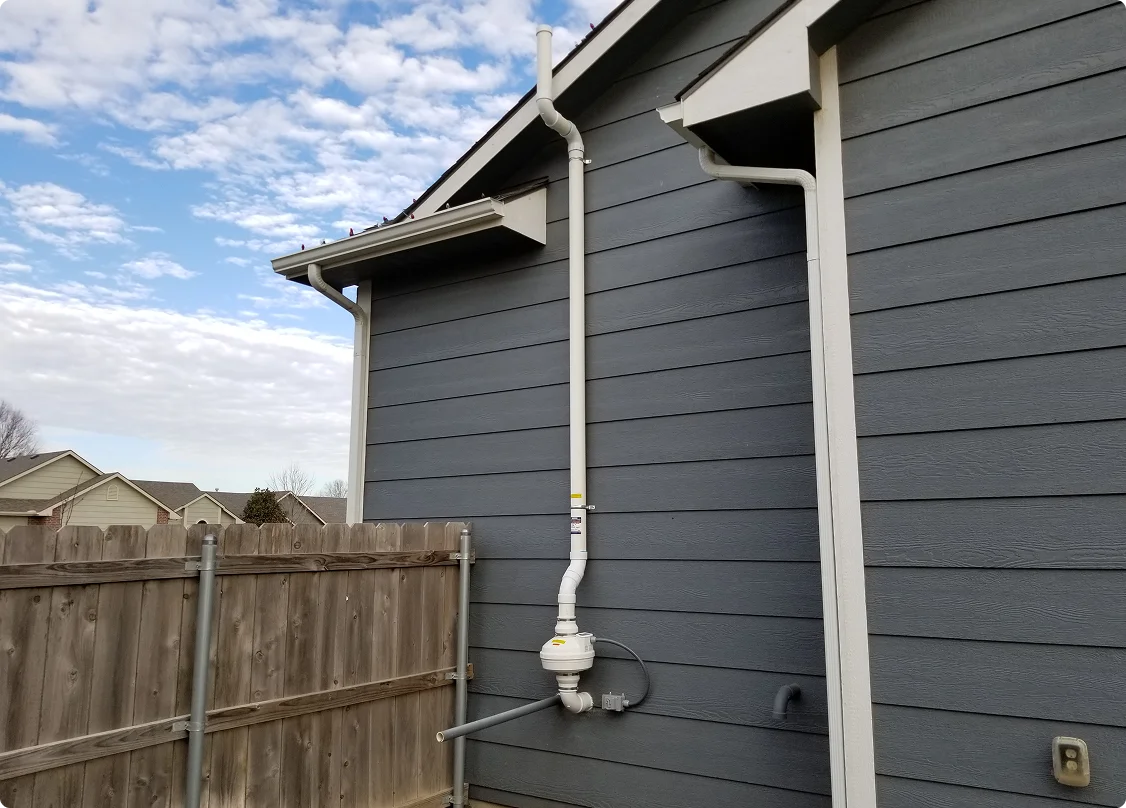
The two halves of the work carry different weight. Measurement is almost purely a judgment exposure — the device, its placement, the protocol, the call. Installation adds a physical dimension: sub-slab depressurization systems, coring and sealing, pipe and fan through occupied homes, which brings general liability, equipment, and workers compensation forward alongside the professional line.
The equipment is modest and specific: continuous monitors, grab-sample devices, manometers and pressure gauges, and system materials. Contractors equipment schedules it for what it is worth and where it travels — precise instruments rather than a heavy fleet.
A Vermont winter is worth one practical note. A short-term reading assumes closed-house conditions, and the winter supplies them naturally and at length, while a mild stretch does not. The same house can read defensibly in one season and contestably in another, and the difference is not the instrument — it is whether you recorded the conditions, including the obvious ones.
The crew, the limits, the record
Where you install, the crew exposure is real: confined-space entry into crawlspaces and attics, drilling through slab, pipe run in tight spaces where a technician can be hurt. Workers compensation runs through Vermont’s private, competitive market, and the classifications should describe that work rather than the trade name. Vehicles ride on commercial auto — and a vocabulary note this trade needs constantly: an insurance carrier writes your coverage, while a motor carrier hauls freight for hire.
Your loss record carries weight out of proportion to its length, because a professional claim on it speaks to the judgment the whole business rests on. Limits and retention are the genuine choice: fund the small things yourself and buy a serious professional and excess limit you cannot afford to be short on. Certification carries its own fees, incidentally; those are not insurance and we do not quote them.
Where the standard actually lives
<rect x="30" y="54" width="300" height="128" rx="9" fill="#ffffff" stroke="#DCC9B0"/>
<text x="180" y="78" text-anchor="middle" font-family="Inter, system-ui, -apple-system, 'Segoe UI', Roboto, sans-serif" font-size="13" font-weight="600" fill="#12703F">A licensing state</text>
<text x="180" y="102" text-anchor="middle" font-family="Inter, system-ui, -apple-system, 'Segoe UI', Roboto, sans-serif" font-size="11" fill="#5A5048">Publishes a standard</text>
<text x="180" y="122" text-anchor="middle" font-family="Inter, system-ui, -apple-system, 'Segoe UI', Roboto, sans-serif" font-size="11" fill="#5A5048">Administers and supervises it</text>
<text x="180" y="142" text-anchor="middle" font-family="Inter, system-ui, -apple-system, 'Segoe UI', Roboto, sans-serif" font-size="11" fill="#5A5048">A claim is measured against it</text>
<text x="180" y="166" text-anchor="middle" font-family="Inter, system-ui, -apple-system, 'Segoe UI', Roboto, sans-serif" font-size="11" font-style="italic" fill="#5A5048">The state does part of the arguing</text>

<rect x="370" y="54" width="300" height="128" rx="9" fill="#F1E5D6" stroke="#12703F"/>
<text x="520" y="78" text-anchor="middle" font-family="Inter, system-ui, -apple-system, 'Segoe UI', Roboto, sans-serif" font-size="13" font-weight="600" fill="#12703F">Vermont</text>
<text x="520" y="102" text-anchor="middle" font-family="Inter, system-ui, -apple-system, 'Segoe UI', Roboto, sans-serif" font-size="11" fill="#5A5048">No license, no supervision</text>
<text x="520" y="122" text-anchor="middle" font-family="Inter, system-ui, -apple-system, 'Segoe UI', Roboto, sans-serif" font-size="11" fill="#5A5048">Health department points to NRPP or NRSB</text>
<text x="520" y="142" text-anchor="middle" font-family="Inter, system-ui, -apple-system, 'Segoe UI', Roboto, sans-serif" font-size="11" fill="#5A5048">Names a standard it does not run</text>
<text x="520" y="166" text-anchor="middle" font-family="Inter, system-ui, -apple-system, 'Segoe UI', Roboto, sans-serif" font-size="11" font-style="italic" fill="#5A5048">Your customers were told what to expect</text>

<rect x="30" y="196" width="640" height="72" rx="9" fill="#C7683F" stroke="#12703F"/>
<text x="350" y="222" text-anchor="middle" font-family="Inter, system-ui, -apple-system, 'Segoe UI', Roboto, sans-serif" font-size="14" font-weight="600" fill="#1A1A1A">The certification gets you to the start of the argument</text>
<text x="350" y="246" text-anchor="middle" font-family="Inter, system-ui, -apple-system, 'Segoe UI', Roboto, sans-serif" font-size="12" font-weight="600" fill="#1A1A1A">Your protocol and your record are what finish it — professional liability answers</text>Finally
Vermont told your customers what good looks like and then left the enforcement of it entirely to you. Hold the certification the state named — its absence is louder here than in a state that never mentioned one. Then write the scope and the protocol properly, because they are the only documents that speak to whether this reading was taken correctly.
And plan against the real map rather than the imagined one: predominantly Zone 2, zero Zone 1 counties. The demand is moderate. The reliance is total.
For the coverage rather than the pricing, start with professional liability; the radon mitigation insurance program shows how it assembles, and the Vermont radon mitigation insurance page carries the state detail. For a figure built on your real operation, start a quote. If you respond to water, fire, and mold losses rather than testing and mitigating radon, the restoration cost guide is your program instead.