States we serve · Wyoming
Radon mitigation insurance in Wyoming
Insurance for the before-the-hazard trade in Wyoming — radon measurement and testing, sub-slab depressurization, and mitigation-system installs in a state where nearly every county reads high. The signature exposure is the number your business signs and someone relies on at a closing.
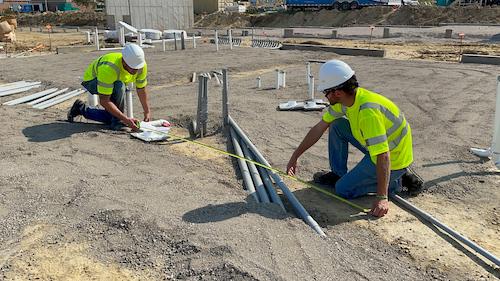

A Wyoming radon business works before the hazard. The job is to find out whether a building carries an elevated level of a naturally occurring, colorless, odorless gas and, where it does, to install the system that draws that hazard back out before it can become harm — measurement and testing, sub-slab depressurization, vapor barriers and crawlspace sealing, and indoor air-quality work. In Wyoming the ground itself makes that work routine: the federal mapping puts nearly the whole state in the highest radon category, so a great many buildings warrant a reading and, when the reading runs high, a system.
The number on that reading is the signature exposure of the trade. A radon test is a professional opinion with a figure attached, and someone relies on that figure — very often a Wyoming real-estate closing turns on whether it sits above or below the action level. There is no ISO form written for that exposure, and no state radon license stands behind the measurement either, so the reliance rests on the professional who signed it and the contract they signed it under. That is precisely why radon coverage in Wyoming is built around professional liability rather than around premises risk alone.
Wyoming adds one more wrinkle that shapes the whole program: the crew coverage does not come from a private carrier. This page walks what a Wyoming radon program costs to build, the state credential picture, the risks that define the work, the claims a specialty carrier actually sees, and the major Wyoming markets where the work concentrates. It stays on the before-the-hazard side of the trade; the after-the-loss side — restoration work that responds to damage already done — lives on the Restoration Contractor Insurance in Wyoming page.
What radon mitigation business insurance costs in Wyoming
We do not quote a number on a state page, and there are no premium figures here by design — a Wyoming radon program is priced to the operation, and these are the drivers that move it. The largest is your professional-liability posture: the limits you carry on the measurement opinion, because that signed opinion is where the defining exposure lives. Close behind is the testing-versus-mitigation revenue split — a testing-only shop, a mitigation-only installer, and a business that does both present different exposures, and in a high-radon state where mitigations are frequent, that mix is a primary rating input. Then comes the crew, and here Wyoming is different: workers compensation runs through the state fund rather than a private carrier, so payroll and crew size drive an exposure that sits with the Workers’ Compensation Division rather than inside the private placement. Your equipment schedule — the monitors, fans, and instruments covered under contractors equipment — and your fleet, the vehicles carrying pipe and instruments under commercial auto, round out the operating drivers, and your claims history sits underneath all of it. We read those drivers against your actual Wyoming operation rather than pricing a generic radon form.
Wyoming radon regulations and licensing
Wyoming has no state radon license or certification. There is no state exam and no state license number standing behind a reading. The Wyoming radon education program recognizes and recommends national certification through the recognized proficiency programs — the National Radon Proficiency Program and the National Radon Safety Board — but that recommendation is not a state license, and it does not create one.
The consequence for a radon business is direct, and it is the whole reason professional liability carries the weight it does here. In a licensing state, a credential sits between the professional and the person relying on the number; in Wyoming, nothing does. The reliance falls on the professional who signed the measurement and the contract it was performed under — not on a state license that can be pointed to after the fact. The number your business puts on a report, relied on at a closing, stands on your own judgment and your own paper. That is a professional liability exposure in its purest form.
The geography sharpens the picture. By the federal Map of Radon Zones, Wyoming is predominantly Zone 1, the highest category, with nearly every county reading high — an extensive high-radon state. That makes the demand geology-driven: the testing that happens here happens because the ground routinely warrants it, not only because a deal asks for it. High frequency means more signed numbers relied on downstream, and a carrier underwriting a Wyoming radon file reads that straight into the account.
Common radon risks in Wyoming
The risks that define a Wyoming radon operation are not, for the most part, the catastrophe risks that drive the restoration side of this brand. Crews certainly work in Wyoming weather — blizzard cold and high wind — but the exposure that actually defines the trade is the measurement, not the climate. The central risk is a number relied on at a closing that later reads differently. A short-term device placed wrong, closed-house conditions not held, a test cut short — any of these can produce a reading a later measurement contradicts, and with no state license behind the result, the business that signed it stands alone with its own judgment. This is the professional liability exposure at the center of the page.
Two more judgment exposures sit alongside it. A clearance called too early — a post-mitigation test signed off as effective when conditions were not held and a follow-up would have read differently — is the same opinion exposure on the install side. And a system that fails after it is installed, months after the crew has left, is a completed-operations question that runs through general liability for the physical harm, with the design judgment sitting alongside it.
Then there is the crew. Sub-slab work means cutting through a slab, coring a suction point, and running pipe and a fan in basements, crawlspaces, and other tight, low-oxygen spaces — confined-space entry that is the defining physical exposure of the trade. A technician hurt in a Wyoming crawlspace is a workers-compensation matter, and in Wyoming that coverage comes through the state fund — the Workers’ Compensation Division of the Department of Workforce Services — rather than a private carrier, which changes how the injury is handled from the start. The after-the-loss version of this work lives on the Restoration Contractor Insurance in Wyoming page.
Common Wyoming radon claims we see
These are described qualitatively, with generic carrier language and no dollar or severity figures — every claim is handled by the insurance carrier, never named here.
- A measurement contradicted after a Wyoming closing. Your business tests a property, reports a reading, and a deal closes on the strength of it. A later test reads differently, and — with no state license to point to — the business that signed the number is drawn in. The exposure is the opinion, not the pipe: a professional-liability matter.
- A clearance called too early. After a mitigation, a post-installation test is run and the system is signed off as effective, but conditions were not held and a follow-up would have read differently. The judgment behind the clearance is where the loss sits.
- A system that fails after install. A sub-slab depressurization system stops drawing the way it was designed to, months after the crew left, and a covered event follows from the completed work — a completed-operations question on the physical side, with the design judgment alongside it.
- A confined-space crew injury. A technician is hurt in a crawlspace on a Wyoming sub-slab job — the kind of injury workers compensation answers, except that in Wyoming the coverage comes through the state fund rather than a private carrier, which changes how the matter is handled from the outset.
Major Wyoming radon markets
Radon demand in Wyoming runs on both the ground and the closing calendar — the map reads high nearly everywhere, and the transactions still decide when a reading gets ordered. These are the markets that fill a Wyoming radon calendar, and what each one means for the work.
Cheyenne
The capital and the state’s largest housing market anchors radon demand on transaction volume — a steady stream of residential closings on the southeastern High Plains, where the soil profile routinely warrants a reading. Government and rail employment keep turnover steady, and closing-tied testing fills much of the calendar.
Casper
Central Wyoming’s energy economy drives relocation churn through Casper, which keeps residential transactions moving on an employment cadence. When energy hiring rises, first-sale and resale closings follow, and each one is a reading ordered against ground the federal map already flags high.
Laramie
Laramie’s market turns on the University of Wyoming — student and faculty rental turnover keeps residential transactions cycling — and on the granite of the Laramie Range beneath it, exactly the kind of fractured subsurface where soil-gas behavior is worth reading before a sub-slab system is designed and sealed.
Gillette
The Powder River Basin energy corridor makes Gillette a new-construction story: workforce housing and first-sale closings add rooftops on a schedule few Wyoming markets match, which drives demand for pre-construction passive systems and testing on new builds rather than resale-driven readings alone.
Rock Springs
On the I-80 corridor in the southwest, Rock Springs runs on a mining and trona economy that keeps a working-population housing market turning. Testing here is closing-driven around that employment base, and the high-desert soils of the Green River Basin shape how a mitigation system is designed.
Sheridan
In the north-central foothills of the Bighorns, Sheridan draws in-migration and retiree relocation, which keeps resale closings steady and testing tied to them. The foothill soils and older housing stock make the reading a judgment worth taking seriously before a system goes in.
Why Wyoming radon businesses choose Restoration Guard
We are an independent agency that writes one world — restoration and radon mitigation — and we place coverage with insurance carriers that actually want the work. In Wyoming that focus matters, because two things a generic broker misses here are exactly the things that define the account: with no state radon license behind the measurement, the professional-liability line is not an add-on but the center of the program; and with a monopolistic state fund, the crew coverage does not come from a private carrier at all, so the private placement has to be built around that fact rather than despite it. We know to ask whether you test, mitigate, or both before we quote; to arrange professional liability deliberately for a number that stands on your own judgment and your own contract; and to price the account to a high-radon, geology-driven market. When a contract lands with limits or endorsements you do not recognize, that is a call we take. Start with a quote, or talk it through with us first.
Learn more
Coverage for a Wyoming radon business works as a system built around one signature line. It leads with professional liability for the measurement opinion no state license stands behind, then adds general liability for the third-party and completed-operations exposure of install work, workers compensation for the crew in crawlspaces and confined spaces — through the state fund in Wyoming — contractors equipment for the fans, monitors, and instruments, commercial auto for the fleet, and excess liability when a contract demands higher limits.
The signature line
The rest of the program
- General Liability Insurance
- Workers Compensation Insurance
- Contractors Equipment Insurance
- Commercial Auto Insurance
- Excess Liability Insurance
Insurance by the operation you run
The other Wyoming page
Get covered
Primary sources
Wyoming radon mitigation insurance FAQs
What does radon mitigation business insurance cover for a Wyoming radon business?
It is the coverage program for a radon operation working across Wyoming — measurement and testing, mitigation-system design and installation, sub-slab depressurization, vapor barriers and crawlspace sealing, and indoor air-quality work. The line that defines the class is professional liability, because the measurement your business signs is an opinion with a number on it that someone relies on, very often at a real-estate closing. Around that signature sit the everyday lines a contractor working inside occupied homes needs: general liability for third-party injury and property damage, contractors equipment for the fans and monitors you carry, commercial auto for the trucks, and excess liability when a contract calls for higher limits. Workers compensation for the crew is its own conversation in Wyoming, because it runs through the state fund rather than a private carrier. We build the program to the operation you actually run — testing only, mitigation only, or both.
Do you insure the home buyer or the seller at a Wyoming closing?
No. We insure the radon business, never the property owner, the buyer, or the seller. The closing where your reading gets relied on is your operating environment — it is why a professional-liability exposure exists for you — but nothing on this page is advice to anyone about their transaction, their result, or whether their loss is covered. When we talk about a claim, we mean a claim on your policy: the radon business defending the number it signed, or working within the claims process on a covered matter. The people relying on your measurement have their own advisors; our job is the coverage on your operation.
Does Wyoming license radon measurement or radon mitigation?
No. Wyoming has no state radon license or certification. The state radon education program recognizes and recommends national certification through the recognized proficiency programs — the National Radon Proficiency Program and the National Radon Safety Board — but a recommendation is not a state license and does not create one. The practical effect is that the reliance falls on the professional who signed the measurement and the contract it was performed under, which is exactly why professional liability carries the weight it does for a Wyoming radon business.
Wyoming is a high-radon state — how does that change the exposure?
It raises the frequency, not the nature, of the exposure. By the federal Map of Radon Zones, Wyoming is predominantly Zone 1, the highest category, with nearly every county reading high, so the demand here is geology-driven rather than transaction-driven — testing happens because the ground under a Wyoming home routinely warrants it. More readings and more mitigations mean more signed numbers relied on downstream, and each of those is the professional-opinion exposure at the center of this page. A carrier reads the high-radon geography straight into the account.
How does Wyoming’s monopolistic workers-compensation fund affect my program?
In Wyoming, workers-compensation coverage does not come from a private carrier at all — it runs through the Workers’ Compensation Division of the Department of Workforce Services, the state fund. We do not quote that coverage or its rates on a state page, but it shapes the program: the rest of your lines — professional liability, general liability, contractors equipment, commercial auto, excess — are placed with private insurers, while the crew coverage sits with the state. For a radon business whose technicians perform sub-slab and confined-space work, understanding where the injury coverage actually comes from is part of building the program correctly.
Does this insurance cover my trucks, and what do you mean by carrier?
Your service vans and the trucks that carry pipe, fans, and instruments to a Wyoming job run through commercial auto — the at-fault accident, the physical damage, and the auto liability on the road are an auto matter, not a general-liability one. One note on language, because this trade uses the word constantly: your insurance carrier is the company that writes your coverage, which is a different thing from a motor carrier that hauls freight for hire. We insure the fleet a radon business runs in service of its own testing and installation work, not a for-hire trucking operation, and the distinction changes how the auto exposure is rated.
Get Wyoming radon coverage built around the number someone relies on
Tell us whether you test, mitigate, or both, and we will market it to insurers that write the class — with the measurement exposure arranged, not assumed, and the state-fund crew coverage accounted for.