
States we serve · Wyoming
Restoration contractor insurance in Wyoming
Wyoming restoration runs on extreme cold — blizzard, high wind, and the freeze-and-burst losses a hard winter drives across a sparsely settled state with long distances between jobs. The signature challenge is that the substances a crew is hired to remove are carved out of the standard general-liability policy.
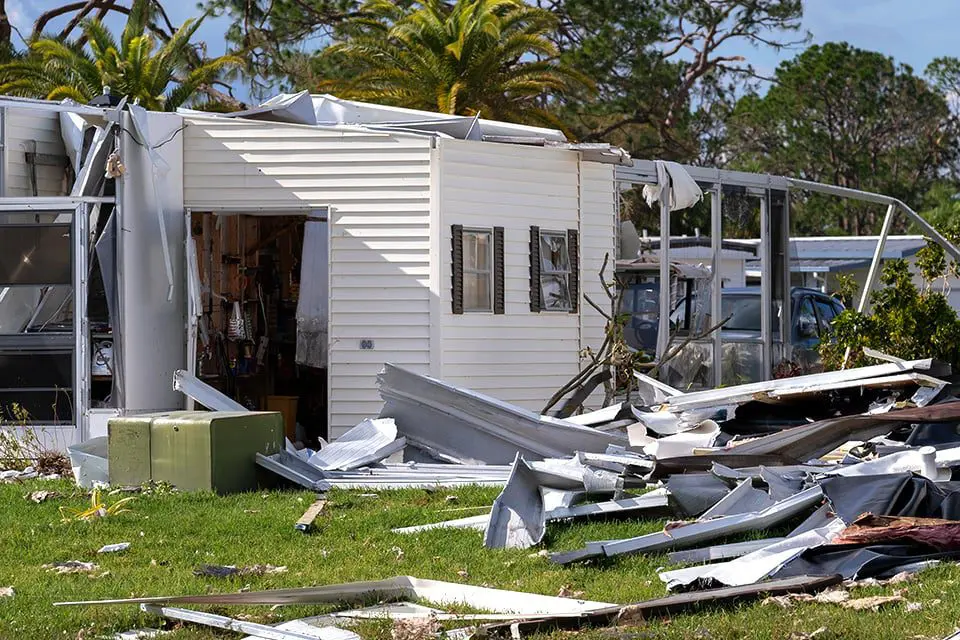

A restoration contractor in Wyoming works after the loss. A blizzard has already driven wind and water through an envelope, a cold snap has already burst a pipe in an unheated wall, a wildfire in the foothills has already pushed smoke into a structure — and your crew is the one that shows up, often at an odd hour, to a building that is occupied, damaged, and full of the owner’s belongings. Wyoming concentrates the cold end of the catastrophe map: blizzard and high wind across the open plains, extreme cold and the freeze-and-burst losses it drives, hail in the warm months, and wildland-interface wildfire in the foothills. It does all of this across enormous distances between towns, which is its own kind of exposure. Restoration contractor insurance is the program built around that after-the-loss reality, and it starts with the one line that defines the trade.
That line answers the pollution exclusion. A standard general-liability policy — the base most contractors assume covers their work — carries an exclusion that reaches the exact substances restoration exists to remove: mold, the sewage in a Category 3 water loss, and the smoke and soot after a fire, along with the contaminated material you haul away. The base policy, by its own terms, does not answer for the contaminant itself, which is why contractors pollution liability leads every restoration program we write. This page walks what that coverage costs to build in Wyoming, the state’s contract-governed mold posture, the risks a Wyoming crew actually runs, the claims we see, and the major markets across the state — and it stays on the after-the-loss side throughout; the before-the-hazard, radon side of the brand lives on its own Wyoming radon page.
What restoration contractor insurance costs in Wyoming
We do not publish premium figures — every number belongs to your own quote once an underwriter has seen the operation. What we can do honestly is name the drivers that move a Wyoming restoration file, in rough order of weight. The largest is the limit you carry on contractors pollution liability and whether a market has appetite for the mold and Category 3 sewage work in your mix, because that is the signature line and the one general liability will not answer. Close behind is payroll and how your crew’s hours map across mitigation, demolition, and reconstruction class codes — the same class-code map that drives most contractor programs.
From there, Wyoming’s geography weights two lines harder than it might elsewhere. The size and value of the drying-equipment fleet you schedule on contractors equipment matters more in a state where gear is hauled long distances and left on remote sites for weeks; the number and type of response trucks and pack-out vehicles that drive the commercial auto piece carry the same distance weight. Then the revenue mix between mitigation and reconstruction, which sets the completed-operations tail your general liability and excess liability carry; the value of contents you hold after a pack-out under bailees coverage; and your claims history, which an underwriter reads for how the work is run. One structural note that shapes the whole file: in Wyoming, workers’ compensation runs through the state fund rather than a private carrier, so it is not a premium line in the program we place — but the exposure still colors how an underwriter reads the operation.
Wyoming mold regulations and licensing
Wyoming is on the honest, unregulated end of the mold spectrum: there is no state mold-assessment or mold-remediation license, and there is no statewide general-contractor license either, though an individual local jurisdiction may require its own contractor registration for building work. Nothing at the state level defines who may assess a mold problem, who may remediate it, or what standard the work must meet. In practice, a Wyoming mold remediation is governed by the contract between you and the customer and by the consensus industry standards a careful operator follows — not by a credential you can hold up to an underwriter or a customer as proof of scope.
The insurance implication is the mirror image of what happens in a licensing state. Where a state licenses mold assessors and remediators separately, the license does part of the underwriting work by defining roles and setting a floor. Wyoming does none of that, so the wording of your own coverage carries the full load. That is why the pollution line matters even more here: mold is a pollutant carved out of the standard general-liability policy, and with no licensing scaffold to lean on, contractors pollution liability written to the actual work is what stands behind a remediation when a dispute over spread, recurrence, or scope follows. And where a job produces a judgment rather than a repair — a moisture-mapping opinion, a clearance decision someone relies on — that reliance is a professional liability exposure the standard policy is not built to answer. We describe the state’s posture as it actually is; we do not invent a board or a statute to fill a slot Wyoming leaves empty.
Common restoration risks in Wyoming
The work does not happen at your shop — it happens at a Wyoming house or business mid-crisis, and the risk profile follows from what put it there. The dominant driver is cold: extreme cold and the freeze-and-burst water losses that arrive in clusters after a snap, blizzard and high wind that open a building to water, and snow-load through a long winter. In the warm months hail adds envelope and interior-water work, and in the foothills the wildland-urban interface puts wildfire — and the smoke and soot cleanup behind it — on the calendar. These are the environment a Wyoming crew responds into, described as such and not as claim advice to anyone.
On top of the perils sits the signature exposure that follows the crew everywhere: the pollutant you were hired to remove. Mold, Category 3 sewage, and smoke and soot are carved out of the standard general-liability policy by its pollution exclusion, so the base coverage does not answer for the very substance of the job — the gap contractors pollution liability exists to close. Two more risks travel with the work regardless of the peril, and Wyoming’s distances sharpen both. The customers’ contents in your care during a pack-out are carved out of general liability and answered by bailees coverage; and the drying-equipment fleet deployed for days or weeks on properties you do not control, and hauled across long distances between jobs, is a first-party contractors equipment exposure rather than a liability one. If your firm also works the before-the-hazard side, the radon exposure lives on the Wyoming radon page; this page stays on the loss you respond to.
Common Wyoming restoration claims we see
These are described qualitatively — no dollar amounts, no severity figures, and no carrier named — because the point is the shape of the exposure, not a number.
- The mold claim denied under the pollution exclusion. A crew finishes a remediation on a water-damaged structure, a dispute follows over spread or a recurrence, and the general-liability policy the operator assumed would respond declines it under the pollution exclusion — the exact gap contractors pollution liability exists to close, and one with no licensing floor to fall back on in Wyoming.
- The freeze-burst that turns into a Category 3 loss. A pipe bursts behind a wall during a cold snap, the water sits before anyone finds it, and what started as a clean-water job is now contaminated — the contaminant, the disposal, and any bodily-injury allegation fall on the pollution side rather than the base liability policy.
- Contents lost from a pack-out. A fire, water event, or theft at your storage facility damages a customer’s belongings held after a pack-out — goods in your care, custody, and control, and squarely a bailees exposure that general liability carves out.
- Drying equipment gone from a remote site. A trailer of dehumidifiers and air movers deployed at a property you do not control for weeks disappears one morning, and the loss to your own gear is a contractors-equipment matter, not a liability one — a familiar exposure across Wyoming’s long mobilization distances.
Major Wyoming restoration markets
Wyoming is not one restoration market but several, each with its own building stock, distance profile, and underwriting story. These are the six we write most.
Cheyenne and the southeast
The capital and largest metro anchors the state’s restoration payroll on the high plains, where sustained high wind and blizzard open structures and a hard freeze bursts pipes behind the walls. Because Cheyenne carries the deepest concentration of crews, an underwriter reads the file for how hours split between emergency mitigation and the loss-driven rebuild — and, in a monopolistic-fund state, for how the rest of the program is built around a workers-compensation line that does not come from a carrier at all.
Casper and the central basin
Casper’s energy-sector commercial base layers industrial and commercial restoration on top of the residential freeze work, so a crew here answers larger loss-driven rebuilds with longer completed-operations tails. The basin’s scale also means mobilizing hardware to jobs spread across open country, which pushes the drying-equipment schedule and the excess-liability structure up an underwriter’s reading order.
Laramie and the high country
At elevation, Laramie carries the coldest and longest freeze exposure in the state, and freeze-and-burst water losses dominate the caseload through a long winter. Snow-load and pipe-burst events arrive in clusters after a cold snap rather than one at a time, so an underwriter looks at surge-response capacity and the mitigation-versus-reconstruction revenue split on a Laramie book.
Gillette and the Powder River energy country
The energy hub of the northeast runs commercial and workforce-housing building stock with high turnover, which drives contents pack-out and the value of goods held in your care after a loss. That makes bailees limits against a stored pack-out — and the completed-operations tail on commercial reconstruction — the pieces an underwriter watches most closely on a Gillette file.
Rock Springs and the isolated southwest
The far southwest is geographically remote from the state’s other restoration hubs, which shifts the operating economics more than the peril mix. Thin restorer density and long mobilization distances mean drying gear is deployed for weeks on properties you do not control and hauled long distances between jobs, so the contractors-equipment schedule is the exposure an underwriter reads first here.
Sheridan and the Bighorn foothills
In the north the wildland-urban interface adds wildfire to the winter profile, so a Sheridan crew works smoke and soot residues alongside the freeze-burst water losses. Fire cleanup puts the pollution line squarely in play — smoke and soot are carved out of general liability the same way mold and sewage are — and the seasonal swing between fire and freeze shapes how an underwriter reads year-round capacity.
Why Wyoming restoration contractors choose Restoration Guard
We are an independent agency that writes one world — restoration and radon mitigation — and we place coverage with the insurance carriers that actually want the work. In Wyoming that focus earns its keep. We know to ask whether you respond to blizzard, freeze-burst, hail, or foothill-wildfire losses, and how much of your revenue is mold and Category 3 sewage, before we quote. We draw the pollution exclusion so the substance you remove is answered by contractors pollution liability rather than assumed into general liability; we work with the state’s contract-governed mold posture instead of pretending a license exists; and we build the rest of the program around the fact that workers’ compensation here comes from the state fund, not a carrier. When a certificate request, a program requirement, or a scope question lands on your desk that you do not recognize, that is a call we take. Start with a quote, or talk it through with us first.
Learn more
Coverage for a Wyoming restoration business works as a system, and it starts with the line that makes the trade a specialty class: contractors pollution liability for the mold, Category 3 sewage, and smoke and soot the standard general-liability policy excludes. Around it sit general liability for third-party injury and the rebuild tail, bailees coverage for the contents in your care, workers compensation for the crew — here through the state fund rather than a private carrier — contractors equipment for the drying fleet, commercial auto for the response vehicles, excess liability for the added limit, and professional liability where the work produces a judgment someone relies on.
The signature line
The rest of the program
- General Liability Insurance
- Bailees Coverage
- Workers Compensation Insurance
- Contractors Equipment Insurance
- Commercial Auto Insurance
- Excess Liability Insurance
- Professional Liability Insurance
Insurance by the operation you run
The other side of the axis in Wyoming
Get covered
Primary sources
Frequently asked questions about restoration contractor insurance in Wyoming
Does Wyoming license mold assessment and remediation?
No. Wyoming runs no state mold-assessment or mold-remediation program, and there is no statewide general-contractor license either — though a local jurisdiction may require its own contractor registration for building work. That means mold remediation in Wyoming is governed by your contract and by consensus industry standards rather than by a state credential you can point an underwriter or a customer to. The practical effect on insurance is that nothing external defines the scope of a mold job for you, so the wording of your own coverage does the work a license would otherwise do elsewhere. That matters most on the pollution side: mold is a pollutant carved out of general liability, and in a state with no licensing scaffold to lean on, contractors pollution liability written to the actual work is what stands behind a mold remediation when a dispute follows.
Does my general liability cover the mold, sewage, and smoke my crew removes in Wyoming?
No. A standard general-liability policy carries a pollution exclusion, and that exclusion reaches the exact substances restoration exists to remove — mold, the sewage in a Category 3 water loss, and the smoke and soot after a fire, along with the contaminated material you haul off a site. So the base policy does not answer for the contaminant itself. That is not a defect to argue at claim time; it is the reason a separate line exists. Contractors pollution liability is written precisely to answer the environmental exposure general liability carves out, and because these forms are largely a manuscript, non-standard specialty market, how one is worded matters more than the label on the declarations page.
How does workers’ compensation work for a Wyoming restoration business?
Wyoming is one of the four monopolistic-fund states, so this piece works differently than almost anywhere else. Workers’ compensation coverage comes through the Workers’ Compensation Division of the Department of Workforce Services — the state fund — and not from a private insurance carrier, so it is not a line we place. What we do is build the rest of your program around that reality: the general liability, the pollution coverage, the equipment and auto, and the excess limits all sit with the specialty market, while the comp exposure runs through the state system. For a restoration business that puts crews in respirators in contaminated spaces, on winter storm work, and into freezing crawlspaces, that separation is worth understanding clearly, because the coverage that protects the crew and the coverage that protects the business come from two different places.
Do you insure the property owner’s claim, or my restoration business?
Your restoration business — always. Restoration is the trade whose commercial world runs on somebody else’s insurance claim, so it is worth being exact: we place coverage on the contractor, and nothing here is advice to a property owner about their own loss, policy, or deductible. What we do describe is the environment you sell into. Much of Wyoming restoration arrives as insurer-funded work, and the property owner’s carrier sets the scope you are paid on — the carrier’s scope of repair, not your estimate, is what your receivables track against. Program and TPA relationships route a share of the volume. Those are facts about your operating economy, and they belong on your policy conversation; the property owner’s claim is theirs to have with their own carrier.
Does this cover my response trucks and equipment trailers across Wyoming distances?
Yes — through commercial auto, which sits alongside the liability and property lines in the program. The trucks that roll on an emergency call across long Wyoming distances, the trailers that haul dehumidifiers and air movers, and the box trucks that move a pack-out run through commercial auto the moment a loss involves a vehicle on the road. One note on language, because this trade says “carrier” constantly: your insurance carrier is the company that writes your coverage, which is a different thing from a motor carrier that hauls freight for hire. We insure the fleet a restoration business runs in service of its own work — the response and pack-out vehicles — not a for-hire trucking operation, and the two meanings of the word are worth keeping straight when you read a policy.
What drives restoration insurance cost in Wyoming?
We do not publish premium figures — every number belongs to your own quote once an underwriter has seen the operation — but we can name the drivers honestly. The largest lever is the limit you carry on contractors pollution liability and whether a market has appetite for the mold and Category 3 sewage work in your mix. Then payroll and how your crew’s hours map across mitigation, demolition, and reconstruction class codes; the size and value of the drying-equipment fleet, which carries real weight in a state where gear travels long distances and sits on remote sites for weeks; the revenue split between mitigation and reconstruction, which sets your completed-operations tail; and your claims history, which an underwriter reads for how the work is actually run. Because comp runs through the state fund, it is not a premium line in the program we place, but the exposure still colors how an underwriter reads the operation.
Get Wyoming restoration coverage built around the loss you respond to
Tell us what you respond to — water, fire, smoke, mold, storm — and where in Wyoming you work, and we will market it to insurers that write the class, with the pollution exposure and the state-fund comp reality handled, not assumed.